
Alright, fellow gamer! You’ve just hit the jackpot with GameJinn, your ultimate guide to all things pixels and play. Asking about the Virtual Boy? Now that’s a deep cut, a true relic from the gaming past! Let’s dive headfirst into the glorious (and sometimes headache-inducing) world of Nintendo’s crimson console.
### Virtual Boy Nintendo Classics: A Hands-On Journey into the Red Abyss
Ah, the Virtual Boy. Just uttering its name sends a shiver down the spine of many a seasoned gamer. It wasn’t just a console; it was an *experience*, a bold (if flawed) leap into the third dimension that left a lasting impression, often literally, on players’ foreheads. Let’s get “hands-on” with this peculiar beast.
#### The Hardware: A Glimpse Through Ruby-Red Goggles
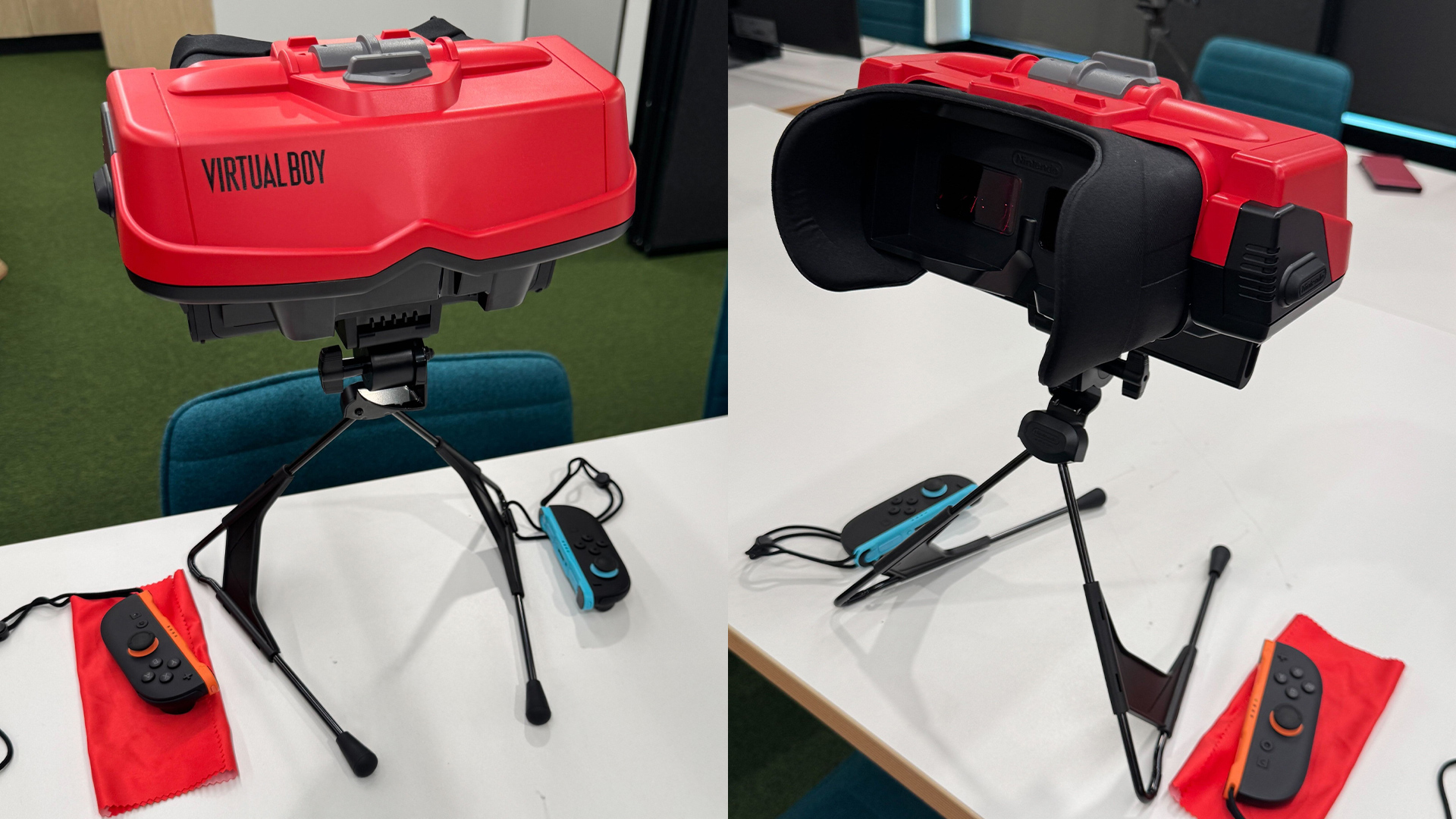
Imagine strapping a pair of binoculars to your face, but instead of seeing the world, you’re peering into a monochromatic realm of pure red and black. That, my friend, is the Virtual Boy’s visual signature. Released in 1995, Nintendo’s foray into virtual reality was… well, *unique*.
* **The Display:** Forget vibrant colors and crisp resolutions. The Virtual Boy used an LED display that rendered everything in shades of red on a black background. This wasn’t just an aesthetic choice; it was a technical limitation and a cost-saving measure. The “3D effect” was achieved through a parallax barrier system, sending slightly different images to each eye. When it worked, it was genuinely impressive for its time, creating a sense of depth that no other home console could replicate. When it didn’t, it was a blurry mess that could induce eye strain faster than you could say “Game Over.” Many players reported discomfort, headaches, and even nausea after extended play sessions.
* **The Controller:** This isn’t your average gamepad! The Virtual Boy controller is a beast of its own, resembling a giant, winged boomerang. It features two D-pads, one on each side, along with A, B, Start, and Select buttons, plus two shoulder buttons. The dual D-pads were designed to give developers more options for 3D movement, though few games truly utilized both effectively. It’s surprisingly comfortable to hold, despite its unconventional shape, and feels robust.
* **The Stand:** You couldn’t just hold the Virtual Boy up to your face. Oh no, that would be too simple! It came with a collapsible stand, forcing you to play hunched over a table, peering into the eyepiece. This ergonomic nightmare contributed significantly to the console’s reputation for discomfort.
#### The “Classics”: Gems in the Red Rough
Despite its short lifespan and limited library (only 22 games were released in Japan and 14 in North America), a few titles managed to shine through the crimson haze.
1. **Virtual Boy Wario Land:** If there’s one game that justifies owning (or at least experiencing) a Virtual Boy, it’s this one. It’s a masterclass in 2D platforming, cleverly using the 3D effect to add depth to the level design. Wario can jump between the foreground and background, solve puzzles, and discover hidden areas. The controls are tight, the level design is ingenious, and it’s genuinely fun. This game alone proves the Virtual Boy *could* have been something more.
2. **Teleroboxer:** This title is often cited as one of the best examples of the Virtual Boy’s 3D capabilities. It’s a first-person boxing game where you control a robot, dodging and punching opponents. The sense of depth is crucial here, allowing you to judge incoming attacks and deliver powerful blows. It’s challenging, intense, and surprisingly immersive for the hardware.
3. **Red Alarm:** A 3D rail shooter that pushed the console’s wireframe graphics to their limits. You pilot a spaceship through various environments, blasting enemies and dodging obstacles. The 3D effect helps immensely with depth perception, making dogfights feel more dynamic. It’s fast-paced and provides a genuine sense of flying.
4. **Mario Clash:** While not as universally praised as Wario Land, Mario Clash is a unique take on the classic Mario Bros. formula. You clear stages by knocking enemies into the background or foreground using Koopa shells. It’s a puzzle-platformer that cleverly uses the Virtual Boy’s depth perception as a core gameplay mechanic.
5. **Jack Bros.:** A top-down action game that’s a hidden gem. It’s fast, fluid, and features multiple playable characters, each with unique abilities. The 3D effect isn’t as pronounced, but the solid gameplay makes it a standout. It’s a rare and sought-after title for collectors.
#### Hands-On: The Actual Gameplay Experience
Playing a Virtual Boy game today is a trip down memory lane, often fraught with a bit of modern discomfort.
* **The Red:** You *will* notice the red. It’s everywhere. While some games manage to make it work aesthetically, others feel stark and visually fatiguing. Your eyes will adjust, but the monochrome nature can be limiting.
* **The 3D Effect:** When it hits, it’s genuinely cool. Enemies pop out, platforms recede, and you get a real sense of space. However, maintaining that sweet spot for the 3D can be tricky. Slight head movements or misalignments can break the illusion, leading to blurriness and eye strain.
* **The Controller:** It feels good in the hands, and the dual D-pads, while underutilized, offer a unique control scheme. For games like Wario Land, it’s responsive and precise.
* **The Posture:** Get ready to hunch! The fixed viewing angle means you’ll be leaning over the console, which isn’t exactly ergonomic for long sessions.
#### Hacks, Tips, and Cheats for the Modern Virtual Boy Enthusiast
Since the Virtual Boy is a collector’s item and its original hardware can be a pain (literally), here’s how most modern gamers experience its “classics”:
* **Emulation is Your Friend:** This is by far the most accessible way to experience Virtual Boy games without the headaches (or the price tag). Emulators like **Mednafen** (for PC) or **RetroArch** (with the Mednafen core) do an excellent job. Many emulators even offer options to change the color palette from red to more eye-pleasing green or blue, or even grayscale, which is a game-changer for comfort. Some can even simulate the 3D effect on modern 3D displays or VR headsets, offering a glimpse of what could have been.
* **Flash Carts:** If you’re lucky enough to own original hardware, a flash cart (like the HyperFlash32) allows you to load ROMs onto an SD card and play them on the actual console. This is the ultimate way to experience the original hardware without constantly swapping rare (and expensive) cartridges.
* **Fan Translations:** Some Japanese-exclusive titles, like Insmouse no Yakata (a first-person horror game!), have received fan translations, opening up more of the Virtual Boy’s limited library to a wider audience.
* **Homebrew:** The Virtual Boy scene, though small, is dedicated. There’s a thriving homebrew community creating new games and utilities for the system, proving that the little red console still has some life left in it.
So, there you have it! A deep dive into the Virtual Boy. It was a commercial failure, a technological oddity, and a source of both wonder and discomfort. But for those willing to peer into its ruby-red depths, there are indeed some truly classic gaming experiences to be found. Now, what other gaming mysteries can GameJinn unravel for you? Perhaps something with a few more colors?


Leave a Reply