
In the fast-paced environment of Marvel Rivals, understanding the intricacies of damage falloff and range scaling is vital for maximizing each hero’s potential in combat. This detailed look at the mechanics of damage falloff for various heroes highlights how their abilities function over distance and offers strategic insights for players aiming to leverage their strengths effectively.
Heroes and Their Damage Falloff/Ranges
Iron Man
– Repulsor Blast: This ability features a significant 40% damage falloff starting at 3 meters. While the direct impact damage remains steady, the area of effect (AoE) diminishes notably with increased distance. Players should thus engage enemies within close range to capitalize on the full effect of this attack.
– Two-handed Repulsors: Mirroring the regular repulsor mechanics, this ability also exhibits a 40% falloff, but it activates at a longer distance of 5 meters. This allows Iron Man to maintain effectiveness at a slightly greater range, albeit still leaning towards close quarters.
– Unibeam: Specially designed for distance, the Unibeam emits a powerful straight-line attack up to 25 meters without any falloff in damage per second. This makes it ideal for sniping targets from afar and encourages players to utilize this ability for strategic positioning.
The Punisher
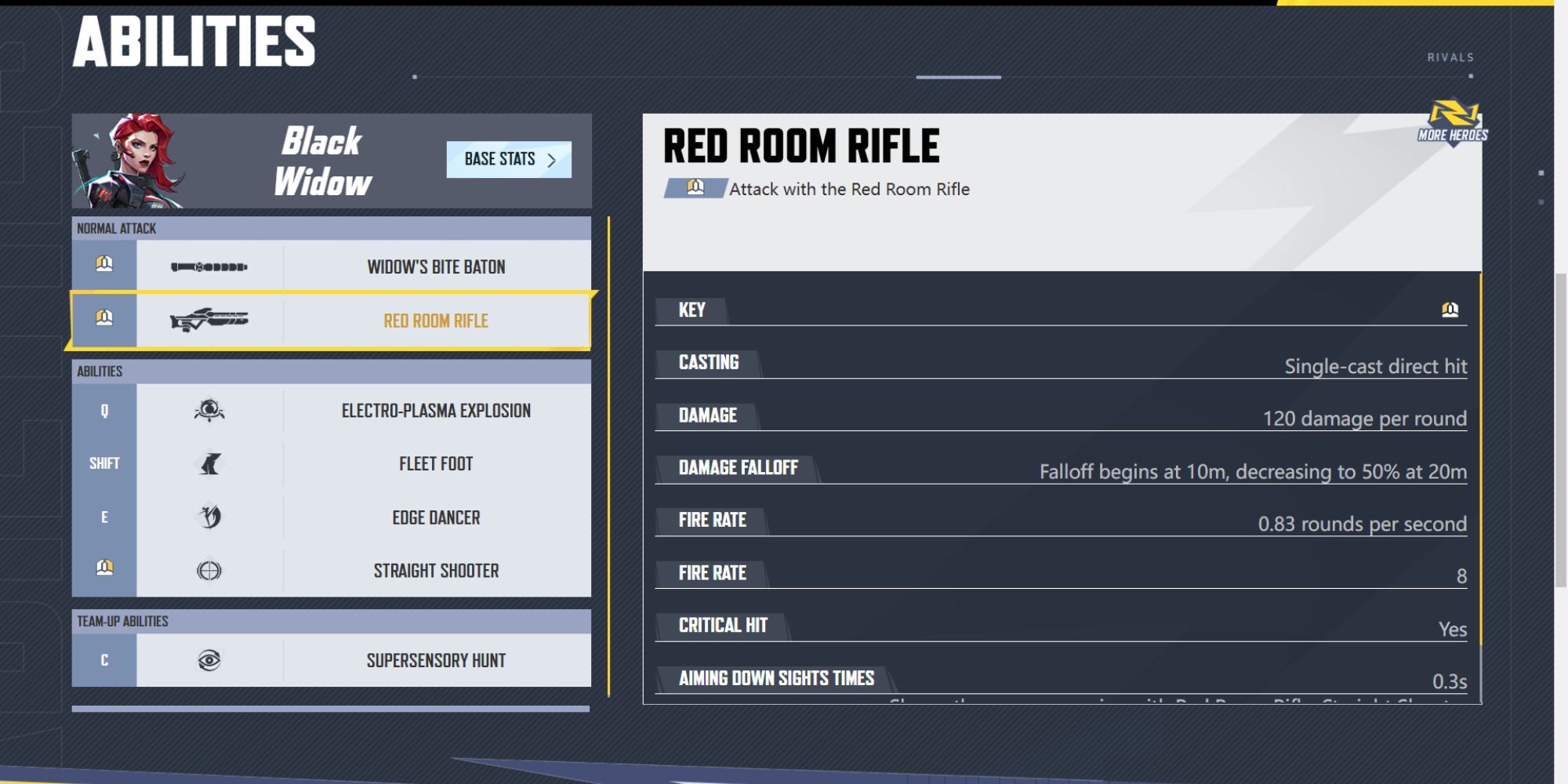
– Adjudication Rifle: The damage output from this rifle suffers a substantial decline, starting at 20 meters and plummeting by 70% at 40 meters. This necessitates careful positioning, as engaging from a distance can severely reduce damage—encouraging players to close the gap for maximum effectiveness.
– Deliverance Shotgun: In direct contrast, this weapon is powerful at close range, with damage falloff beginning at 8 meters and decreasing to 40% at 15 meters. The shotgun’s design inherently favors close-quarters engagements, aligning well with The Punisher’s style of confrontation.
Spider-Man
– Primary Fire: Like The Punisher, Spider-Man’s primary fire suffers damage falloff at 20 meters, decreasing to 50% effectiveness at 40 meters. His role as a nimble combatant is echoed here, as players are encouraged to maintain close to medium-range combat.
– Web-Cluster: This ability shares the same damage falloff characteristics as Spider-Man’s primary fire, further emphasizing the need for proximity in engagements.
General Trends
Across the roster of heroes, clear patterns emerge regarding their damage scaling:
– Vanguards: Typically embodying tanky roles, vanguards often feature abilities with minimal to no falloff, making them resilient frontline fighters capable of absorbing damage while dealing consistent output.
– Duelists: These heroes often exhibit more pronounced falloffs, compelling them to engage enemies at medium ranges where their combat style can shine without significant damage reduction.
– Strategists: Their range scaling can vary greatly, influenced by whether they lean towards support roles with healing or buffs or focus on damage dealing from a safe distance.
Strategic Implications
Recognizing the falloff mechanics is paramount for effective gameplay:
– Hero Positioning: Heroes like Iron Man and Spider-Man must stay within their optimal ranges to ensure every ability can unleash its full potential. Misjudging distances can lead to considerable damage loss.
– Engagement Tactics: For The Punisher, tactical positioning is critical; he should engage effectively to maximize his shotgun’s damage, while leveraging the rifle’s strengths in a controlled environment.
– Team Dynamics: Successful team compositions will often integrate heroes with complementary abilities, enabling teams to counteract individual range limitations. For instance, pairing heroes with severe falloffs alongside long-range attackers such as Doctor Strange can create a balanced approach to both offense and defense.
Conclusion
Navigating the battlefield in Marvel Rivals requires a strategic understanding of each hero’s damage falloff and range mechanics. By choosing heroes that align with one’s playstyle and team strategy and by recognizing the importance of engagement distances, players can enhance their effectiveness in every match. Understanding when to strike, retreat, or hold position can ultimately turn the tide in favor of those prepared to meet the challenge of optimizing hero potential.
Leave a Reply