
To effectively manage your party during challenging combat encounters in Dragon Age: The Veilguard, you’ll want to adopt a strategic approach that leverages the game’s combat mechanics and the unique abilities of your companions. Below is a comprehensive guide aimed at maximizing your effectiveness in battle.
1. Companion Selection and Party Composition
In The Veilguard, you’re limited to bringing only two companions into combat, making it essential to choose wisely. Aim for a balanced team composition, taking into account the following roles:
– Tank: A sturdy companion who can absorb damage and protect the rest of the party.
– Damage Dealer: A character that excels in dealing high levels of damage, whether through melee or ranged attacks.
– Support: A healer or a character with crowd control abilities to assist in managing the flow of combat.
Example Composition:
– Rook (You): A melee rogue adept in agility and quick strikes.
– Companion 1: A tanky warrior with high health and defensive capabilities.
– Companion 2: A mage or necromancer providing ranged damage options and crowd control spells.
2. Understanding the Ability Wheel
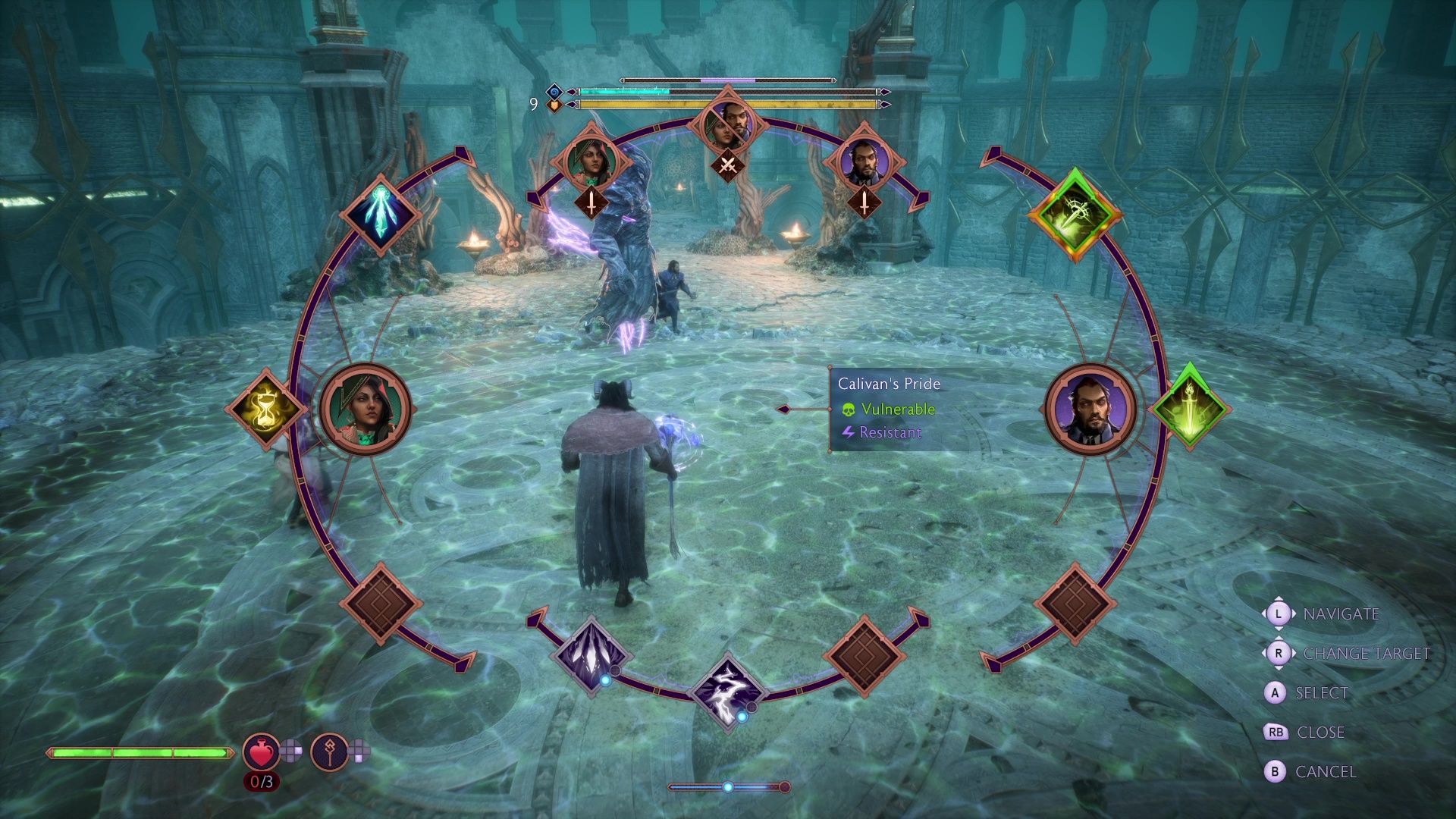
The Ability Wheel is pivotal in The Veilguard, allowing you to pause combat and strategize your next moves. Utilize this feature to:
– Plan Coordinates Attacks: Choose abilities for yourself and your companions to create powerful combos that exploit enemy weaknesses.
– Monitor Cooldowns: Keep track of ability cooldowns to ensure a constant flow of action and resource management.
3. Directing Companions
While you cannot fully control your companions, you can effectively issue commands through the Ability Wheel. Consider:
– Specific Skills: Order companions to use their most effective abilities at the right moment.
– Combos: Coordinate between your abilities and those of your companions to maximize damage and efficacy in combat.
4. Leveraging Environmental Advantages
The battlefield is often filled with opportunities to gain an upper hand:
– Use Terrain: Look for chances to use the environment, such as pushing enemies off ledges or using explosive barrels.
– Destroy Obstacles: Breaking barriers may grant you strategic routes or trigger traps against enemies.
5. Managing Health and Resources
Health management is crucial:
– Health Potions: Use health potions found in green pots distributed throughout the map to keep your party alive.
– Skill Cooldown Awareness: Since there’s no mana system for the player, focus on timing your abilities rather than managing a resource pool.
6. Adapting to Enemy Advantages
Be observant regarding enemy strengths:
– Combat Strengths: Some foes may possess increased attack speeds or special resistances. Use the Ability Wheel to analyze these advantages and adapt your strategy accordingly.
7. Stagger System
Utilize the stagger mechanic:
– Build Vulnerability: Use heavy attacks and specific abilities to increase the stagger meter on enemies, making them more susceptible to subsequent damage.
– Devastating Takedowns: Once the stagger meter is filled, follow up with powerful strikes to maximize the damage output.
8. Proactive Defense and Positioning
Effective positioning and defense can significantly reduce damage taken:
– Timing Defensive Moves: Block and parry at the right moments to mitigate incoming damage.
– Strategic Location: Position yourself and your companions in advantageous spots to control the flow of battle and avoid being surrounded.
Conclusion
By carefully selecting your companions, utilizing the Ability Wheel for strategic planning, capitalizing on environmental factors, and managing health effectively, you can navigate difficult combat scenarios in Dragon Age: The Veilguard. Adapt your strategies based on your enemies’ strengths and coordinate with your party to come out victorious. With practice and keen observation, you’ll become a master of managing your party in even the most challenging encounters.





Leave a Reply