
Overview of the Skill System in Dragon Age: The Veilguard
In Dragon Age: The Veilguard, the skill system provides a deep and engaging way for players to tailor their characters’ abilities and playstyles. This complexity serves to enhance the gameplay experience, allowing for diverse strategies and character development.
Skill Types
The game categorizes skills into four distinct types:
– Traits: These skills modify existing abilities, enhancing their effects or changing how they work in combat.
– Passives: These skills offer persistent stat boosts, providing benefits that apply continuously rather than during specific actions.
– Abilities: These are the active skills that players utilize during combat, allowing for a variety of strategic maneuvers.
– Ultimates: These represent powerful finishers that can drastically turn the tide of a battle when executed.
Skill Trees
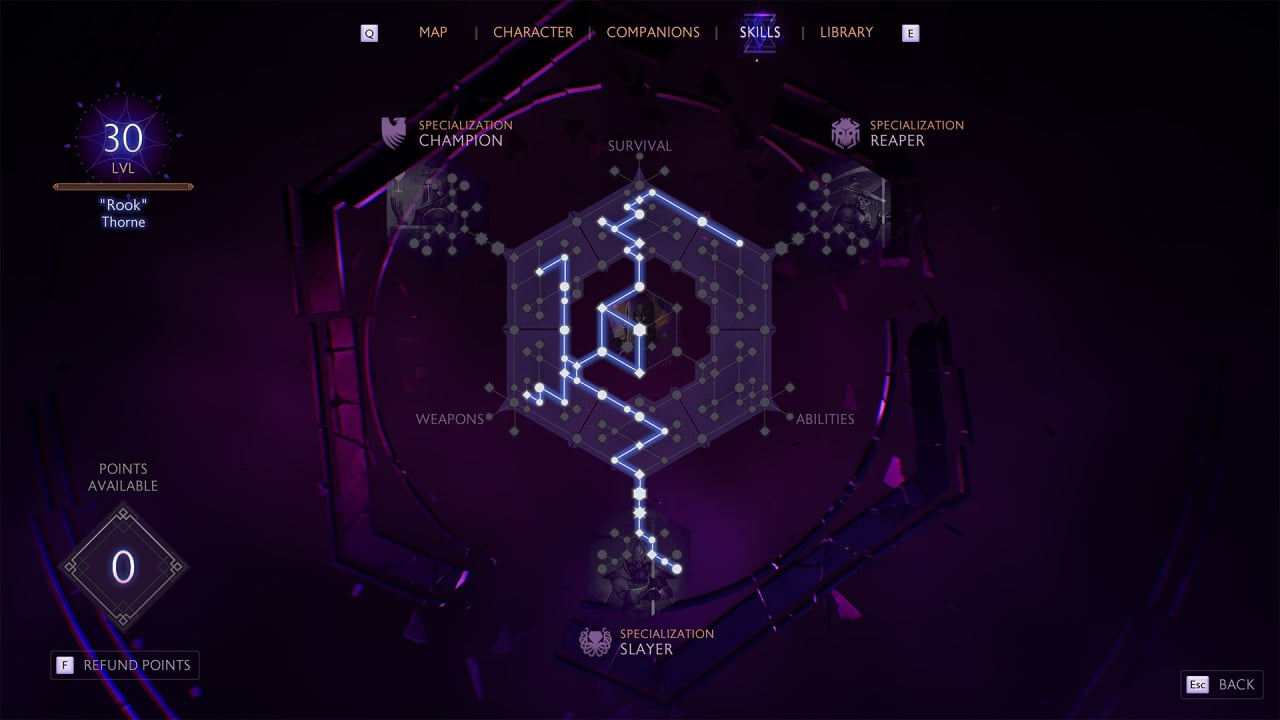
Every class features a unique skill tree where players can allocate skill points obtained through leveling up, locating codex entries, and vanquishing foes. The skill trees are composed of various shapes that denote different skill types, adding visual clarity to the progression system:
– Large Circle: Represents core class skills and weapon proficiencies.
– Diamond: Signifies abilities that can be equipped in ability slots during encounters.
– Medium Circle: Denotes major passive bonuses or significant upgrades to abilities.
– Small Hexagon: Indicates traits that modify existing abilities.
– Small Circle: Features minor passive upgrades or small stat boosts.
Class-Specific Skill Trees and Abilities
Warrior
The Warrior skill tree is distinctly structured into three clusters: Survival, Weapons, and Abilities. Notable abilities include:
– Blight Bane: A defensive move that also inflicts damage.
– Cleaving Strike: An area attack that hits multiple enemies.
– Deadly Ground: A zone control ability that enhances survival.
– Grappling Spear: A tactical ability that allows for crowd control.
At level 20, Warriors can choose a specialization to further define their role:
– Champion (Grey Wardens): Focuses on defense, excelling with sword and shield.
– Reaper (Mourn Watch): Emphasizes a lifesteal mechanic with aggressive play.
– Slayer (Lords of Fortune): Masters two-handed weapons for powerful attacks.
Mage
Mages wield formidable magical abilities, including:
– Fade Strike: An ability that provides extraordinary mobility.
– Mind Blast: Knocks back foes and disorients them.
– Perfect Cast: Enhances the effectiveness of spells.
They can specialize in:
– Death Caller (Mourn Watch): Masters the art of necromancy and dark magic.
– Evoker (Shadow Dragons): Focuses on harnessing elemental forces.
– Spellblade (Antivan Crows): Combines melee attacks with magical enhancements.
Rogue
Rogues focus on agility and cunning, with abilities such as:
– Fade Reflex: Allows dodging attacks while slowing time.
– Tumbling Blades: Executes a sequence of attacks following evasive rolls.
They can pursue one of several specializations:
– Duelist (Antivan Crows): Excels in dual-wielding and defensive maneuvers.
– Saboteur (Lords of Fortune): Masters traps and devices for area control.
– Veil Ranger (Veil Jumpers): Specializes in long-range archery, striking from afar.
Companion Progression
Companions in The Veilguard each have their own skill trees that allow for tailored character progression, fostering synergy with the player’s chosen build. By building relationships and increasing their relationship level, companions gain skill points that can be allocated to enhance their capabilities.
Conclusion
The skill tree system in Dragon Age: The Veilguard presents a detailed and flexible framework for character customization and combat strategy. Each class’s specialization options cater to a variety of playstyles, enabling players to craft unique builds that harmonize with their companions and overall group tactics. The intricate design fosters a personalized adventure, encouraging players to explore different abilities and approaches to the challenges they face in the game.




Leave a Reply