
Step-by-Step Guide to Connecting Chapters in The Rise of the Golden Idol
Connecting events from different chapters in The Rise of the Golden Idol requires careful analysis of characters, objects, and overarching themes throughout the narrative. This detailed guide will help you navigate these connections effectively.
—
1. Identify Key Characters
– Character Analysis:
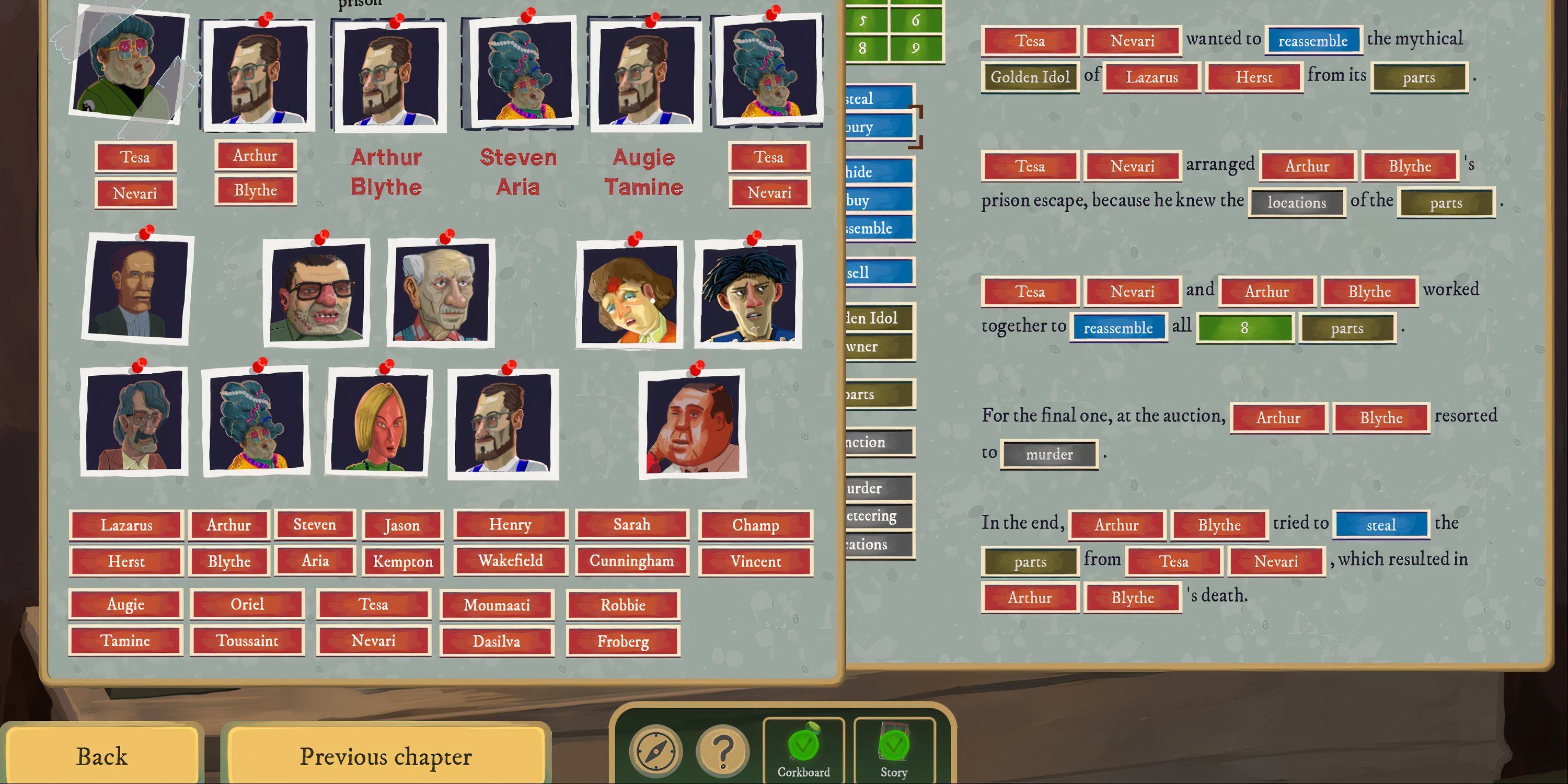
– Focus on recurring characters such as Tesa Nevari and Arthur Blythe.
– Tesa Nevari consistently attempts to reassemble or protect the Golden Idol, serving as a pivotal figure throughout the narrative.
– Arthur Blythe, involved in various criminal activities, adds complexity to the story. Track their appearances, actions, and development in each chapter.
– Character Relationships:
– Pay attention to how their relationships evolve between chapters and how they influence each other’s motivations and decisions.
—
2. Follow the Golden Idol’s Trail
– Central Importance:
– The Golden Idol is the central object that drives the plot. Understanding its significance to each character is crucial.
– In Chapter 2, explore the idol’s history and how different characters are linked to its parts and power.
– Reassembly Motif:
– Reassembly of the idol in later chapters emphasizes its thematic importance. Make note of any clues regarding its components throughout the chapters.
—
3. Understand the Harmony Foundation’s Role
– Key Location:
– The Harmony Foundation serves as a backdrop for various critical events.
– Familiarize yourself with the rituals and proceedings that occur here—these often connect characters from different contexts and contribute to the broader themes of empathy and the eradication of hatred.
– Recurring Themes:
– Themes associated with the Foundation may resonate in characters’ arcs, highlighting moral dilemmas and interconnections.
—
4. Use Visual and Text Clues
– Visual Identification:
– Pay attention to visual identifiers such as facial markings, clothing styles, or unique items that signal character continuity across chapters.
– Textual Analysis:
– Carefully analyze dialogues, notes, and other text evidence that provide insight into characters’ backgrounds and their connections to the events unfolding in each chapter.
—
5. Piece Together Timeline and Motives
– Chronological Awareness:
– Events in chapters may not unfold in a linear fashion, so developing a mental or physical timeline helps clarify the sequence of events and how earlier actions influence later developments.
– Motivation Mapping:
– Recognize that characters’ motivations often stem from past experiences and interactions, tying their actions to prior incidents, especially those involving the Golden Idol or the Harmony Foundation.
—
Example Connections Across Chapters
Chapter 2: The Pursuit
– Summary: This chapter delves into the Golden Idol’s history and involves characters like Tesa Nevari and Augie Tamine.
– Connections:
– Tesa’s exploration of the idol set the stage for her later encounters in subsequent chapters, particularly her objective to reassemble the idol.
Chapter 3: The Machine
– Summary: Expands on themes from Chapter 2, introducing additional characters like Bruce Myson and Alex Remington, and examines the Harmony Foundation’s procedures.
– Connections:
– The motivations and actions observed here will clarify character behaviors in later chapters. Pay attention to how the foundation’s workings affect different characters’ fates.
—
Using the Corkboard
– Visual Organization Tool:
– The Corkboard assists in visually aligning key characters and events. Use it to connect names to faces, track aliases, and catalog clues.
– Regular Updates:
– As new details come to light, continuously revise and update your Corkboard to ensure a coherent understanding of the narrative flow.
—
By diligently following these strategies and maintaining a keen eye on character interactions, thematic elements, and narrative clues, you can successfully link events across different chapters in The Rise of the Golden Idol. This interconnected understanding enhances your overall experience in the game and enriches the storytelling.


Leave a Reply