
In Armored Core VI, the mechanic of impact damage significantly influences combat strategies by directly engaging with the Attitude Control System (ACS) stagger mechanic. Below is a comprehensive breakdown of how impact damage interacts with various enemy types and the associated build optimization strategies:
—
Core Mechanics of Impact Damage
1. Stagger Accumulation:
– Impact damage is crucial for filling an enemy’s ACS stagger meter. When this meter reaches its threshold, the enemy becomes staggered, resulting in a marked increase in the damage they take from subsequent hits (a multiplier ranging from 2x to 2.5x) [2][4].
– The weapon’s impact stats determine the rate at which this meter fills; thus, high-impact weapons such as shotguns or bazookas are particularly effective for quickly staggering foes [1][2].
2. Direct Hit Adjustment (DHA):
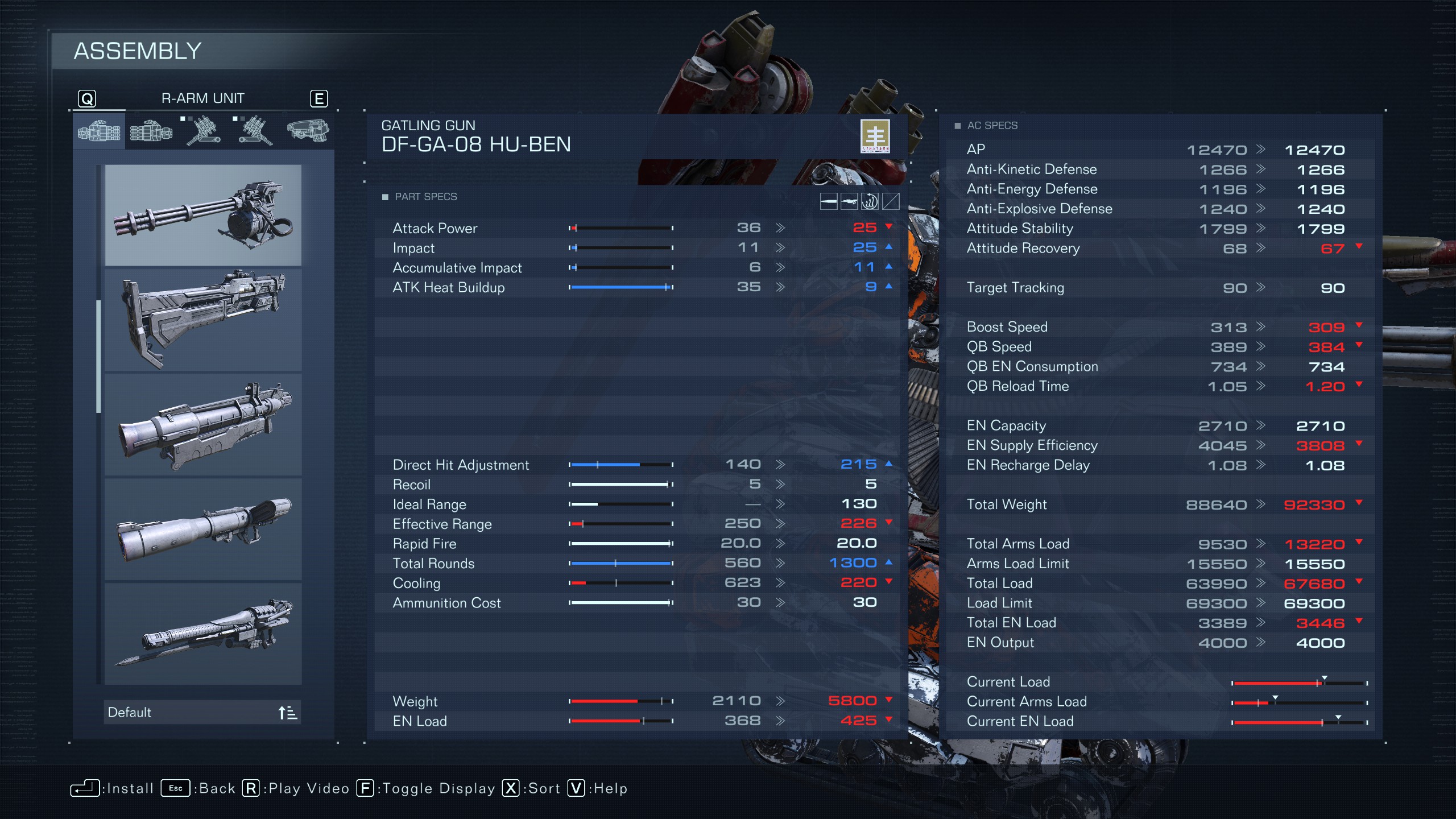
– After an enemy is staggered, certain weapons benefit from a hidden stat known as Direct Hit Adjustment (DHA), which amplifies their damage output. For instance, a handgun might achieve approximately 383 damage against a staggered target, compared to just 163 against a non-staggered adversary with a DHA multiplier of 2.25x [2].
– Kinetic weapons like rifles often lack higher DHA values, while explosive weapons and melee attacks tend to possess enhanced DHA capabilities [2][4].
—
Enemy Type Considerations
– Heavy/High-Armor Enemies:
– These enemies necessitate a sustained application of high-impact damage to stagger. Preference should be given to weapons such as plasma launchers or pile bunkers, which deliver significant burst impact damage [4][5].
– A prime example includes tetrapod MTs or boss ACs, which can be effectively subdued by staggering them to expose weak points.
– Fast/Agile Enemies:
– Engaging fast-moving targets requires the use of high-impact tracking weapons, such as homing missiles, or rapid-fire kinetic options like Gatling guns, to effectively apply pressure to their ACS [5].
– Notably, these lightweight ACs demonstrate quicker recovery from stagger, necessitating sustained damage and pressure.
—
Build Optimization Strategies
Stagger-Focused Builds
– Weapon Pairing:
– An effective strategy involves pairing a high-impact weapon (e.g., Songbirds grenade launcher) with a weapon possessing a high DHA multiplier, such as a laser lance or pile bunker [2][4].
– OS Tuning Upgrades:
– Invest in Direct Hit Modifier and ACS Strain upgrades to maximize the efficiency of stagger generation [2][5].
– Core Parts:
– Select core parts such as high firearm-spec arms (e.g., VE-46A) for improved tracking and utilize high-energy load generators to power energy-intensive stagger weapons effectively [5].
Counterplay Against Stagger
– Recovery Speed:
– Equip cores and leg parts with high ACS recovery rates (e.g., VP-424) to reduce the duration of stagger events and enhance survival rates during combat [5].
– Defensive Play:
– Implement quick-boost-heavy builds to evade incoming high-impact projectiles consistently, or equip pulse armor to negate incoming stagger damage [5].
—
Key Interactions
– Assault Boost:
– Utilizing an assault boost to collide with enemies can increase kinetic impact; though this mechanic remains unverified within gameplay, it posits an interesting dynamic based on both speed and collision [3].
– Energy vs. Kinetic:
– Energy weapons generally inflict lower impact damage but excel in sustained damage dealings, whereas kinetic weapons are tailored more towards staggering opponents [1][4].
– Coral Weapons:
– These unique weapon types leverage high burst damage potential, often combined with extreme DHA values (e.g., Coral Oscillator), making them formidable in stagger-focused encounters [4].
By optimizing your Armored Core’s weaponry, tuning, and mobility to maximize impact damage mechanics, players can establish a competitive edge in both PvE and PvP scenarios, ultimately leading to more efficient and effective combat engagements.



Leave a Reply