
In “Alan Wake II,” the Case Board system offers players a unique and immersive way to engage with the game’s narrative and investigative mechanics. Below is a structured guide detailing how to effectively use this system for successful clue management and case solving.
Understanding the Case Board
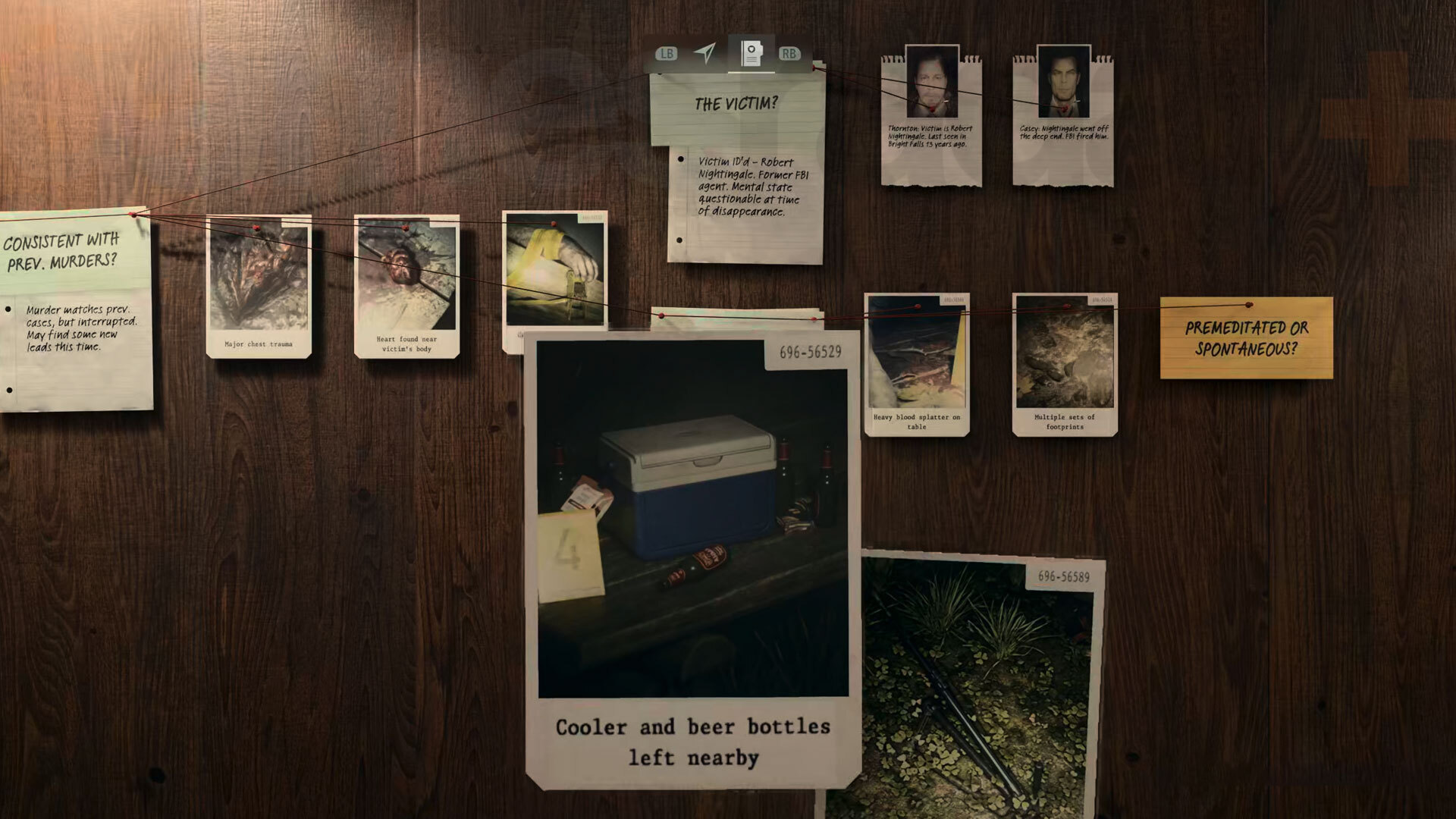
The Case Board, referred to as the “Mind Place” in-game, serves as a crucial interface for organizing evidence and clues as players take on the role of Saga, the FBI agent. This interactive space features:
– Notes and Objectives: Tracks your current tasks and findings.
– Maps: Acquired as you explore, aiding in navigation.
– Personnel Files: Information about characters involved in your investigation.
– Evidence and Clues: A collection of gathered data integral to your case.
How to Use the Case Board Effectively
1. Gather Physical Evidence
– Explore crime scenes thoroughly, examining not just the obvious items but also subtle details in the environment.
– Look for highlighted locations that signify collectible clues, such as:
– Footprints: Indicating someone’s presence.
– Wounds: Noting how victims were harmed.
– Objects: Items left behind or removed from scenes that can provide context or motive.
2. Add Clues to the Case Board
– After collecting clues, enter the Mind Place and navigate to your Case Board.
– Drag and Drop: Place each clue onto the relevant prompt/question on the board to visualize connections.
– If uncertain about where to place clues, hover over questions to see indicators that may suggest further evidence gathering or NPC interactions.
3. Make Deductions
– Each clue placed can help answer investigative questions (e.g., determining the manner of death).
– By connecting clues effectively, you may deduce new insights; for instance, correlating bruising, wounds, and missing objects can reveal the nature of the crime.
– Solving questions will not only advance your understanding but will also unlock new leads and objectives within the game.
4. Profile Characters and Talk to NPCs
– Use the profiling feature to analyze individuals tied to your case.
– Engaging NPCs can be pivotal in filling knowledge gaps regarding suspects or witnesses, thereby aiding your deductions on the board.
5. Follow Updated Goals
– After resolving any question, check your board for updated objectives, as these will steer the next stages of your investigation (e.g., seeking new evidence or revisiting previously explored locations).
Tips for Effective Clue Management
– Regularly Revisit the Case Board: As new clues are discovered, return to reorganize and reassess connections that may now be apparent.
– Leverage Hover Text: Frequently use the hover feature to clarify if you can answer a prompt or if further exploration is necessary.
– Identify New Lines of Inquiry: Solving existing clues may often reveal new leads, prompting further investigative exploration.
– Combine Logic with Game Mechanics: The game is designed to avoid overly cryptic clues. Use the intuitive hints provided by the Case Board to guide your next steps.
Example: Piecing Together a Case
1. Examine the Crime Scene: Collect various pieces of evidence (e.g., footprints, bruising on the victim, and items like a heart).
2. Add Clues to the Board: Properly match and arrange these clues with their corresponding questions on the Case Board.
3. Make Deductions: Determine critical insights (e.g., the killer interrupted) which leads to updated objectives for your investigation.
4. Follow Up: Newly outlined tasks might involve profiling a suspect or checking out a suggested location to further your inquiry.
Summary Table: Clue Management Steps
| Step | Action | Outcome |
|—————————|———————————————–|———————————–|
| Gather clues | Examine crime scene, interrogate NPCs | Obtain vital physical and verbal information |
| Add to Case Board | Organize clues by dragging them to relevant prompts on the board | Clarified structure and connections within your case |
| Make deductions | Solve questions by matching clues | Discover new leads and adjust objectives |
| Update goals | Monitor the board for new investigative tasks | Keep the progression of the story energized |
By adhering to these guidelines, players can master the Case Board mechanic in “Alan Wake II,” enhancing their ability to piece together clues and unravel the intricacies of the story. Happy investigating!




Leave a Reply