
Environment Design and Speedrunning Strategy in Neon White
Neon White merges fast-paced first-person shooting with seamless parkour mechanics, creating a dynamic and visually stimulating environment that profoundly influences speedrunning strategies. The game is designed with distinct strata—White, Red, and Green—each presenting unique challenges and aesthetics. This breakdown elaborates on how the environment shapes speedrunning techniques and tactics.
—
Core Principles of Environment Design
1. Readability and Efficiency:
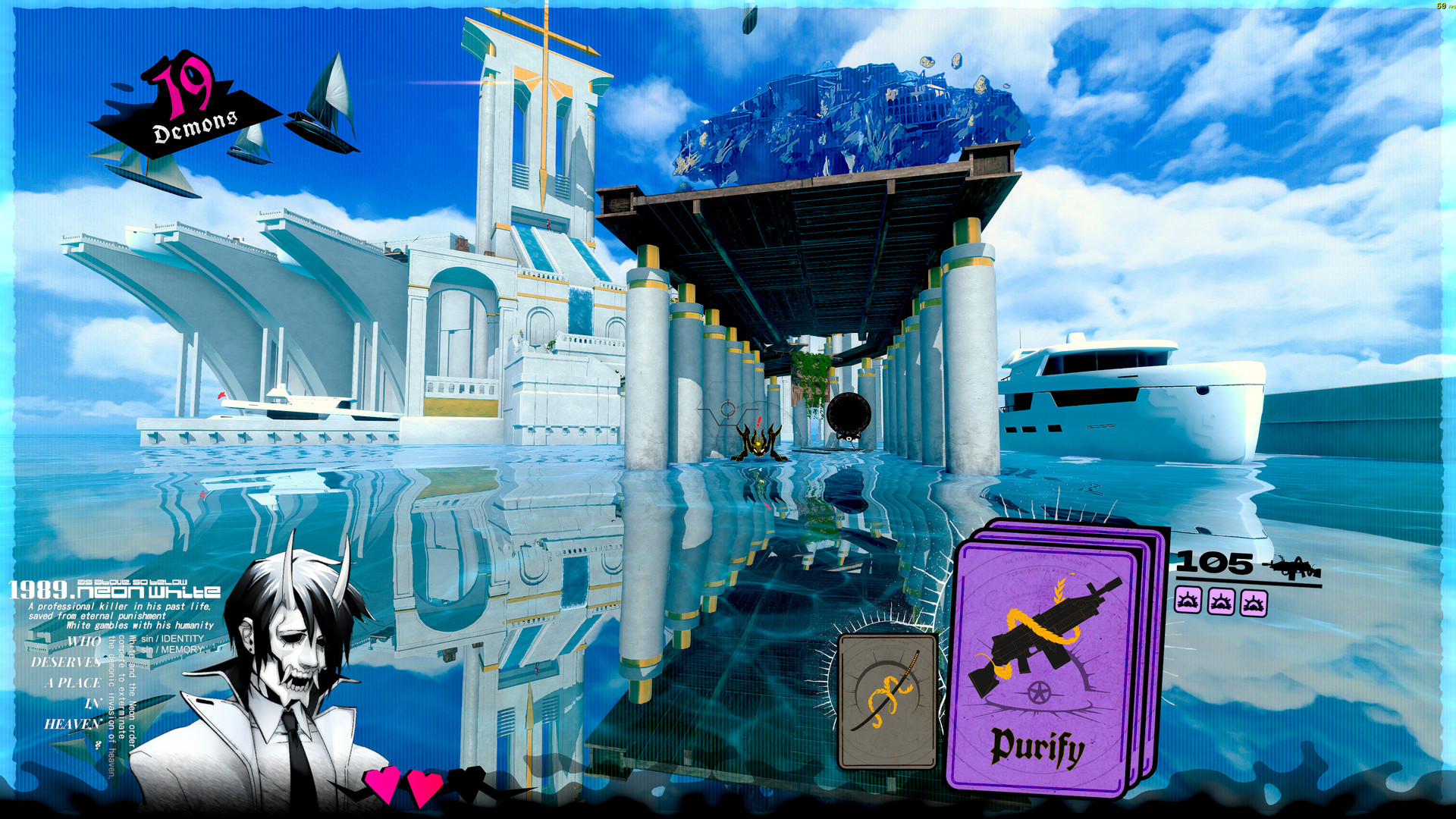
Levels in Neon White are designed for immediate visual clarity. This ensures players can quickly comprehend layouts and routes even when moving at high speeds. A distinct color palette, particularly the predominance of white in early levels, aids in creating a clear and engaging visual experience. Such design promotes quick learning and adaptive gameplay, essential traits for speedrunners who must maximize efficiency in traversing each level.
2. Modularity and Hand-Designed Shortcuts:
The levels utilize modular kits that encourage efficient iteration and a cohesive aesthetic throughout the game. Embedded within these designs are both intentional shortcuts and spaces that invite improvisation. This combination fosters an environment that rewards players for creativity and mastery, aligning well with the fast-paced nature of speedrunning.
3. Visual Themes by Stratum:
Each stratum in the game is characterized by distinctive visual themes that guide player interactions. The White stratum emphasizes simple lines and open spaces conducive to straightforward movement, while reds and greens introduce more complex hazards and vertical elements. These thematic cues influence player strategy, often leading to variations in movement techniques required to tackle challenges effectively.
—
Influence on Speedrunning Strategies
1. Proficiency and Familiarity:
Levels are initially easy to conquer but often mislead players, encouraging exploration and recompilation. This is intrinsic to speedrunning, where familiarity breeds quicker times as players learn optimal routes and shortcuts. A depth of knowledge about level design becomes a crucial asset, allowing speedrunners to find the fastest paths through practice.
2. Shortcuts and Improvisation:
With the intentional inclusion of developer-planned shortcuts and potential for player improvisation, speedrunning becomes a multidimensional experience. Players can not only execute established optimized paths but also discover new routes and quick maneuvers. Utilizing card abilities creatively to navigate obstacles showcases a hybrid strategy that weighs proactive exploration against learned pathways.
3. Collectibles and Alternate Objectives:
Upon completing levels, collectible gifts appear, enticing players to revisit them. These collectibles require nuanced understanding and mastery of the environment, thus reinforcing speedrunning as players refine their runs, exploring levels from varied perspectives. The pursuit of these goals adds an extra layer to gameplay, fostering both speed and thoroughness in exploration.
4. Stratum-Specific Mechanics:
The unique characteristics of each stratum force players to adapt their strategies beyond mere speed. For instance, levels in a vertical stratum may necessitate aerial agility and precision, while others encourage swift ground-based maneuvers. Players must analyze and tailor their tactics, balancing movement techniques with the specific nuances of each environment.
—
Summary Table: Environment Design and Speedrunning
| Stratum Feature | Influence on Speedrunning Strategy |
|————————|——————————————————–|
| Readable, clean layouts | Quick navigation and learning of routes |
| Modular construction | Facilitates shortcuts and consistent visual coherence |
| Distinct visual themes | Offers cues for hazards/mechanics, guiding adaptation |
| Developer shortcuts | Encourages the discovery of “intended” fast routes |
| Space for improvisation | Supports unique and creative player strategies |
| Collectibles | Promotes mastery, replayability, and diverse objectives |
—
Conclusion
Neon White’s environment design—characterized by readability, modularity, and thematic diversity—significantly impacts speedrunning strategies. Success hinges not only on fast execution of pre-defined paths, but on the player’s ability to exploit the game’s rich environmental features, uncover shortcuts, and adapt strategies unique to each stratum. Mastery of these elements transforms speedrunning into a comprehensive pursuit of both skill and creativity, embodying the essence of Neon White’s design philosophy.


Leave a Reply