
In Baldur’s Gate 3, efficient resource management is essential, particularly before significant encounters, such as major boss fights. The game offers two major resting options: Full Long Rest and Partial Long Rest, each serving different strategic needs based on your current situation.
Full Long Rest
Opting for a Full Long Rest is typically the best way to prepare your party for daunting challenges. Here’s what it entails:
– Complete Health Restoration: Every party member’s hit points are fully restored, ensuring that you’re at maximum capacity to face threats.
– Full Resource Recovery: You regain all spell slots, class features (like Action Surge for Fighters, Ki points for Monks, Channel Divinity for Clerics, etc.), as well as charges on items that require a long rest to refresh.
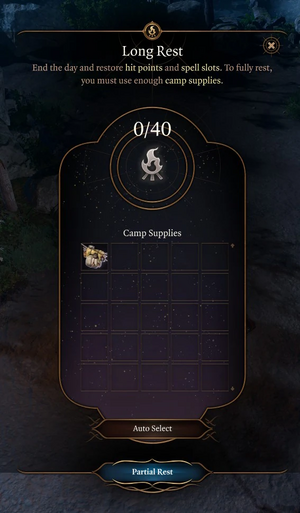
– Camp Supplies Requirement: To initiate this rest, you’ll need 40 camp supplies. Managing this resource is crucial, especially as supplies can occasionally be scarce.
– In-Game Day End: The Full Long Rest concludes the in-game day, allowing for added interactions like dialogue, party management, and character respecialization, which can help refine your strategy.
– Total Reset: This rest option leaves you fully prepared with health, spells, and abilities restored, making it ideal for facing tougher opponents.
Partial Long Rest
On the other hand, a Partial Long Rest is an alternative that can serve specific needs:
– Partial Healing: This option restores only half of each party member’s hit points, which can be useful if some healing is needed but not all.
– Limited Spell Slot Recovery: You also regain only half of your spell slots, which might suffice for some engagements but not for major fights unless you’re already mostly prepared.
– Less Stringent Resource Management: While still requiring camping, this option doesn’t specify an exact number for camp supplies, allowing for some flexibility if you’re low on resources.
– Ending the Day: Similar to a Full Long Rest, it concludes the day, enabling a transition without a complete refresh.
– Strategic Use: This option is particularly useful if you need to conserve camp supplies or want to progress the in-game timeline without committing to an extensive recovery.
Key Differences and Resource Management Implications
| Feature | Full Long Rest | Partial Long Rest |
|—————————-|———————————–|———————————|
| Hit Points Restored | 100% | 50% |
| Spell Slots Restored | 100% | 50% |
| Class Resource Restoration | Fully restored | Not fully restored / limited |
| Camp Supplies Required | 40 | Fewer/no explicit mention |
| Ends Day | Yes | Yes |
| Short Rest Count Reset | Yes | No |
Conclusion
In summary, while a Partial Long Rest can be a tactical choice for moderate healing and partial resource recovery, a Full Long Rest is generally the preferred method before a challenging fight. Its comprehensive restoration of health, spells, and abilities maximizes your party’s potential, offering you the best chance of success against formidable enemies. Properly evaluating your situation, including the availability of camp supplies and your party’s current health, will dictate the most effective choice for your adventures in Baldur’s Gate 3.



Leave a Reply