
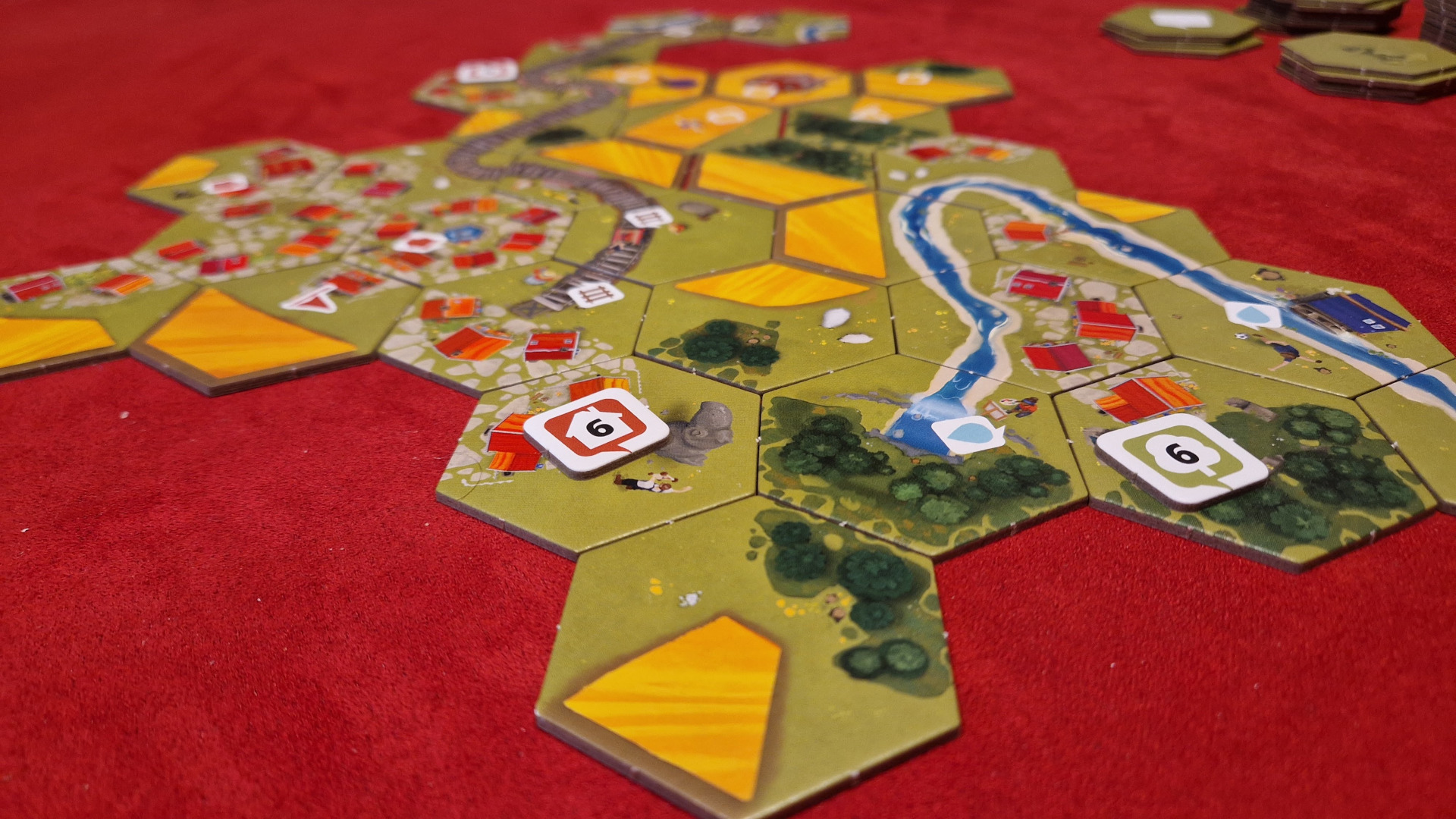
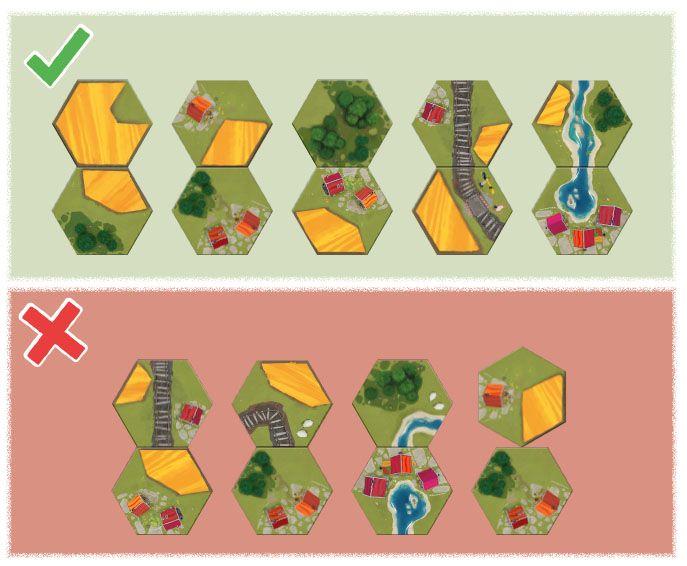
In Dorfromantik, the primary gameplay revolves around placing hexagonal tiles, where the fundamental mechanic requires players to ensure at least one edge of a new tile aligns with an adjacent tile. This matching principle underpins the scoring system, with perfect placements—where all six edges align—yielding the highest rewards and enhancing potential strategies for tile management and placement optimization.
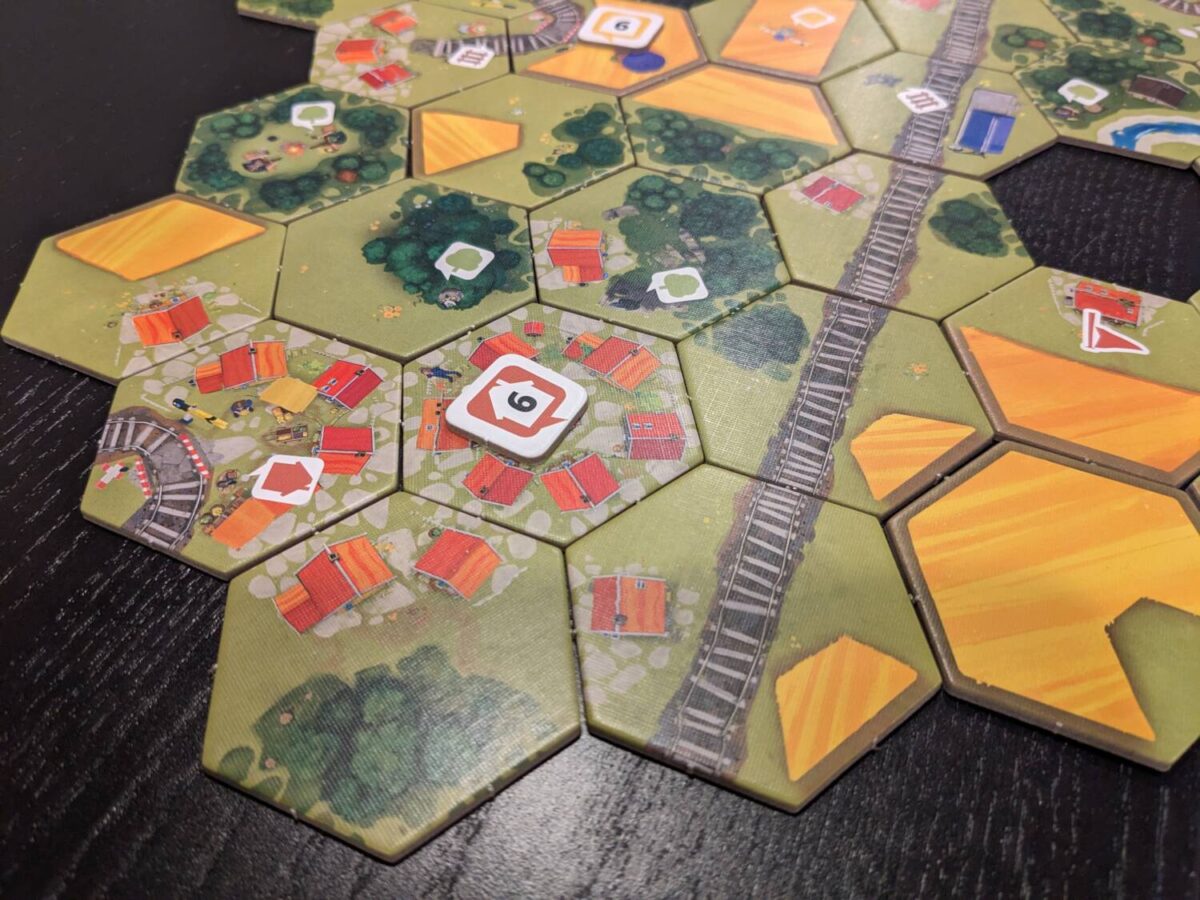
While the core rules of tile placement remain consistent throughout the different game modes, variations emerge primarily through additional gameplay elements introduced by quests and biomes. These elements elevate the strategic depth of tile placement beyond mere edge matching. Players often encounter tasks linked to specific objects on the tiles that necessitate targeted placements—such as creating connections for rail lines or formulating arrangements around structures like windmills. This design not only incentivizes thoughtful placements but also brings a dimension of strategic decision-making to the tile-laying experience.
Key Points on Tile Placement Mechanics:
1. Fundamental Gameplay Mechanic:
– Players are required to position new tiles adjacent to existing ones where at least one edge matches. This rule applies consistently across all game modes.
– Rotating tiles is allowed to achieve the best fit and optimize scoring, with perfect matches—aligning all edges—rewarding players significantly.
2. Influence of Quests and Biomes:
– Different biomes introduce unique tile types, each with specific layout requirements connected to quests. These can set certain placement goals, compelling players to prioritize specific configurations over simple edge matching.
– Completing these quests often leads to additional rewards in the form of extra tiles, thereby influencing both subsequent placements and overall strategy.
– The strategic landscape shifts, as players must balance the fundamental alignment mechanics with the need to meet these quest objectives.
3. Stack Management Implications:
– Effective tile placement extends gameplay by rewarding players with extra tiles, fundamentally altering their decisions about which tiles to select for future placements.
– Adhering to placement goals while managing the stack of available tiles becomes a core part of strategy in different modes.
Summary:
Though the mechanics of physically placing tiles remain unchanged across modes, the gameplay context—enriched by quests and biome-specific challenges—substantially influences player strategies. These additions create a nuanced approach to tile placement, incorporating not only the fundamental edge-matching rule but also the fulfilling of strategic objectives that dictate how players choose to lay their tiles. Therefore, while the basic tile placement mechanics are uniform, the strategic implications vary widely based on the mode and objectives at hand, leading to distinct gameplay experiences.
:strip_icc()/pic7861597.png)

Leave a Reply