
In Dorfromantik, successfully building expansive and coherent landscapes hinges on meticulous tile placement. Here’s an extensive guide to help you enhance your tile management skills, optimize your score, and maximize your enjoyment of the game through effective planning.
Key Strategies for Effective Tile Placement
1. Understanding Tile Edges and Matching
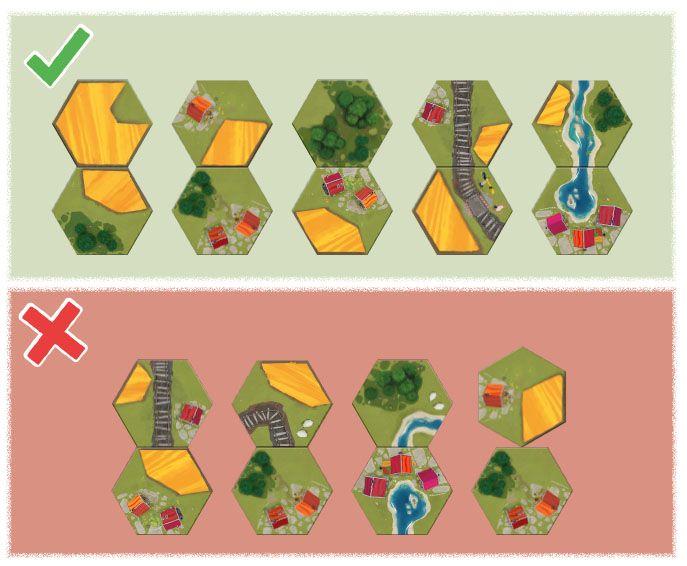
– Each tile comprises six edges, and the primary objective is to align these edges to match the terrain types (forest, water, village, etc.).
– Utilize the game’s visual cues: matching edges highlight in white while mismatches appear in pink. This feedback serves as a crucial guide during tile placement, ensuring you maximize connectivity.
2. Build Large Connected Areas
– Aim to concentrate the same terrain types (like forests or fields) into larger, connected areas rather than creating isolated patches.
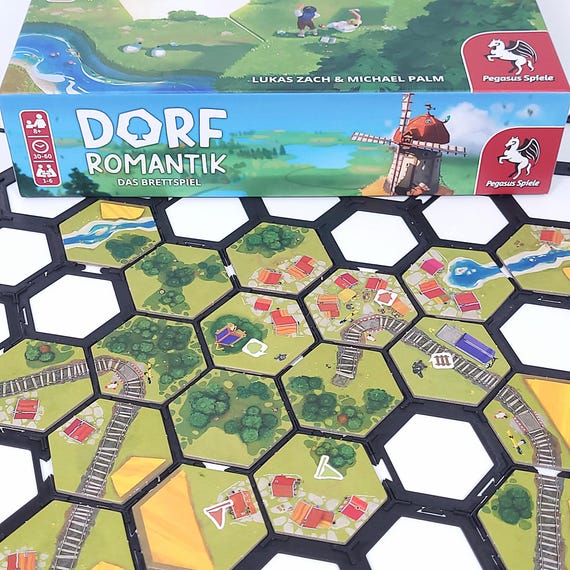
– This strategy not only enhances the aesthetic of your landscape but also facilitates fulfilling quests—such as growing a forest with a certain number of trees or connecting extensive railway tracks.
3. Utilize Previews and Plan Ahead
– Take advantage of the tile preview feature that displays your next few tiles. Planning where to place the current tile can significantly affect how smoothly you expand into future tiles.
– Spend time rotating and considering how each tile will align with upcoming ones to ensure continuity and coherence throughout your landscape.
4. Focus on Manageable Quests
– Quests can dictate your tile placement strategy. Some quests have explicit requirements (like a certain number of houses or fields), so prioritize those you can realistically complete.
– Don’t shy away from unattainable quests early in the game; failing these won’t penalize you but will refresh the quest pool, often offering easier objectives moving forward.
5. Strive for Perfect Placement
– Achieving a “perfect” placement—where all six edges of a tile match adjacent tiles—can yield a significant bonus of 60 points, along with an additional tile for your pool.
– While seeking perfect placements may be challenging, doing so can drastically enhance your overall score and gameplay longevity.
6. Leverage Color-Coded Quest Indicators
– Each tile’s edges feature color-coded indicators indicating where you can expand specific terrain types—red for houses, green for trees, yellow for fields, blue for water, and brown for railroads.
– This feature allows you to quickly ascertain the best growth directions to satisfy quests, guiding efficient and strategic placement.
Practical Tips for Optimal Gameplay
– Start New Clusters Wisely: Initiate new islands of a particular tile type only when you foresee a feasible connection to your main area. This foresight can help maintain the integrity of your landscape’s continuity.
– Maximize Matching Edges: Always place your tiles in a way that prioritizes edge matching while also focusing on quest completion objectives. The dual focus will help you keep expanding effectively.
– Experiment Before Finalizing: Avoid rushing the placement of tiles; take your time to rotate and experiment to find the most suitable orientation and position before locking in your choice.
– Selectively Complete Quests: Understand that not every quest needs to be fulfilled to progress. Focus instead on those that will provide the most significant benefits in terms of extending your gameplay and maximizing potential scores.
Conclusion
By implementing these strategies—building larger clusters, carefully matching edges, utilizing previews, managing quests strategically, and striving for perfect placements—you can significantly enhance your Dorfromantik experience. These guidelines will help you navigate the challenges of tile placement and allow for a more enriching game, leading to longer play sessions and higher scores. Enjoy crafting your beautiful landscapes!
-session-complete-score-(right).jpg)
Leave a Reply