
The Role of Political and Religious Climate in Pentiment
In Pentiment, the richly woven political and religious tapestry of 16th-century Europe shapes the narrative, the characters’ motivations, and the overarching investigation, creating a compelling and immersive gameplay experience. Set against the backdrop of significant upheaval, the game intricately combines historical reality with the personal journey of its protagonist, Andreas Maler.
Influence of the Political and Religious Climate
Religious Control and Social Tensions
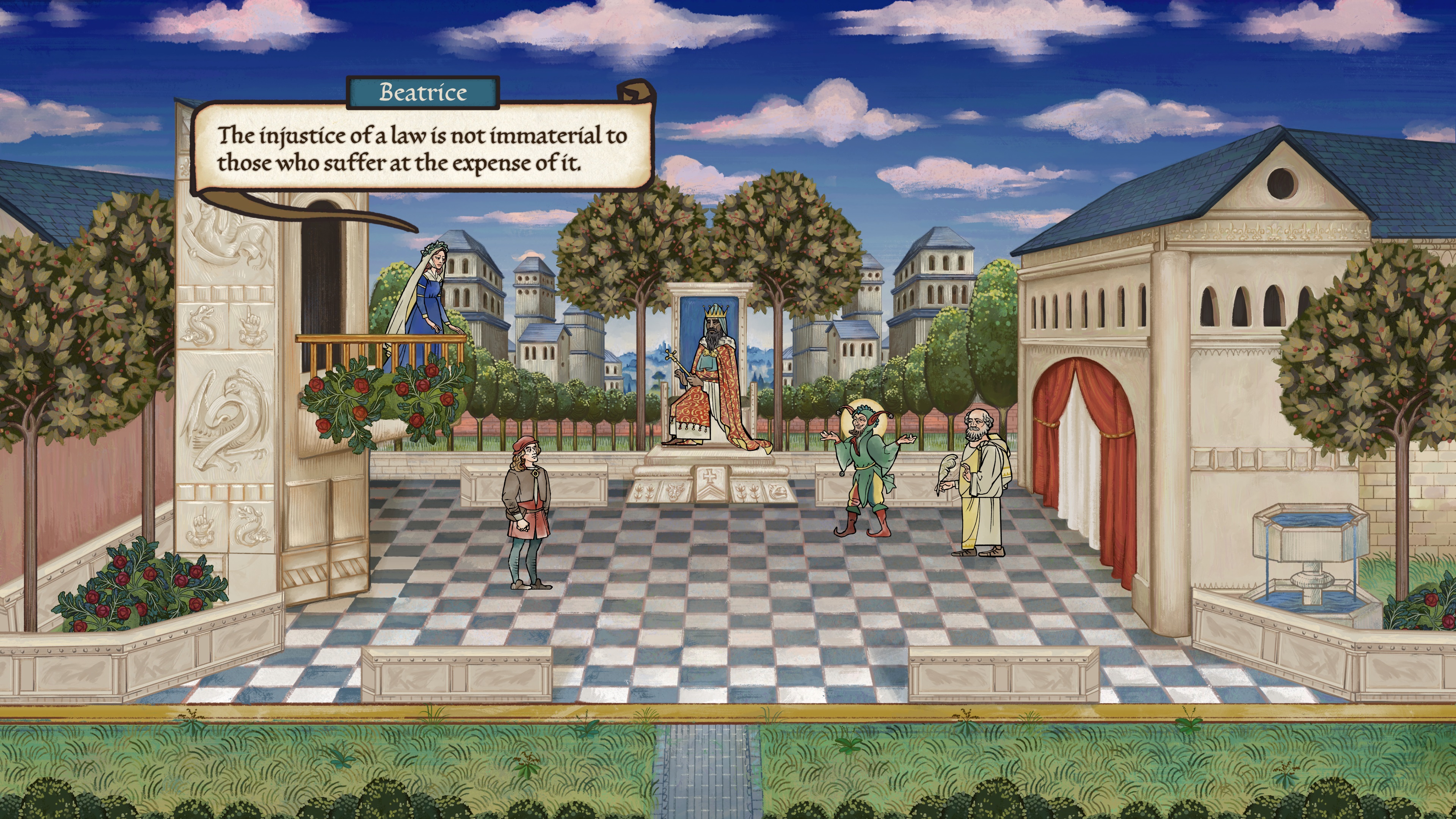
At the heart of Pentiment lies the struggle for power among the Abbey, the Duke, and a discontented populace weary of oppressive rule. The Abbey’s theocratic authority tightly regulates community life and morals, leading to friction with the Duke’s secular governance and the townsfolk’s increasing dissatisfaction. This power dynamic is pivotal in shaping the events of the game, as players must navigate these conflicting interests. Andreas finds himself caught in the middle, tasked with balancing the implications of upholding religious authority while addressing the grievances of the peasants. The choices players make can shift allegiances and determine the community’s trajectory, reflecting the ideological conflicts exemplified during the Reformation.
Class and Oppression
Pentiment boldly explores themes of class struggle and oppression, prevalent during this tumultuous time. The investigation reveals how marginalized groups, particularly the lower classes, are often scapegoated and readily accused, while the corrupt practices of the elite remain obscured by their power. Such social dynamics complicate the quest for truth, as uncovering certain facts may endanger established interests. The narrative emphasizes that the pursuit of justice is anything but straightforward when intertwined with systemic inequalities. This commentary not only enriches the story but also highlights the moral complexities inherent in a society governed by class divisions.
Ambiguity and Social Constructivism
One of the game’s most striking features is its embrace of ambiguity. While a “definite answer” regarding the orchestrator behind key events is hinted at, the game purposefully leaves certain elements unresolved. This mirrors the historical context of the period, where clear resolutions were rare and the truth was often a reflection of power dynamics. By adopting a social constructivist lens, Pentiment critiques how political and religious power can dictate narratives, suppress dissenting truths, and shape historical memory. Players are compelled to grapple with the multifaceted nature of truth, resonating with the complexities of historical inquiry.
Summary of Key Points
– The interplay of political and religious tensions between the Abbey, the Duke, and the townsfolk fabricates a rich backdrop that influences character interactions and the pursuit of justice.
– Social hierarchies significantly affect the investigation, with marginalized groups facing greater suspicion and the elite evading scrutiny, encapsulating the class disparities of the time.
– The intentional ambiguity in the narrative reflects the elusive nature of truth, shaped by political machinations and historical contexts.
– Player choices regarding whom to support—be it the established religious order or the restless populace—lead to meaningful impacts on the storyline, underscoring the weight of political context in shaping narratives.
In sum, Pentiment intricately uses its historical political climate not merely as a setting but as an essential framework that informs its narrative depth, character development, and the moral complexity of the investigation. The game invites players to reflect on the power struggles of the past while engaging in a narrative that remains relevant to contemporary discussions about authority, truth, and social justice.



Leave a Reply