
In the innovative puzzle game Baba Is You, the concepts of “Word” and “Text” are foundational to the gameplay mechanics, particularly in how players interact with and manipulate the game’s rules. Understanding the distinct roles these concepts play enhances players’ strategic approaches to solving puzzles. Here’s an in-depth exploration of how “Word” and “Text” function in practice.
Word
Definition:
In Baba Is You, a “Word” refers to specific game objects or entities that players can manipulate to create rules. Each word represents a tangible concept or entity that influences the environment and gameplay.
Usage:
Words include characters or elements like “Baba,” “Wall,” and “Rock.” These can be combined to form actionable rules. For example, the rule “ROCK IS PUSH” indicates that rocks can be interacted with in a way that allows players to push them around the game grid.
Rule Formation:
The formation of rules using Words follows a structured syntax, typically laid out in a manner that resembles natural language. Rules are read sequentially, either from left to right or top to bottom, mirroring typical sentence structures. The concrete nature of these rules drives immediate gameplay mechanics.
Example:
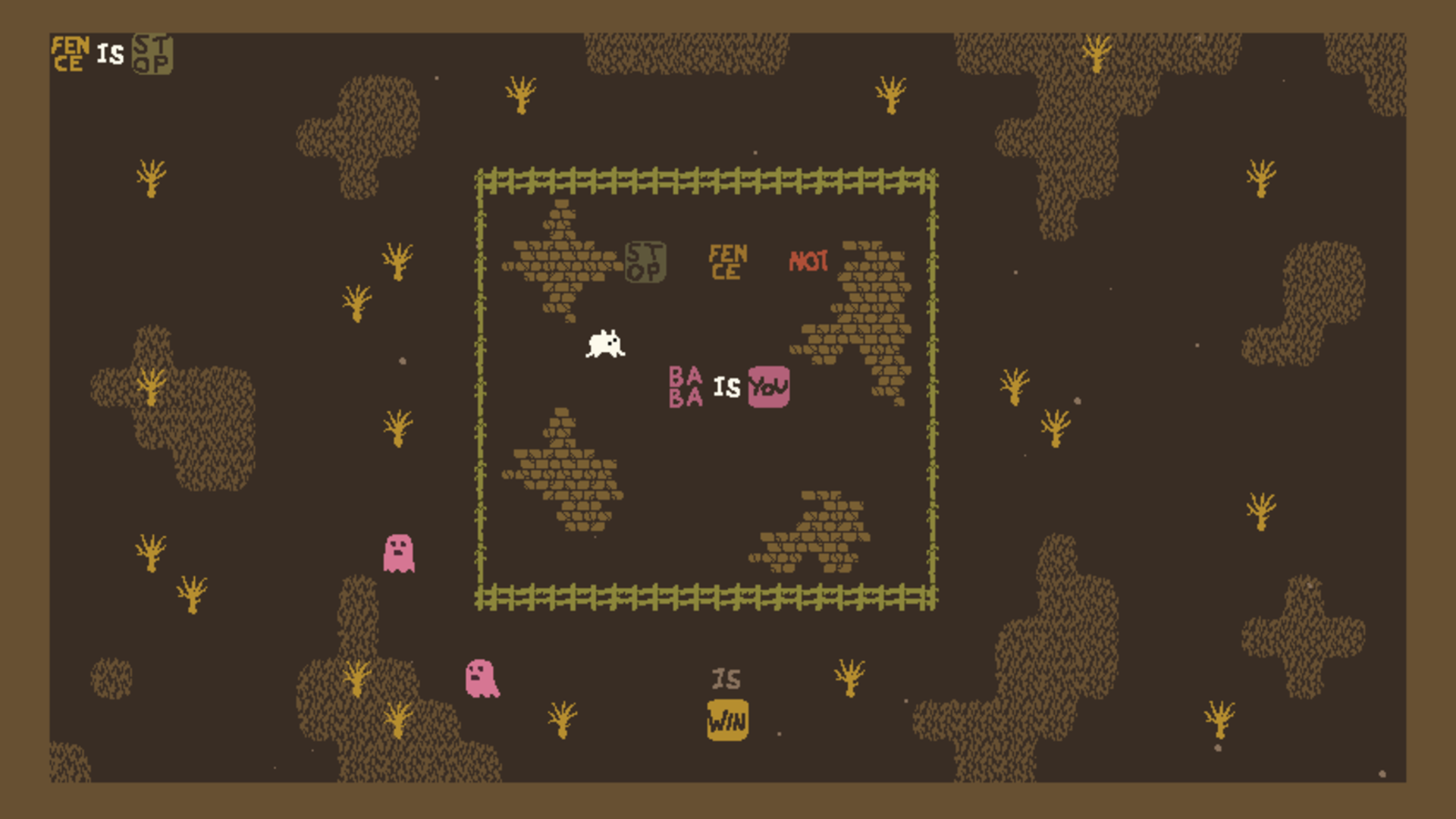
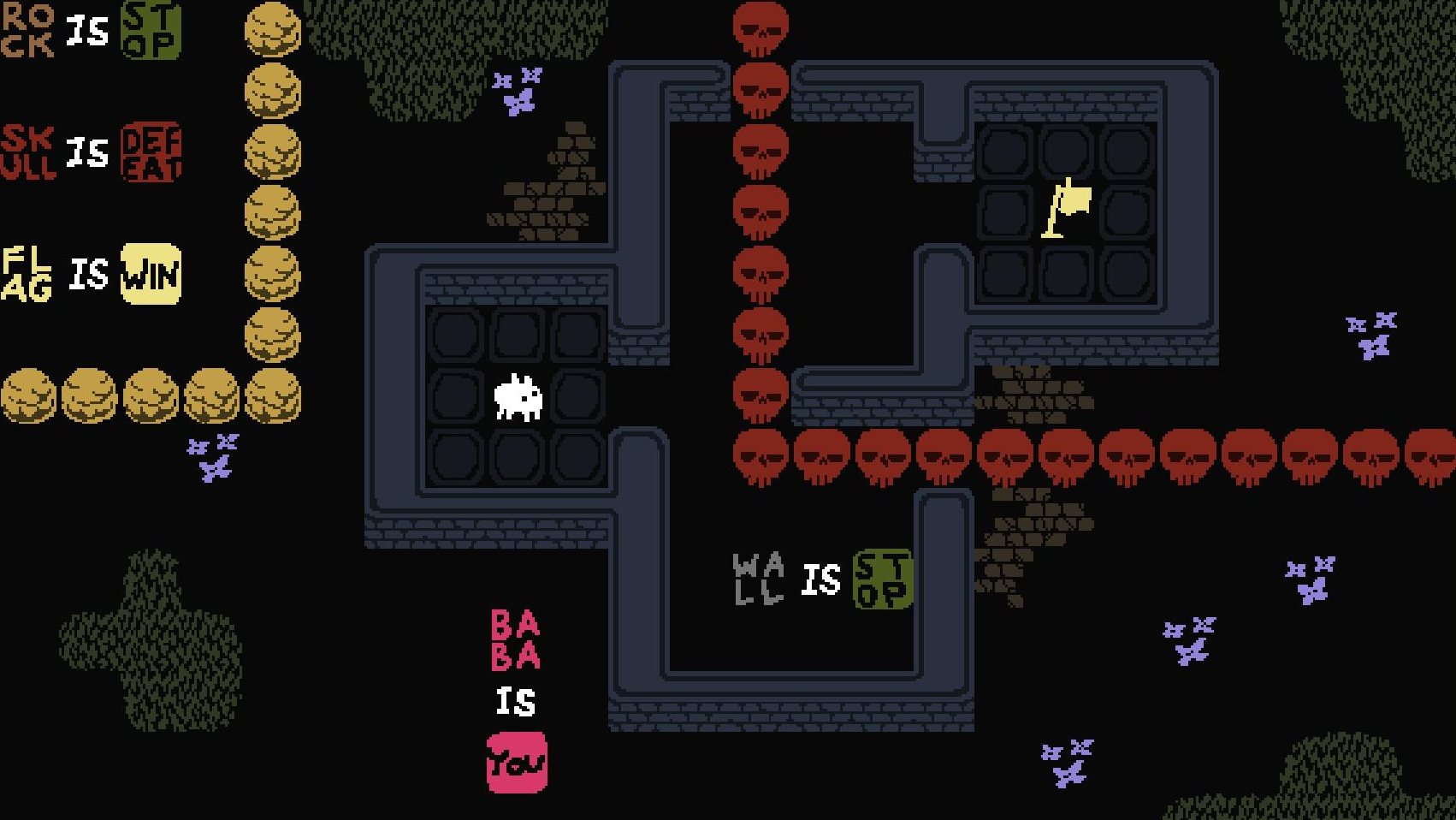
The rule “BABA IS YOU” establishes a clear condition where “Baba” becomes the player character, thus allowing the player to control Baba directly and influencing their approach to the puzzle.
Text
Definition:
“Text” represents a more abstract concept in the game, introduced to facilitate a more flexible approach to rule-making. The Text noun serves as a placeholder that can represent any word within the context of the game.
Usage:
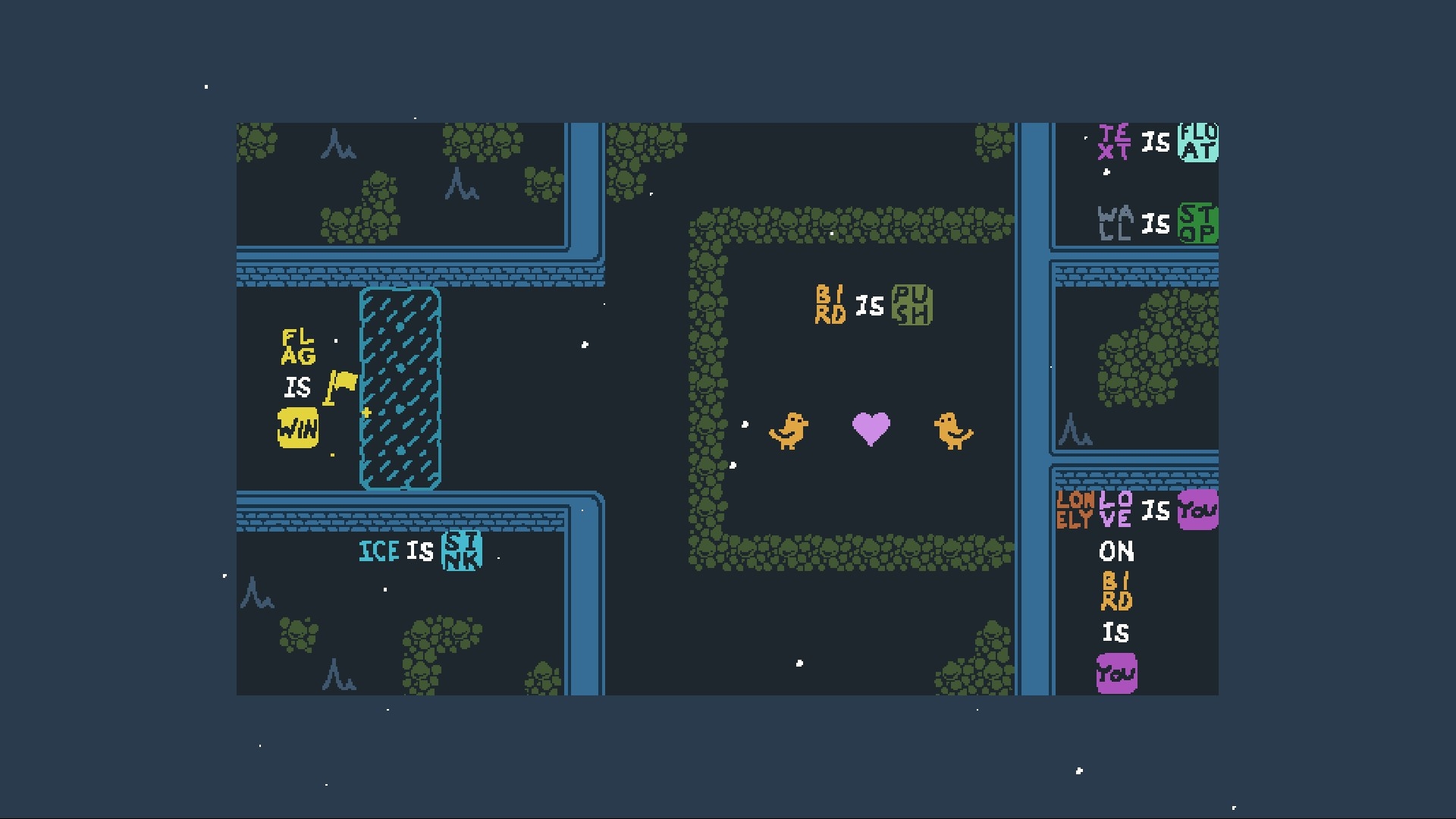
Text acts as a generic term that enhances the complexity of rule formation. A rule like “TEXT IS WORD” allows players to treat any written word as a manipulatable object, promoting inventive and dynamic interactions with the game’s rules.
Rule Formation:
The rules involving Text are similarly structured to Word rules but allow for greater versatility. This flexibility opens up avenues for combining rules and adapting them to specific situations or puzzles, as any written word can be used interchangeably, depending on what the player aims to achieve.
Example:
With the rule “TEXT IS WORD,” players can manipulate any text they encounter, effectively broadening the scope of potential actions they can take in the game. This could permit rules like transforming barriers or characters based on player creativity, rather than relying on set objects.
Summary of Differences
In summary, the fundamental difference between “Word” and “Text” in Baba Is You lies in their specificity and abstraction.
– Word Rules: Concrete and specific; they refer directly to defined game objects, influencing immediate gameplay interactions.
– Text Rules: Abstract and versatile; they allow for generative and creative rule-making, giving players the power to redefine the context in which objects are interacted with.
Both types of rules are essential for navigating the puzzles the game presents, demonstrating the depth of the rule-writing system that allows players to creatively alter gameplay. This duality not only adds layers to each puzzle but also encourages players to think critically and flexibly about the possibilities within the game.


Leave a Reply