
In the game Baba Is You, understanding how various rules influence gameplay is essential for progressing through the levels. Two fundamental rules governing object interactions are “X is Push” and “X is Stop.” These rules are pivotal for manipulating the game environment and solving puzzles. Below is a detailed exploration of both rules, their functionalities, and their impact on gameplay.
“X is Push”
– Definition: This rule states that the object labeled as X can be pushed by the player or any other movable entities. It invites players to strategize movement to navigate the game’s spatial challenges.
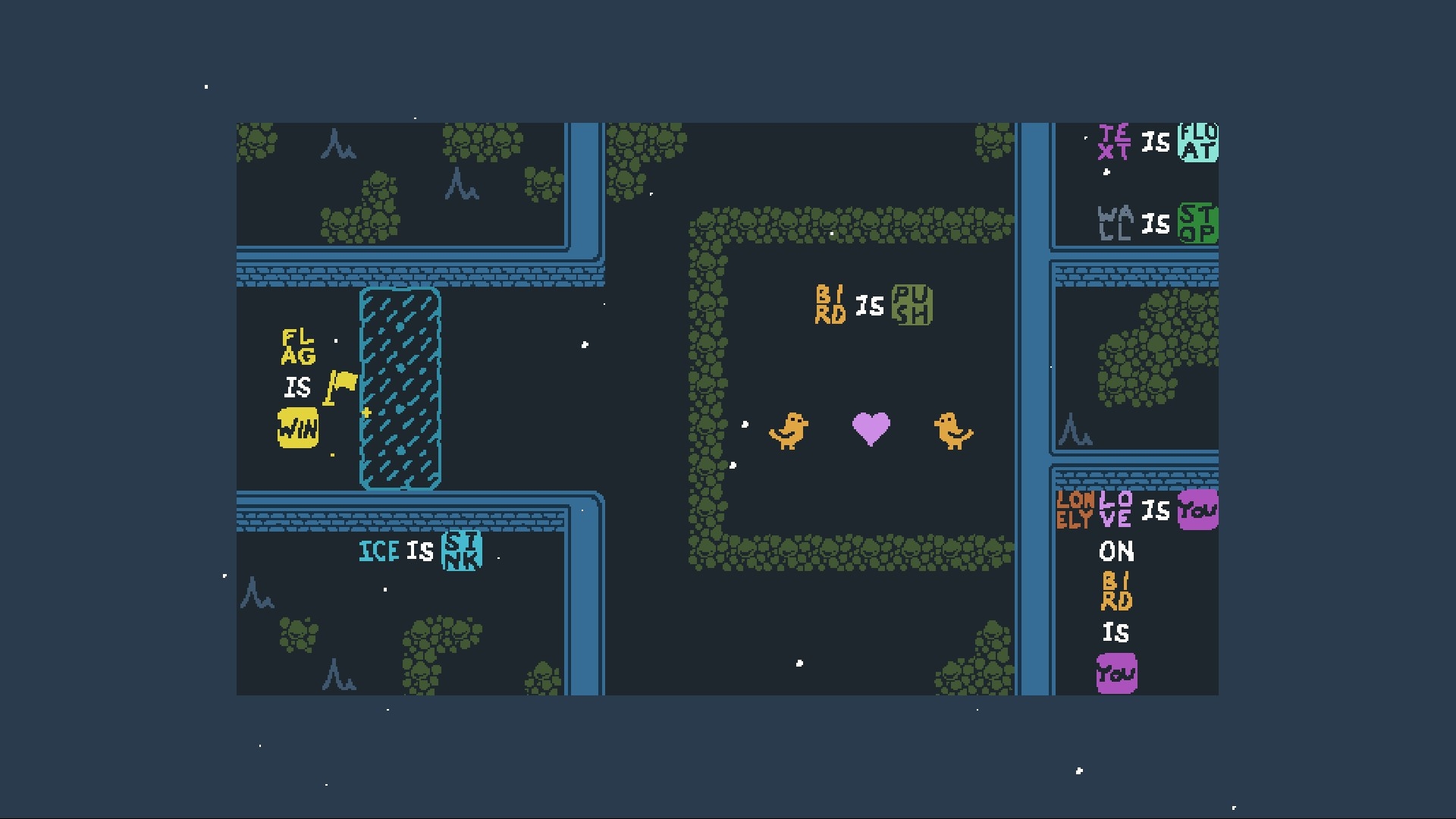
– Example: If the rule reads “Rock is Push,” it implies that rocks can be moved around the game area by the player. The player can interact with the rocks to manipulate their position effectively.
– Behavior: When an object is defined as PUSH, it becomes an interactive element in the game. Players can push these objects into different positions, which is essential for creating pathways, activating mechanisms, or achieving goals necessary to progress through the level. It allows for a dynamic interaction with the game environment, where players can creatively utilize pushable objects to solve puzzles.
“X is Stop”
– Definition: This rule indicates that the object designated as X cannot be traversed. Essentially, it serves as a barrier, impeding movement through it.
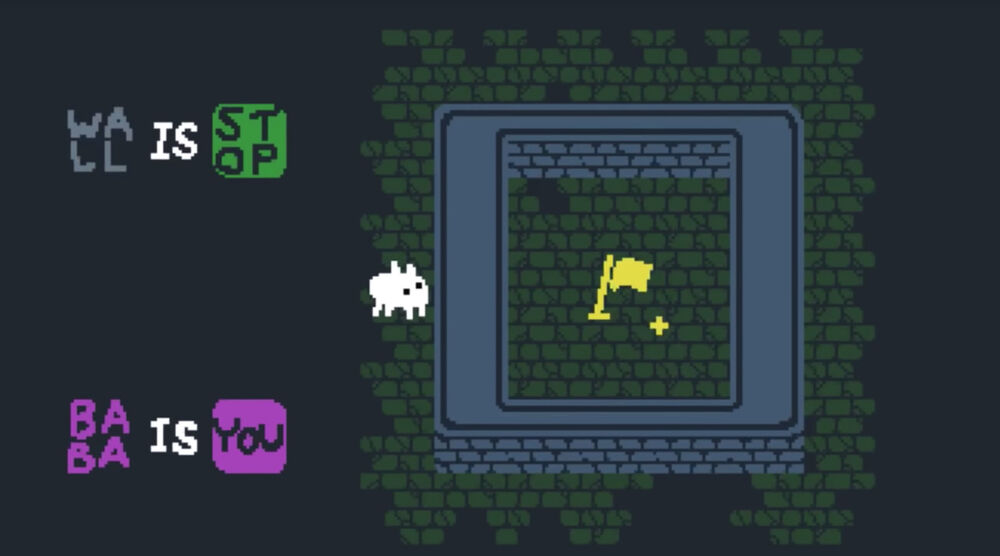
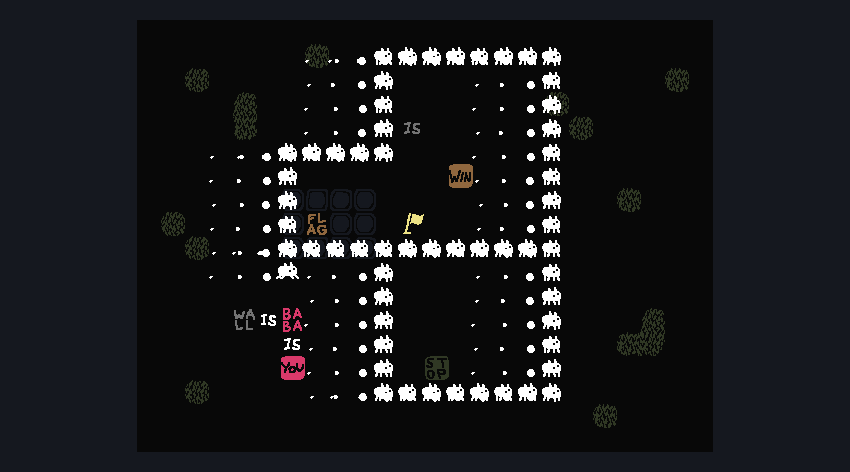
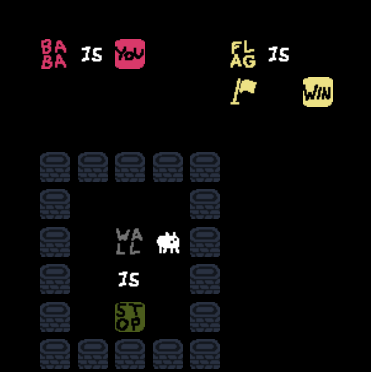
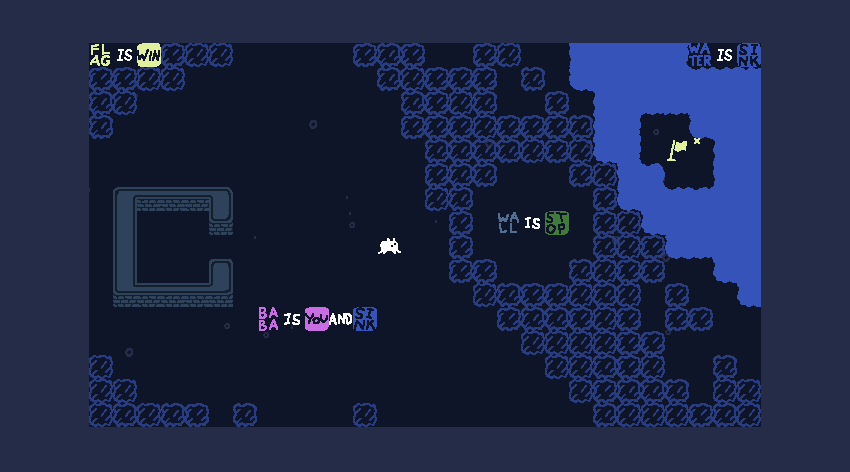
– Example: If the rule states “Wall is Stop,” it demonstrates that players cannot pass through walls. They are also unable to push walls as they are inherently immovable due to this classification.
– Behavior: Objects defined as STOP serve as limitations within the game environment. They act as barriers that delineate the boundaries of the playable space, preventing players and other objects from unlawfully occupying spaces they shouldn’t be able to cross. This rule is critical for creating structured levels where players must consider their movements carefully to avoid getting stuck or losing progress.
Key Differences
1. Movement:
– “X is Push” facilitates movement; players can manipulate these objects.
– “X is Stop” restricts movement; players cannot pass through or interact with these objects in a way that allows crossing.
2. Interaction:
– With “X is Push,” players can actively push those objects into desired positions.
– With “X is Stop,” players must navigate around these objects, as they cannot move through them.
3. Level Design:
– Utilizing “X is Push” creates puzzles that revolve around movement, requiring players to think critically about how best to reposition items.
– In contrast, using “X is Stop” establishes boundaries that require careful planning to work around in order to accomplish objectives.
Conclusion
In summary, the distinction between “X is Push” and “X is Stop” significantly shapes the gameplay experience in Baba Is You. The former encourages interaction and movement through the game’s world, facilitating puzzle-solving through manipulation. The latter establishes the rules of physical space, creating constraints that players must navigate. This dynamic interplay between movement and restriction is central to crafting engaging puzzles and challenges that are hallmarks of the game. Whether pushing boxes or avoiding walls, players must employ creativity and strategic thinking to progress.
Leave a Reply