
Comprehensive Guide to Court Management in Crusader Kings III
Managing your court and courtiers effectively in Crusader Kings III (CK3) is a vital aspect of gameplay that requires strategic thinking and careful attention to detail. Your court can significantly impact diplomacy, intrigue, succession planning, and military capabilities. Here’s a detailed guide to mastering court management.
—
Key Components of Court Management
1. Court Composition
– Courtiers: Unlanded characters in your court, which may include family members, knights, visitors, and guests. They serve multiple roles in the management of your realm.
– Functionality: Courtiers are essential for arranged marriages, recruitment for military service, filling council positions, or being granted titles and baronies.
2. Recruitment and Utilization
– Recruiting Knights: Consistently monitor your courtiers for those with high prowess; these individuals can enhance your military strength.
– Marriage Alliances: Use courtiers to forge marriages with vassals or foreign rulers, bolstering your political alliances and claims to territories.
– Granting Titles: Consider giving land to loyal courtiers to create vassals, which helps in the distribution of power and maintaining loyalty within your realm.
3. Managing Guest Visits
– Visitor Events: Guests may arrive seeking favors, bringing gifts, or presenting opportunities for alliances. They might also possess valuable skills or claims.
– Recruitment Opportunities: Assess guests for high skill levels or useful traits; they can be incorporated as knights or councilors.
4. Council and Court Staff
– Councilors: Appoint characters with high skills (ideally above 16) to ensure effective governance across various domains.
– Court Physician: A skilled physician is valuable for maintaining health and managing illnesses, reducing the risk of death among your key characters.
5. Court Splendor and Grandeur
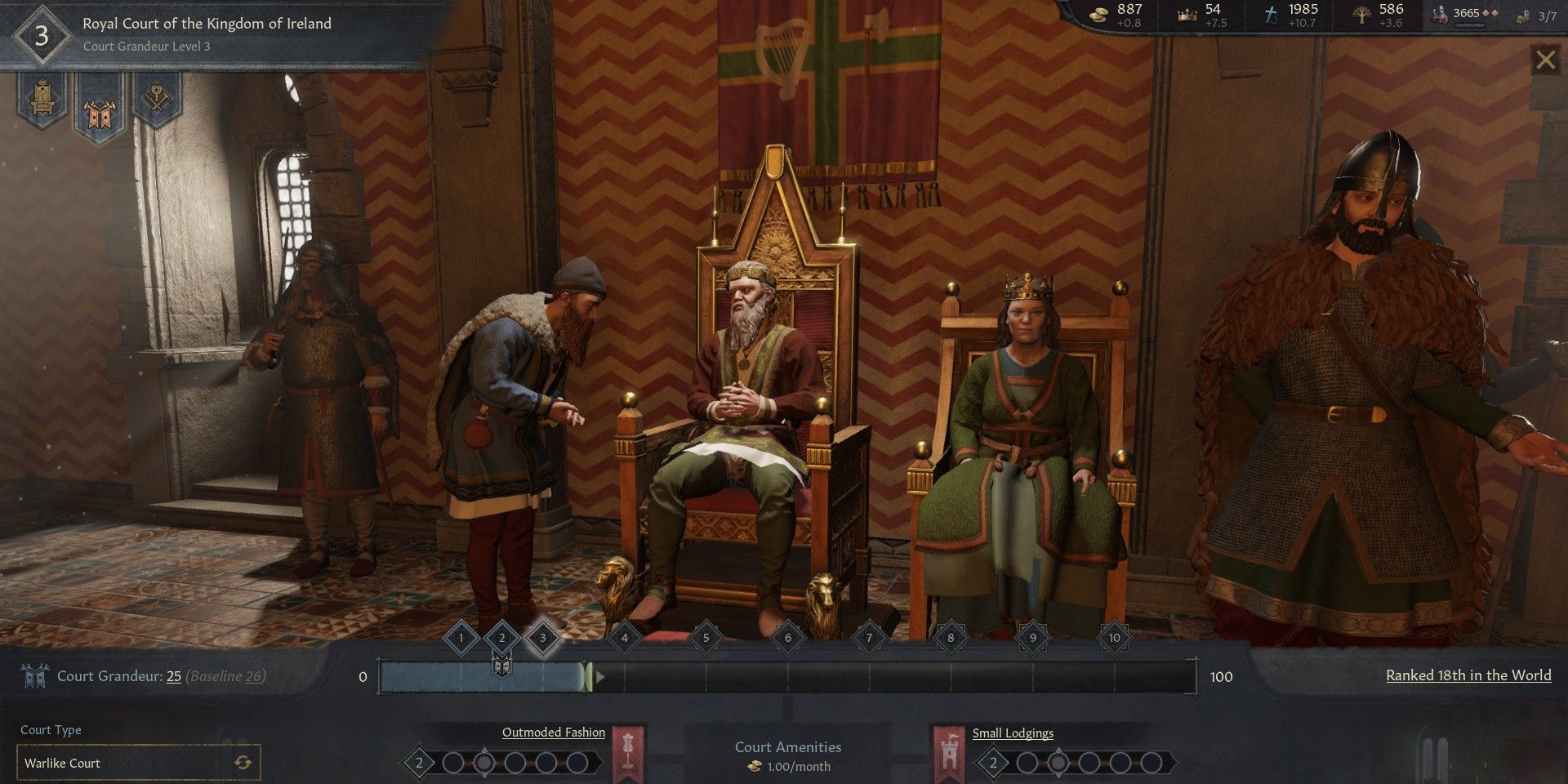
– Court Grandeur: A higher grandeur level enhances your diplomatic reputation, positively affects vassal opinion, and improves marriage prospects.
– Holding Court: Kings and emperors can hold court every five years to manage petitions and engage with vassals. This event costs prestige and offers various benefits, including increased grandeur and legitimacy.
– Event Slots: The scale of your court determines how many events can occur during a session (3 for a small court, 6 for average, and 9 for grand).
– Cost and Benefits: Holding court not only costs prestige (100 for kings, 125 for emperors) but also generates random petition events that can be pivotal for maintaining stability within your realm.
6. Managing Court Size and Power Dynamics
– Keep Court Manageable: An excessively large court can become difficult to manage, while a small court might limit your options. Balance is key.
– Resolving Factions and Vassals: Engaging with vassals during court events allows you to address grievances and potentially sway opinions to prevent uprisings.
—
Practical Court Management Tips
– Regularly Review Courtiers: Routinely assess the skills and traits of your courtiers to maximize their contributions to your realm.
– Monitor Court Size: Keep your court at an optimal size; consider expelling or granting land to unneeded courtiers to increase efficiency.
– Utilize Court Events: Actively participate in “Hold Court” sessions and respond to visitor events to derive maximum benefits from these opportunities.
– Leverage Marriage Alliances: Use marriages to strengthen ties with powerful vassals and foreign rulers, which can provide valuable military or political support.
– Promote Grandeur: Invest in court artifacts, hold feasts, and maintain a high level of grandeur for enhanced diplomatic leverage.
– Utilize the Court Physician: A skilled physician lowers the risk of illness, ensuring the longevity and effectiveness of your ruler and their family.
—
Advanced Strategies
– Recruit Skilled Staff: Prioritize recruiting councilors and knights with high skills to improve your tactical and administrative effectiveness.
– Landing Courtiers: Granting land to loyal courtiers can create beneficial vassals, solidifying your power base while maintaining their loyalty.
– Manage Factions: Use events to placate or neutralize factional leaders to prevent internal dissent and maintain stability.
—
Summary Table: Court Management Essentials
| Aspect | Description |
|———————–|————————————————————————–|
| Courtiers | Unlanded characters for marriages, recruitment, and titles |
| Guests | Visitors potentially bringing claims or skills, can be recruited |
| Council and Physician | Appoint skilled characters for management and health benefits |
| Grandeur | Increases through events and artifacts, enhancing diplomacy and opinions |
| Holding Court | Every 5 years; addresses petitions, boosts grandeur and legitimacy |
| Court Size | Maintain efficiency—too large is unwieldy, too small limits options |
—
Effectively managing your court in Crusader Kings III requires a mix of strategic foresight and attention to detail. By balancing recruitment, marriage alliances, council appointments, and grandeur while keeping an eye on the size of your court, you can navigate the complexities of feudal politics successfully.




Leave a Reply