
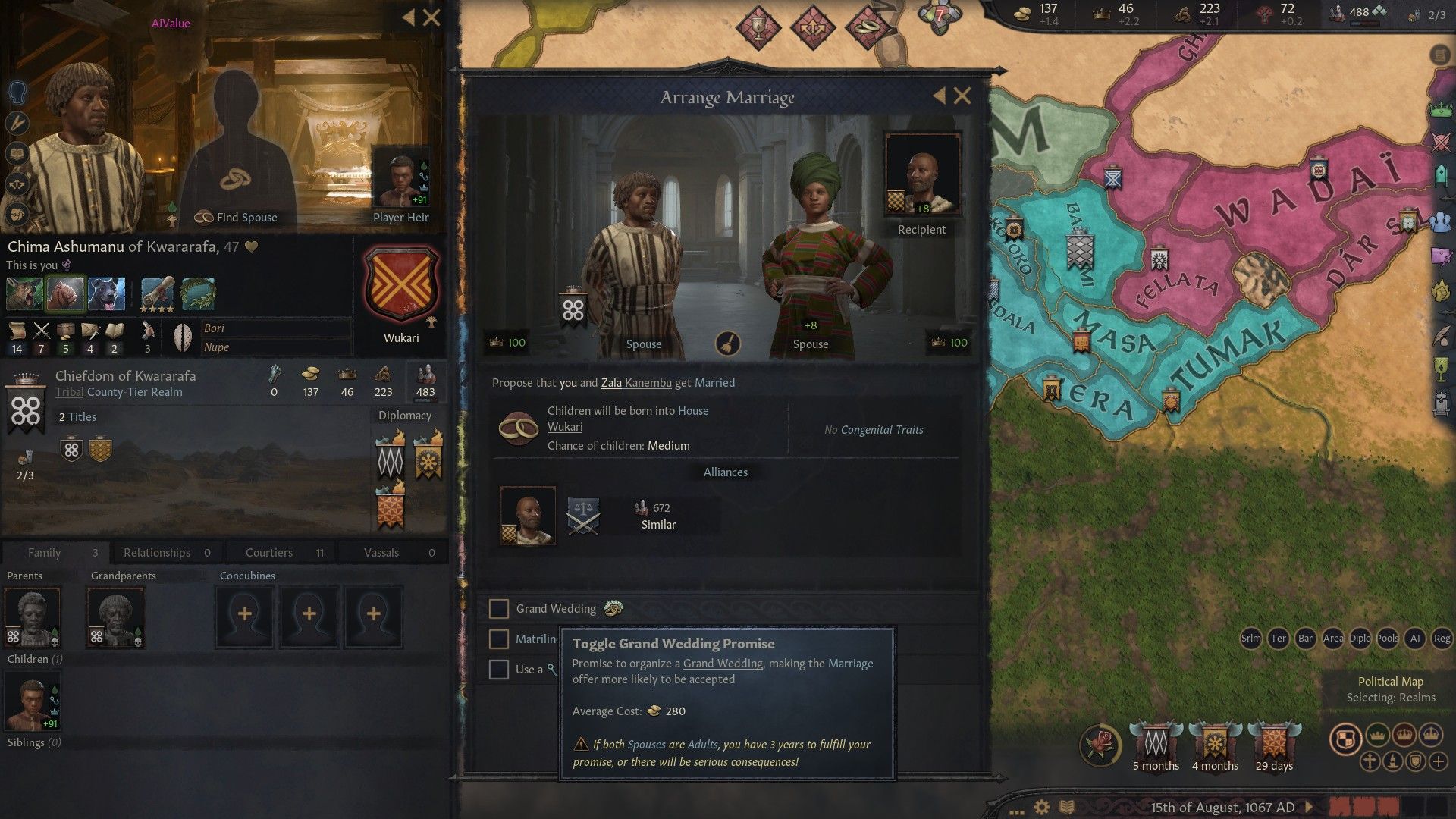
Strategic marriages in Crusader Kings III serve as a cornerstone for successful dynasty management and gameplay strategy. The multifarious benefits they provide are vital in navigating the complexities of medieval politics, warfare, and inheritance. Here’s a structured look into the advantages of forming strategic marital alliances:
1. Alliances and Diplomacy
– Alliance Formation: Marrying into other kingdoms is one of the primary strategies for establishing alliances. These marriages can result in military support during times of war, as allies are more likely to assist you in defending your realm from external threats or participating in offensive wars to expand your territory.
– Diplomatic Leverage: Beyond military alliances, these marriages enhance your diplomatic standing. The relationships built through strategic marriages afford you greater influence within courts and can facilitate negotiations, trade agreements, and peace treaties that benefit your dynasty.
2. Inheritance and Territory Acquisition
– Potential Inheritance: Marrying into influential families can lead to unexpected territorial gains if the spouse inherits land. This is a powerful means of expansion without the need for military conflict, allowing you to quietly increase your holdings.
– Dynastic Growth: Claims to territories can also be established through these marriages. If your character marries a member of a family with claims to certain lands, it opens up paths for conquest or peaceful claims after the death of an heirless ruler.
3. Genetic Legacy and Dynasty Building
– Trait Inheritance: The game features a detailed genetics system, enabling you to choose spouses based on desirable traits that will be passed on to your offspring. By carefully selecting partners with strong attributes, you can nurture a line of competent rulers, enhancing the overall capability of your dynasty.
– Dynastic Prestige: Marriages that produce capable heirs or reinforce alliances bolster your dynasty’s prestige. Increased prestige presents various gameplay advantages, including better chances to form alliances, secure loyalty from vassals, and attract powerful allies.
4. Family and Dynasty Size
– Offspring and Succession: A well-planned strategic marriage can secure a line of succession, ensuring that your titles remain within the family. This continuity is crucial, as it prevents fragmentation and strengthens your dynasty’s grip on power.
– Dynasty Expansion: Larger families allow for greater flexibility in forming new alliances through subsequent marriages, enhancing your political maneuverability and expanding your influence across regions.
5. Strategic Maneuvering
– Tactical Options: Securing alliances through marriage can enable you to manipulate rival families or position yourself advantageously in conflicts. By marrying strategically, you can exert pressure on adversaries or gain advantageous positions in power struggles.
– Conflict Resolution: Beyond outright warfare, strategic marriages can serve as tools for conflict resolution. They can forge hostile factions into alliances or create circumstances that make warfare less appealing due to the potential for mutual beneficial relationships.
Conclusion
In conclusion, strategic marriages in Crusader Kings III are not just social contracts but vital tactical moves that can significantly enhance your dynasty’s power and scope. By forming alliances, securing territory, ensuring a strong genetic legacy, and expanding your family lines, you position yourself at the forefront of medieval politics. Successfully navigating these marital strategies can lead to a robust and influential dynasty that thrives through both diplomacy and conquest.




Leave a Reply