
In The Last of Us Part II, weapon upgrades play a pivotal role in enhancing the combat experience, allowing players to tailor their arsenal to suit different play styles and combat scenarios. Through various upgrade types, players can significantly improve weapon performance across critical areas such as stability, fire rate, and draw speed. Below is a more detailed analysis of how these upgrades influence gameplay.
How Upgrades Affect Weapon Performance
Stability Upgrades
– Impact: Stability upgrades are designed to minimize weapon recoil and sway, which improves overall aiming steadiness. This is essential for maintaining accuracy, particularly with long-range weapons like rifles and pistols that require precise shots.
– Example: For instance, upgrading the stability of the bow allows players to take silent, accurate shots from a distance. This can be especially useful in stealth situations where noise discipline is critical [3][5].
Fire Rate Upgrades
– Impact: Fire rate upgrades enable weapons to fire more rapidly, which becomes critical in high-pressure situations, especially when facing numerous infected or aggressive human enemies up close.
– Example: Consider the pump shotgun, which can have its fire rate increased significantly by as much as 55%. This upgrade allows Ellie to unleash a barrage of rounds quickly, essential for surviving frantic close-quarters encounters [1][5].
Draw Speed Upgrades
– Impact: Specifically affecting weapons like the bow, draw speed upgrades decrease the time required to draw and nock an arrow. This results in faster response times, allowing for quicker engagements during stealth and ranged combat.
– Example: With enhanced draw speed, players can become more offensive, capitalizing on moments to eliminate enemies before they can react [1][5].
Additional Upgrades
– In addition to the primary upgrades mentioned, other enhancements available include:
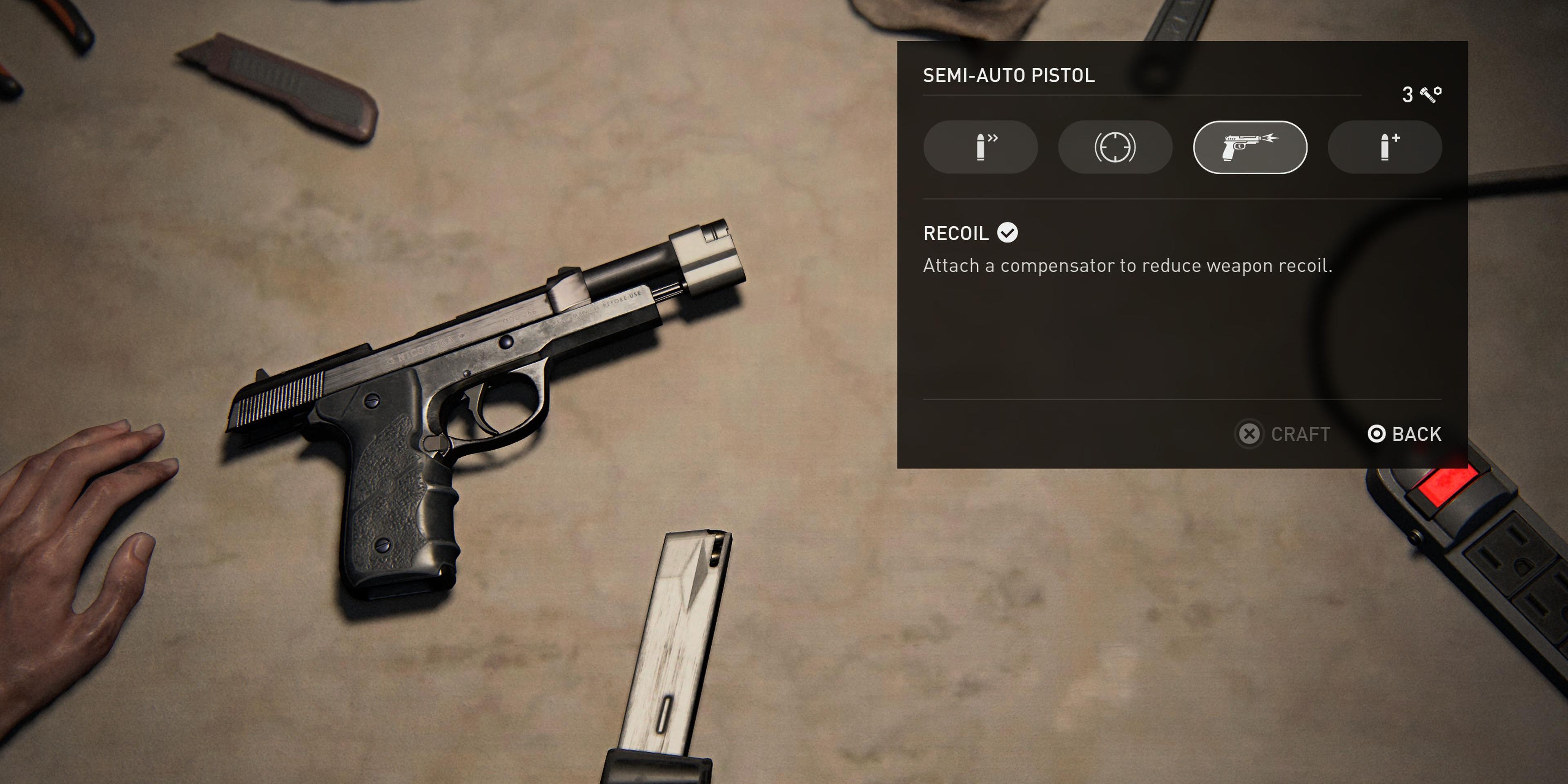
– Recoil Reduction: Further decreases recoil for improved accuracy.
– Reload Speed: Decreases the time taken to reload, which is crucial for maintaining momentum during firefights.
– Capacity: Increases the ammunition that can be carried for specific weapons, enhancing sustained fire capabilities.
– Damage: Boosts the overall damage output, making each shot more lethal.
– Scopes: Allow for better zoom and precision aiming, aiding in long-range engagements [5].
Summary Table of Upgrades
| Upgrade Type | Effect on Weapon Performance | Example |
|—————|————————————————–|——————————-|
| Stability | Reduces recoil and sway, improves aiming steadiness | Bow, rifles, pistols |
| Fire Rate | Increases shooting speed | Pump Shotgun +55% fire rate |
| Draw Speed | Speeds up bow draw and knock time | Bow |
| Recoil | Further reduces recoil | Pistols, military weapons |
| Reload Speed | Decreases reload animation time | Shotguns, revolvers |
| Capacity | Increases ammo capacity | Various weapons |
| Damage | Boosts weapon damage output | Rifles, revolvers |
| Scopes | Improves zoom and aiming precision | Bolt-action rifle, hunting pistol|
Conclusion
In The Last of Us Part II, weapon upgrades serve as a crucial mechanism for enhancing combat effectiveness, allowing players to optimize their weapon handling and performance. By focusing on stability, fire rate, and draw speed, players can significantly improve their ability to engage with enemies tactically. Selecting appropriate upgrades not only tailors gameplay to fit personal styles—be it stealthy or aggressive—but also profoundly impacts survival chances in a challenging post-apocalyptic landscape. This flexibility in combat mechanics enriches player experience and enhances the overall engagement with the game’s narrative and environment.




Leave a Reply