
In The Outer Worlds, the selection of armor sets and the application of mods are critical to shaping your character’s survivability and effectiveness in combat, as they directly influence both resistances and skills. Understanding the mechanics behind armor types, their effects on gameplay, and the incorporation of mods can significantly enhance your gameplay experience.
Armor Types and Their Effects on Resistances and Skills
Armor Rating and Damage Reduction
Armor in The Outer Worlds provides damage reduction based on an attribute known as Armor Rating. When you receive damage, it is mitigated by the armor corresponding to the hit location: chest armor protects the body while helmets protect the head. This concept is straightforward; for example, if a shot typically inflicts 175 damage, a well-rated armor piece can reduce that to a lower amount, such as 141, illustrating the effectiveness of the armor rating in mitigating damage.
Light, Medium, and Heavy Armor
1. Light Armor:
– Protection: Offers the least damage reduction.
– Bonuses: Provides bonuses to entire skill groups, enhancing abilities related to stealth and skills. Ideal for players who prefer stealthy or skill-oriented gameplay, light armor supports builds that rely on agility and finesse in combat.
2. Medium Armor:
– Protection: Balances between damage reduction and skill enhancement.
– Bonuses: Usually boosts a single skill, making it suitable for players who want decent protection while still benefiting from specialized abilities. It’s a versatile choice for characters who want to maintain a balance between defense and capability without sacrificing too much stealth.
3. Heavy Armor:
– Protection: Provides the highest armor rating, offering significant damage reduction.
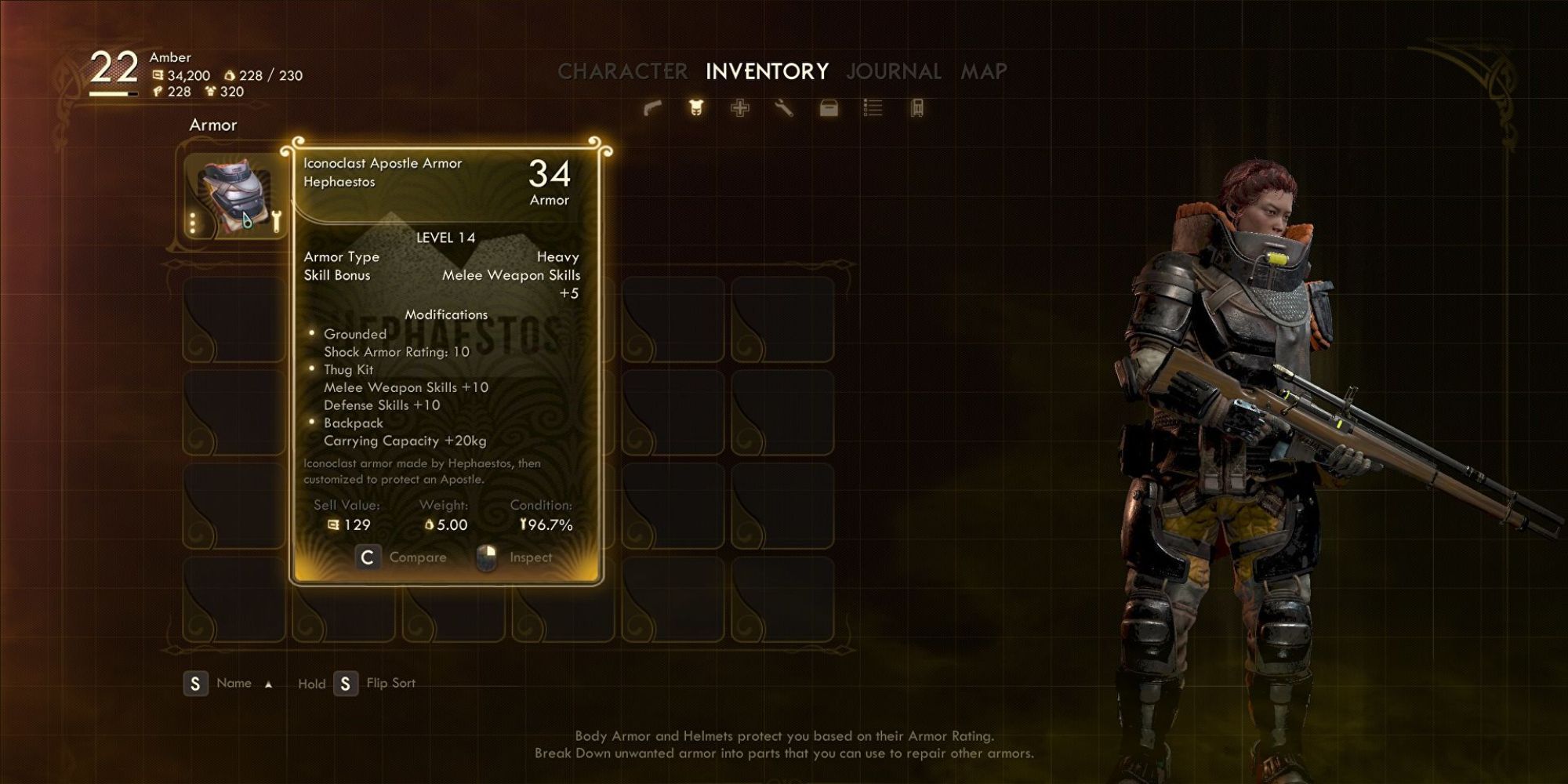
– Penalties: Despite its protective capabilities, it imposes a -5 penalty to stealth and only enhances a single skill. Heavy armor is tailored for players focused on being tanky or dealing substantial damage in direct combat, as it enables them to absorb more damage at the cost of reduced stealth capabilities.
Skill and Attribute Bonuses
Armor pieces frequently include bonuses to various skills or attributes that can shape your playstyle:
– For example, certain armor sets can enhance combat skills such as Melee Weapon Skills or Tech skills. The Hibernation Suit, though not the most defensively-minded choice, grants a +5 to Tech skills, ideal for tech-heavy builds at the game’s start. The Iconoclast Apostle Armor, on the other hand, provides a +5 boost to Melee Weapon Skills, which is beneficial for melee-focused characters looking to amplify their damage output.
Armor Mods and Their Impact
Armor can be customized significantly through mods, which can be installed at workbenches to improve its protective qualities or introduce new effects. Mods can increase resistance to particular damage types or provide passive perks that enhance combat maneuvers and survival tactics.
– An example of this is the SugarOps Elite Armor, which not only emphasizes damage protection but also features unique mods and perks that accommodate a variety of playstyles, showcasing the potential versatility that armor mods can provide beyond mere damage reduction.
Summary
In summary, armor sets in The Outer Worlds play a dual role in deepening gameplay mechanics:
– Damage Mitigation: Each armor’s rating contributes to reducing incoming damage based on where an attack hits.
– Skill and Attribute Enhancement: Bonuses from armor further enhance specific skills or stats, augmenting the character’s overall performance.
Your choice among light, medium, or heavy armor should reflect your preferred trade-offs between the necessary protection and the desired skill enhancements. While heavy armor ensures maximum protection, it significantly hinders stealth capabilities. In contrast, light armor favors skill boosts, albeit with reduced defensive benefits. Hence, it’s essential to align your armor choice with your overall strategy and playstyle in The Outer Worlds.


Leave a Reply