
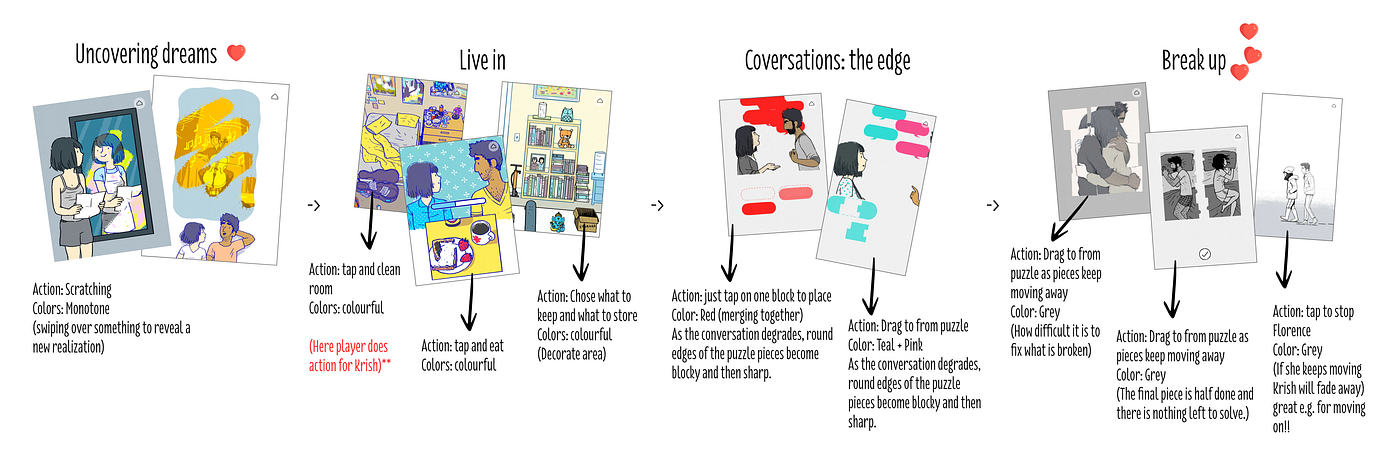
In the mobile game Florence, the mechanic of assembling puzzle pieces during argument scenes serves as a powerful metaphor for the complexities of communication and emotional conflict in relationships. Throughout these sequences, players encounter puzzle shapes that are intentionally irregular and significantly more complicated than earlier gameplay segments. This design choice reflects the heightened emotional stakes and tension that characterizes arguments between the protagonist, Florence, and her partner, Krish.
The primary interaction during these argument scenes involves dragging and fitting together these challenging puzzle pieces to form speech bubbles. The awkward shapes require careful maneuvering, symbolizing the inherent difficulties in expressing thoughts and emotions during conflict. Players often find themselves feeling a sense of frustration, which mirrors the emotional turmoil that arises during real-life disagreements. This aspect of the gameplay is particularly effective in immersing players in the emotional landscape of the characters, with some even reporting annoyance towards Krish as they navigate these puzzling interactions.
As the argument unfolds, the puzzle pieces are alternately completed by each character, enhancing the dynamic of back-and-forth confrontation that defines arguments. The escalating complexity of the shapes not only represents the increasing intensity of the conversation but also invites players to engage more deeply with the narrative. With each piece they manipulate, players must confront the challenges of effective communication, making each successful assembly feel earned amid the chaos of the argument.
This puzzle mechanic stands in stark contrast to other parts of Florence, where assembling speech bubbles typically starts off simpler and becomes increasingly straightforward as the characters begin to connect and open up to one another. This juxtaposition further emphasizes the dissonance during arguments compared to moments of harmony within the relationship, enriching the overall narrative experience.
In summary, to engage with the puzzles during the arguments in Florence, players must drag and fit the intricately shaped pieces together, navigating their complexity as a reflection of the emotional struggles and challenges of communication that often accompany conflict in relationships. The game’s design effectively uses these mechanics to evoke feelings of tension, frustration, and ultimately, the difficulty of understanding one another—all crucial components of intimate relationships.


Leave a Reply