
In Return of the Obra Dinn, successfully discerning whether a crew member died from cannon fire or an explosion requires a methodical approach to observation, deduction, and the effective use of in-game resources. Below is a comprehensive strategy to guide you through this process.
Observing the Scene
1. Visual Clues:
– Situational Awareness: Carefully inspect the positioning of the character’s body in relation to cannons and other potential sources of explosive damage. A body thrown back or with marks that indicate a direct trajectory from a cannon could suggest death by cannon fire.
– Damage Assessment: Look for environmental destruction—if the scene shows extensive damage, such as shattered walls or debris scattered across a large area, this may indicate an explosion rather than focused cannon fire.
2. Contextual Clues:
– Surrounding Events: If you see several characters affected simultaneously in a chaotic scene with rapid destruction, it leans more towards an explosion. Cannon fire typically leads to targeted attacks resulting in fewer casualties unless multiple shots are fired in quick succession.
Using the Logbook
1. Logbook Entries:
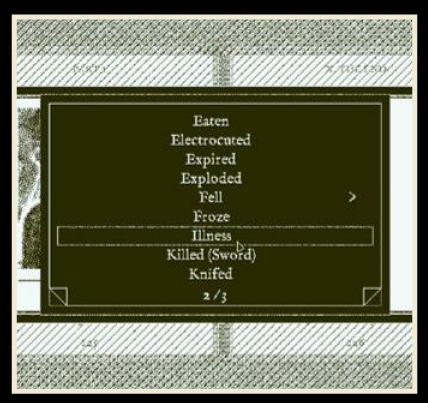
– Each death scene prompts you to identify the cause of death. As you examine visual clues alongside contextual elements, document your findings in the logbook. The accuracy of these entries can help you track patterns.
2. Audio Logs and Dialogue:
– Before venturing into a death scene, pay attention to any available audio cues. Characters might reference specific incidents involving cannon fire or describe an explosion. These details can clarify the context surrounding each death.
Deduction and Elimination
1. Process of Elimination:
– When faced with multiple deaths, use previously gathered information to narrow down possibilities. Cross-reference deaths you’ve already identified to see if certain causes can be ruled out based on the evidence available.
2. Consistency with Other Clues:
– Ensure your conclusions are consistent with the visual and audio clues you have collected. For instance, if a character’s death occurred in an area devoid of cannons but shows signs of explosion effects, it would be logical to classify this as an explosion-related death.
Game Mechanics
1. Feedback System:
– The game employs a feedback mechanism where correct deducing of death causes is rewarded, while incorrect entries prompt further investigation. Utilize this to gauge which conclusions may need reassessment.
2. Progression:
– Successfully identifying deaths unlocks additional areas and further evidence. As new scenes and clues become available, they may shed light on previously ambiguous incidents, allowing for refinement in your deductions.
Final Tips
– Take your time observing each scene thoroughly before making decisions. The intricate details can often reveal more than meets the eye.
– Keep an organized record of your deductions in the logbook to track your hypotheses.
– Be patient; challenging scenarios may require revisiting them with fresh insights as you progress through the game.
By systematically applying these strategies, you can effectively differentiate between deaths caused by cannon fire versus explosions, unraveling the mysteries aboard the Obra Dinn as you advance through your investigation.



Leave a Reply