
Certainly! Here’s a structured overview of chain grabs and throws for Pikachu and Mario in Super Smash Bros. Ultimate, incorporating the key mechanics and strategies for optimal performance.
Chain Grabs with Pikachu
Basic Methodology:
– Initial Throw: Pikachu typically initiates chain grabs using its forward throw at low percentages. This puts opponents in a vulnerable position where they have limited options to escape.
– Down Throw Combo: A common sequence starts with a down throw, which allows Pikachu to follow up with a series of neutral airs (nairs). This technique is referred to as the “nair loop.”
– Combo Sequence:
1. Down Throw – Launch the opponent into the air.
2. Short Hop Nair – Perform a short hop and execute a neutral air attack.
3. Fast Fall – Quickly fast fall to keep the opponent close in front of Pikachu, maintaining their hitstun.
4. Repeat Grabs – After the nair, grab the opponent again and repeat the process.
Damage Window: This combo is most effective at dealing damage from 0% up to about 25%. After this percentage, players might transition to using moves like up tilt to continue damaging the opponent, as the effectiveness of repeated grabs diminishes due to the increased percentage.
Chain Throws with Mario
Basic Methodology:
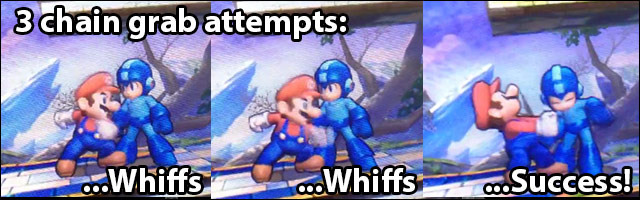
– Throw Initiation: Mario can initiate chain grabs using his down throw. Unlike Pikachu, Mario can pair this with a mix of aerials and additional throws.
– Stage-Specific Advantage: Notably, on certain stages such as the “Combo Tent” on Hyrule Castle, the stage’s layout can help limit opponents’ options to escape with Directional Influence (DI), making chain grabs easier to maintain.
Combo Strategy:
1. Down Throw – Start with a down throw to position the opponent.
2. Follow-Up Aerials or Throws – Depending on the opponent’s weight and damage percentage, Mario can utilize quicker aerials or follow-up throws to keep the opponent within range for another grab.
3. Repeat as Necessary – Chain throws can be continued as long as the opponent’s percentage and DI allow for it.
Key Mechanics for Both Characters
– Dependency on Percentages: The effectiveness of chain grabs is highly contingent upon the opponent’s percentage, weight, fall speed, and their DI response. At lower damage percentages, opponents experience less hitstun, making it easier to keep them in a vulnerable state.
– Rapid Follow-Ups: Pikachu and Mario both capitalize on their fast grab animations and quick follow-ups to maintain the pressure on opponents, being able to chain multiple grabs in quick succession.
– Utilization of Stage Elements: Use of specific stage elements, such as walls or platforms, can provide an advantage. For instance, Mario’s techniques may be enhanced by the structure of the Combo Tent, while Pikachu can use stage positioning to optimize his grab sequences.
Summary
| Character | Chain Grab Method | Notes |
|———–|——————————————————–|—————————————————————-|
| Pikachu | Forward throw at low %; down throw into nair loop; up tilt follow-ups | Effective from 0-25% for combos, then transitions to aerials. |
| Mario | Down throw with throws and aerial follow-ups | Works well on specific stages like Combo Tent; relies on opponent’s DI and weight. |
In conclusion, mastering chain grabs and throws with Pikachu and Mario involves understanding their unique mechanics, timing, and the environmental nuances of the stages. Using their strength at low percentages, players can create complex sequences that lock opponents in a cycle of vulnerability, ultimately leading to significant damage increases and advantageous positions.



Leave a Reply