
In Wolfenstein II: The New Colossus, the hybrid health and armor system enhances gameplay by incorporating elements of strategy, resource management, and narrative significance. Below is a detailed overview of both systems:
Health System
1. Segmented Health
– B.J. Blazkowicz’s health is divided into manageable sections. Each section can regenerate itself as long as it hasn’t been entirely depleted. If a segment is fully lost, it cannot regenerate and requires a health pack for replenishment.
2. Health Packs
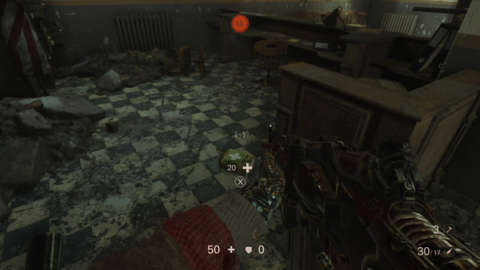
– These items are scattered throughout the game and are critical not only for restoring health segments but also capable of putting B.J. in an “overcharged” state when consumed in excess. This state allows B.J. to temporarily exceed his normal health maximum but will gradually revert back to the standard cap.
3. Maximum Health
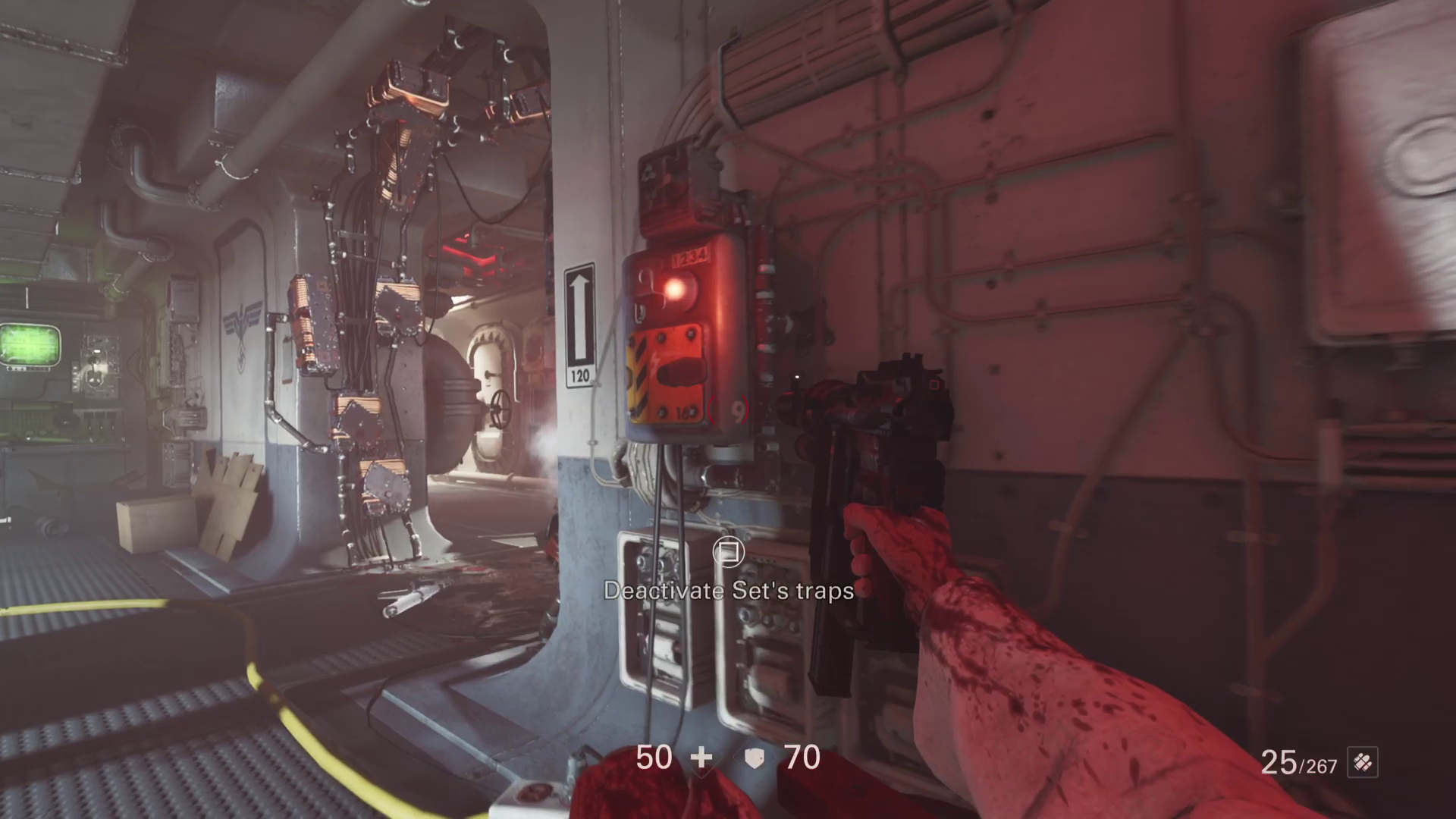
– At the game’s onset, B.J.’s maximum health is capped at 50 due to his injuries, adhering to the storyline. However, as players progress, they can increase this cap up to 100 points or more, aligning with character development and overcoming obstacles throughout the game.
4. Health Regeneration
– Regeneration occurs naturally over time only for partially depleted health segments. Full segments must be restored through health packs, contributing to a tactical approach during gameplay where players must manage resources effectively.
Armor System
1. Armor as a Shield
– Armor serves as a buffer against incoming damage, absorbing hits before they affect B.J.’s health. This non-regenerative shield is crucial for survival, especially in hostile encounters.
2. Armor Acquisition
– Players can acquire armor by defeating armored foes or collecting items like helmets and vests from the environment. Unlike health, armor must be continually replenished as it does not regenerate automatically.
3. Maximum Armor
– The armor can be restored to its full capacity at any time, providing additional security for players regardless of their health status. This independent operation of health and armor contributes to a layered defensive strategy within combat.
4. Armor and Health Relationship
– The independence of armor and health from each other means B.J. can maintain high protection levels even when his health is diminished, allowing for a tactical edge during intense confrontations.
Healing and Overcharging
– Overcharging
– Utilizing health packs beyond the standard need allows B.J. to enter an overcharged state. This mechanic provides momentary advantages in combat scenarios but necessitates careful management, as the excess health will eventually wear off.
– Tactical Considerations
– Players must prioritize finding and using both health and armor strategically, particularly on higher difficulty levels where resources become scarcer, adding to the survival aspect of gameplay.
Progression and Narrative Impact
1. Early Game Limitation
– The initial reduced health reflects B.J.’s physical condition, making early encounters particularly challenging and amplifying the sense of vulnerability until players can obtain health upgrades.
2. Health Upgrades
– As players advance, they unlock health upgrades that not only expand maximum health but also signify B.J.’s recovery journey and empowerment throughout the narrative.
3. Armor Importance
– Prioritizing armor replenishment allows players to endure difficult encounters, especially when health pickups are limited. This strategic emphasis can be decisive during critical moments in the game.
Additional Tactical Elements
– Difficulty Scaling
– The health and armor dynamics encourage players to adopt varied playstyles, whether opting for stealth or aggressive combat, thereby enhancing the game’s overall fluidity.
– Perks and Upgrades
– Players can also earn perks—enhancements across categories like Stealth, Mayhem, and Tactical—further affecting survivability and enhancing combat scenarios. These are obtained by completing specific in-game challenges, enriching the player experience.
Summary Table
| Feature | Health | Armor |
|—————–|—————————————–|——————————————–|
| Regeneration | Partial segments regenerate | Does not regenerate |
| Restoration | Health packs for lost segments | Picked up from enemies/items |
| Maximum | Starts at 50, can increase to 100+ | Up to 100 (independent of health) |
| Overcharge | Possible via extra health packs | Not applicable |
| Narrative Role | Reflects B.J.’s physical condition | Provides tactical buffer |
Conclusion
Overall, Wolfenstein II: The New Colossus features a nuanced health system where partial segments regenerate, while full segments require health packs. At the same time, the armor acts as a crucial, non-regenerating defense layer that must be collected throughout gameplay. This intricate balancing of health and armor, combined with B.J.’s evolving story, offers players both a demanding gameplay experience and a rich narrative, pushing them to engage in thoughtful resource management and tactical combat decision-making.


Leave a Reply