
The boss battles in Cuphead are a hallmark of the game’s design, characterized by their unique thematic elements, attack patterns, and multiple phases that escalate in difficulty. Here’s a comprehensive analysis of notable bosses, focusing on their attack strategies and the phases they go through during encounters:
1. The Root Pack
– Attack Patterns: Primarily uses moving roots and projectile attacks. Players must watch out for the swirling nature of these attacks.
– Phases: The battle progresses as players dodge and counterattack the roots and projectiles, ultimately targeting the Root Pack collectively.
2. Goopy Le Grande
– Attack Patterns: Goopy can leap towards the player to squash them and assumes a larger form to strike from varying angles.
– Phases: Players must navigate through Goopy’s jumping attacks while landing hits on him, requiring both agility and timing.
3. Ribby and Croaks
– Attack Patterns:
– Ribby: Shoots a barrage of six projectiles in consistent patterns, with specific timing on his notable “Parable” punch.
– Croaks: Fires sets of flies that can vary in quantity.
– Phases:
– Phase 1: Both bosses attack at the same time, creating a mix of projectiles and patterns.
– Phase 2: Ribby transitions to a rolling attack, shifting the dynamics of the fight.
4. Hilda Berg
– Attack Patterns: Changes forms between attacks, summoning shooting stars and meteors that challenge player movement.
– Phases: Each transformation introduces new mechanics, increasing difficulty and requiring adaptation to her varied attack forms.
5. Cagney Carnation
– Attack Patterns: Utilizes flower-themed attacks including petals and seed projectiles, each having unique behaviors.
– Phases: As health decreases, Cagney introduces novel attacks, keeping players on their toes.
6. Baroness Von Bon Bon
– Attack Patterns: Uses candy-themed assaults along with the ability to summon minions.
– Phases: Each phase introduces new types of candy minions and distinct strategies.
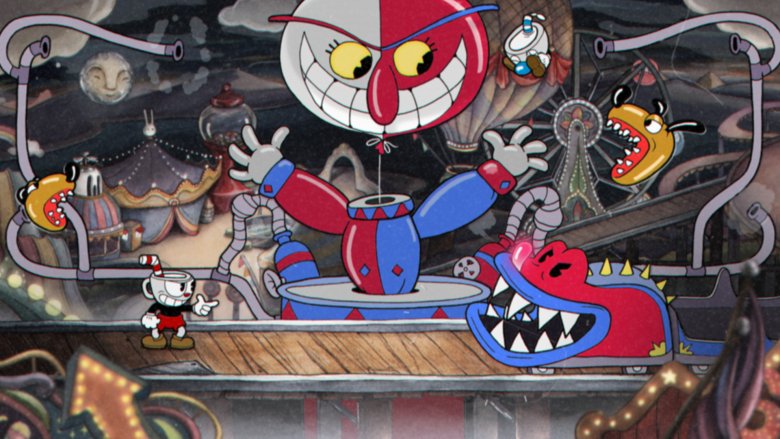
7. Beppi The Clown
– Attack Patterns: Showcases clown-themed attacks such as balloon projectiles and various humorous yet deadly tricks.
– Phases: Changes in clown carriages lead to different attack patterns, demanding quick reflexes.
8. Djimmy The Great
– Attack Patterns:
– Begins with homing projectiles, transitions to controlling a Cuphead puppet, and finally introduces a giant head with pyramidal attacks.
– Phases: Each phase uniquely alters the battlefield dynamics with new attack methodologies.
9. Wally Warbles
– Attack Patterns: Incorporates flight and projectile attacks that add vertical movement to the battle.
– Phases: Moves through different attack sequences including singing and flying stages.
10. Grim Matchstick
– Attack Patterns: Features fire-related attacks including smaller flames and larger fireballs that require careful dodging.
– Phases: Each stage varies in intensity, demanding timing adjustments from players.
11. Rumor Honeybottoms
– Attack Patterns: Transformations lead to various attack forms that keep players guessing.
– Phases: Each form presents a unique attack set, increasing complexity.
12. Werner Werman
– Attack Patterns: Utilizes hammer strikes and projectile throws that require careful navigation.
– Phases: Evolves through different hammer techniques, enhancing the challenge.
13. Captain Brineybeard
– Attack Patterns: Engages with ocean-themed assaults, summoning waves and sea creatures.
– Phases: Includes a range of aquatic-themed attacks as the battle proceeds.
14. Dr. Kahl’s Robot
– Attack Patterns: Employs robotic attacks including lasers and various projectile types.
– Phases: Features multiple robotic components that change the attack dynamics.
15. Sally Stageplay
– Attack Patterns: Incorporates theatrical elements like spotlights and curtains as both blocking and offensive tools.
– Phases: Introduces progressively more complicated theatrical tactics with each phase.
16. Cala Maria
– Attack Patterns: Employs aquatic tactics, including tentacles and water jets to disrupt player movements.
– Phases: Each phase integrates different water-based mechanics.
17. Phantom Express
– Attack Patterns: Features train-themed attacks, utilizing train cars and projectiles to create chaotic battlefield dynamics.
– Phases: Each part of the train introduces distinct types of attacks.
Casino Bosses
1. Tipsy Troop
– Attack Patterns: Bottle-themed assaults and poison gas attacks that challenge spatial awareness.
– Phases: Involves a progression of bottle-related attacks.
2. Chips Bettigan
– Attack Patterns: Card-themed tactics including card throws and the construction of card constructs.
– Phases: Changes as more card-based attacks are introduced.
3. Mr. Wheezy
– Attack Patterns: Uses accordion-themed assaults and musical note projectiles.
– Phases: Expands the musical attack repertoire as the fight goes on.
4. Pip and Dot
– Attack Patterns: Tiny projectiles shot from their eyes challenge precision dodging.
– Phases: Develops through different projectile approaches.
5. Hopus Pocus
– Attack Patterns: Magical attacks featuring illusions and projectiles confuse players.
– Phases: Transforms throughout its phases, increasing the magical challenge.
6. Phear Lap
– Attack Patterns: Racing-themed attacks create a fast-paced challenge with car and projectile assaults.
– Phases: Develops new high-speed challenges in each segment.
7. Pirouletta
– Attack Patterns: Ballet-themed tactics including spins and swift projectiles.
– Phases: Involves a series of increasing ballet-based challenges.
8. Mangosteen
– Attack Patterns: Fruit-themed attacks through projectile throws.
– Phases: Expands to different fruit-based tactics as health diminishes.
9. Mr. Chimes
– Attack Patterns: Bell-themed assaults including ringing sound waves and projectiles.
– Phases: Evolves as various bell-based techniques are introduced.
10. King Dice
– Attack Patterns: Dice-related strategies and a variety of minion summons provide a multifaceted challenge.
– Phases: Combines multiple dice-themed attacks with segments featuring summoned minions.
Final Boss: The Devil
– Attack Patterns:
– Phase 1: Features unpredictability with randomized attacks that test player adaptability.
– Phase 2: Engages in a close-quarters battle with a focus on platform management.
– Phase 3: In a chaotic barrage of projectiles, players must stay grounded.
– Phase 4: The final challenge occurs on a minuscule platform, forcing players to dodge expertly.
– Phases: Each segment ramps up difficulty, necessitating keen reflexes and strategic foresight.
Summary
Every boss in Cuphead is intricately designed to challenge players with distinct attack mechanics and requiring various strategies to defeat. Mastery over timing, positioning, and understanding of the boss’s phases is crucial for success. Players must adapt to the ever-evolving combat scenarios, which create a rich and rewarding challenge, hallmarking the gameplay experience.




Leave a Reply