
In Hollow Knight, players traverse a beautifully crafted world filled with various environmental hazards that enhance both the complexity of gameplay and immersion in the game’s setting. These hazards not only pose challenges for the player but are intimately tied to the thematic elements of each biome, making navigation a critical aspect of the gameplay experience. Here’s a detailed exploration of the key environmental hazards present in Hollow Knight:
Types of Environmental Hazards
1. Spikes
– Visual Style: Spikes typically appear as sharp, metallic or stone protrusions, often ominously placed.
– Typical Biomes: They are found consistently throughout Hallownest, especially prevalent in the White Palace.
– Damage/Effect: Contact with spikes inflicts 1 Mask of damage and can launch the player away, which may lead to further hazards or falls.
– Notes: While spikes do not instantly kill the player, they require careful maneuvering during platforming sequences.
2. Thorns
– Visual Style: Thorns appear as organic, overgrown obstacles, often resembling patches of sharp vegetation.
– Typical Biomes: Primarily found in areas like Greenpath and Deepnest.
– Damage/Effect: Touching thorns also causes 1 Mask of damage.
– Notes: Their placement is designed to necessitate strategic movement, often in combination with enemy threats.
3. Acid
– Visual Style: Acid pools are visually characterized by green, bubbling liquid.
– Typical Biomes: Commonly seen in the Royal Waterways and other industrial areas.
– Damage/Effect: Prolonged contact with acid causes damage over time, which can drain health rapidly.
– Notes: Players may need special abilities like Isma’s Tear to navigate acid safely, especially in tight corridors.
4. Background Hazards
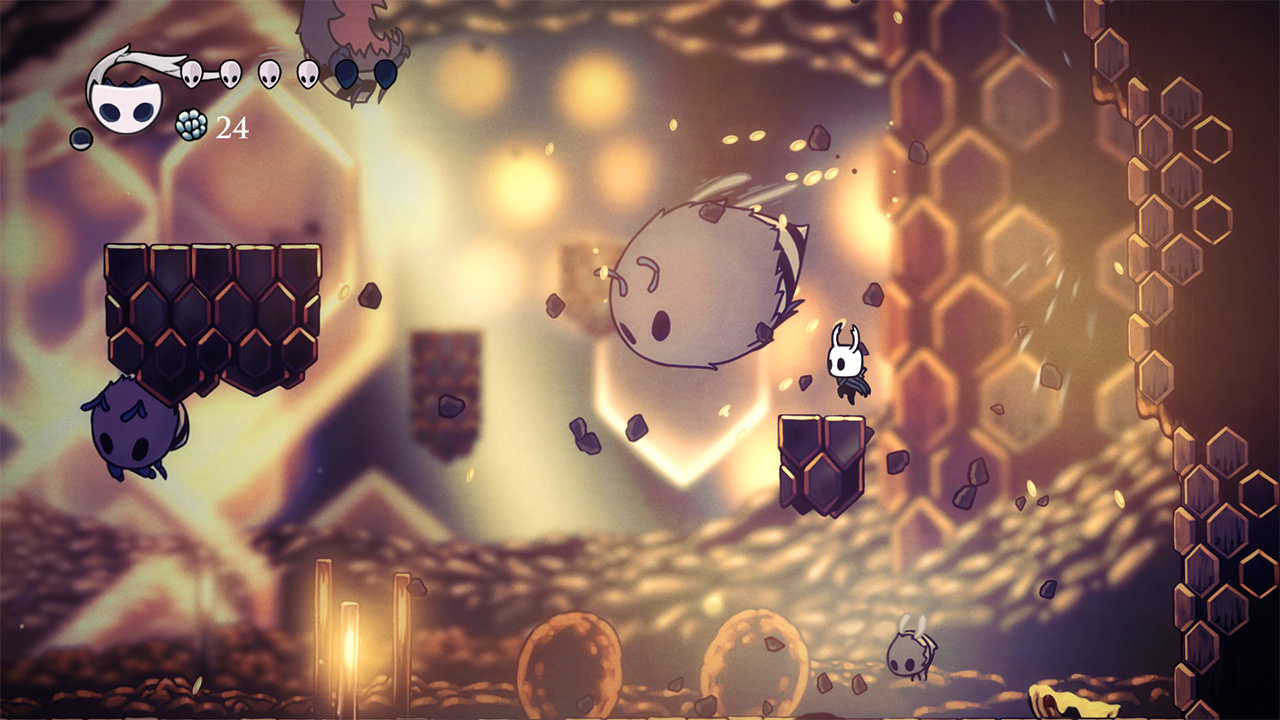
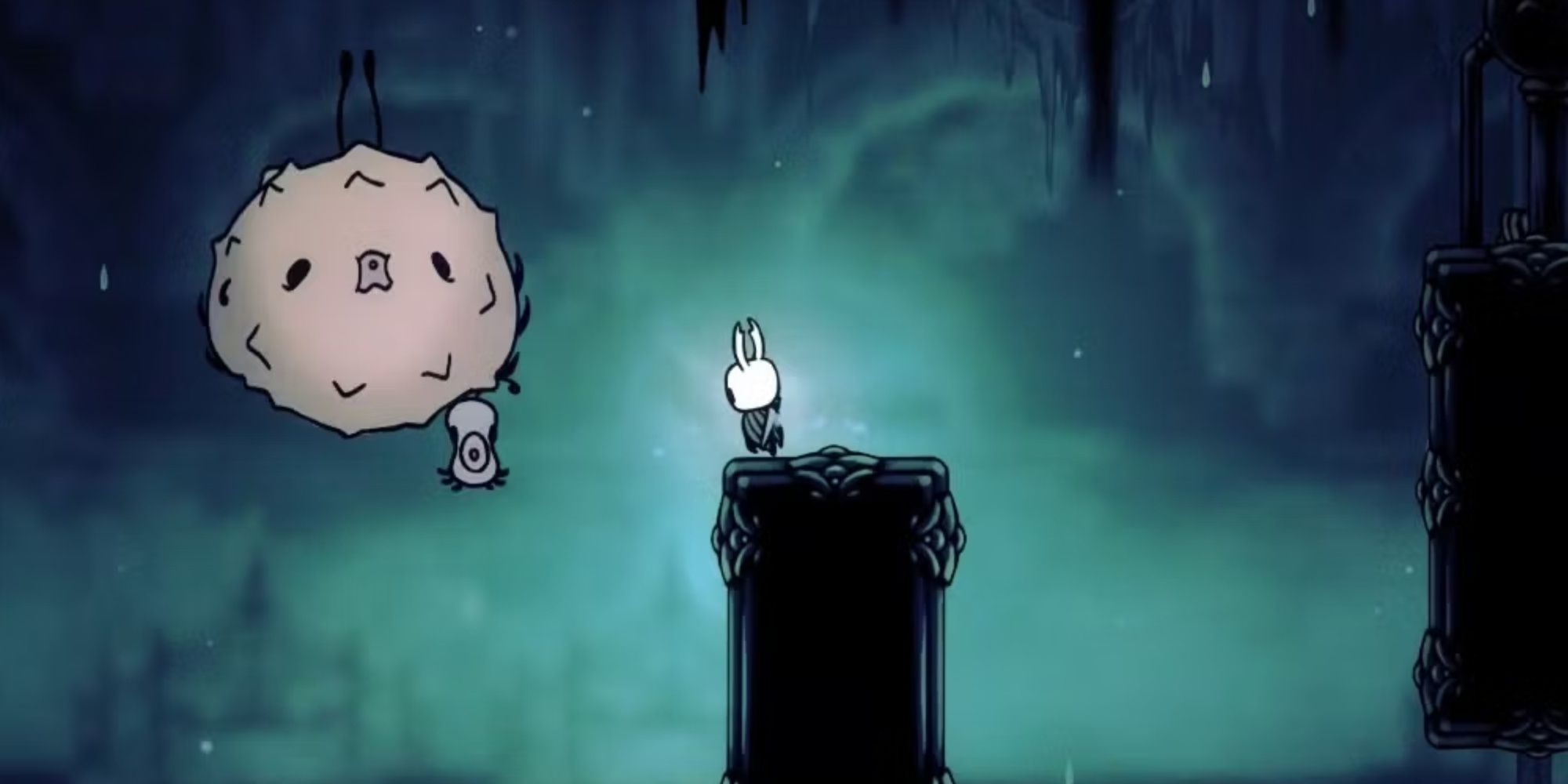
– Visual Style: These include floating, explosive “Ooma” creatures, which serve as more than just enemies.
– Typical Biomes: Found in Fog Canyon; while these are technically enemies, they function as environmental threats due to their explosive nature.
– Damage/Effect: Ooma creatures explode on contact, causing area-of-effect damage that is difficult to dodge in confined spaces.
– Notes: Background hazards add an additional layer of challenge to exploration beyond traditional combat.
5. Deep Pits
– Visual Style: Represented by dark voids that create a sense of danger and uncertainty.
– Typical Biomes: Present throughout Hallownest.
– Damage/Effect: Falling into a pit results in the loss of 1 Mask and respawns the player at the last safe ground.
– Notes: While these cause instant death, the player has the opportunity to recover, emphasizing careful platforming.
Notable Hazard-Intensive Biomes
– Deepnest: Known for its eerie darkness and narrow pathways, filled with sudden drops and environmental threats like thorns and spikes.
– White Palace: Requires near-perfect platforming skills with intricate spikes and sawblade traps, often regarded as a significant challenge for players.
Comparison to Other Games
Unlike some other Metroidvania titles, such as Ori and the Blind Forest, Hollow Knight’s design philosophy regarding environmental hazards allows for recovery instead of instant death. This approach encourages players to master their movements and offers a balance between risk and reward.
Summary Table of Key Hazards
| Hazard Type | Visual Style | Typical Biomes | Damage/Effect | Notes |
|——————-|—————————-|————————|————————————–|———————————————–|
| Spikes | Metal, Stone, Bone | All, esp. White Palace | 1 Mask, launches player | Common in platforming challenges |
| Thorns | Organic, Overgrown | Greenpath, Deepnest | 1 Mask | Often paired with platforming |
| Acid | Green, bubbling liquid | Royal Waterways | Damage over time | Requires specific abilities to bypass |
| Ooma (Explosives) | Floating, glowing spheres | Fog Canyon | Area explosion (enemy/environmental) | Treat as both enemy and hazard |
| Bottomless Pit| Darkness, void | All | 1 Mask, respawn | Instant death, but recovers at last safe spot |
Conclusion
The environmental hazards in Hollow Knight, including spikes, thorns, acid, explosive creatures, and bottomless pits, are integral to the game’s design, enhancing both the challenge and the rich atmosphere of Hallownest. Mastering these obstacles is crucial for progression, particularly in the more punishing late-game areas like Deepnest and the White Palace. The game’s approach allows for player recovery without instant death (apart from pits), fostering a rewarding experience for those willing to conquer its depths.



Leave a Reply