
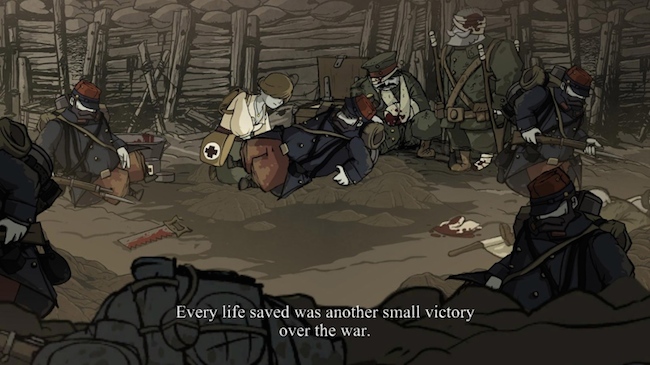
In Valiant Hearts: The Great War, Quick Time Events (QTEs) play a crucial role in enhancing the game’s narrative experience and engaging players in moments of tension and urgency. These QTEs present players with brief, context-sensitive action sequences that require prompt button presses or simple interactions to overcome challenges, such as administering medical aid to injured soldiers or navigating through perilous environments.
The design of QTEs in Valiant Hearts aligns seamlessly with the game’s storytelling and puzzle-solving elements. Unlike traditional games where QTEs are often tied to combat scenarios that demand split-second reflexes, this game utilizes them in a more thoughtful manner. Players may face sequences where they must quickly press a series of buttons to assist a wounded character, or operate machinery like levers and dynamite at critical points in the narrative. These interactions, while requiring timely action, are tailored to be concise and manageable, emphasizing the player’s involvement without overwhelming them with complex mechanics or prolonged sequences.
This integration of QTEs serves multiple purposes: it reinforces the game’s overall atmosphere and the emotional weight of its story, keeping players engaged during poignant moments of peril. The urgency created by these events contributes to the immersive experience, allowing players to feel a sense of involvement in the characters’ fates without diverting the focus from the game’s narrative-driven objectives.
In summary, Valiant Hearts: The Great War uses QTEs effectively to blend urgency with storytelling, focusing on character-driven moments and puzzle-solving rather than fast-paced action, which aligns with the game’s broader themes and emotional resonance.


Leave a Reply