
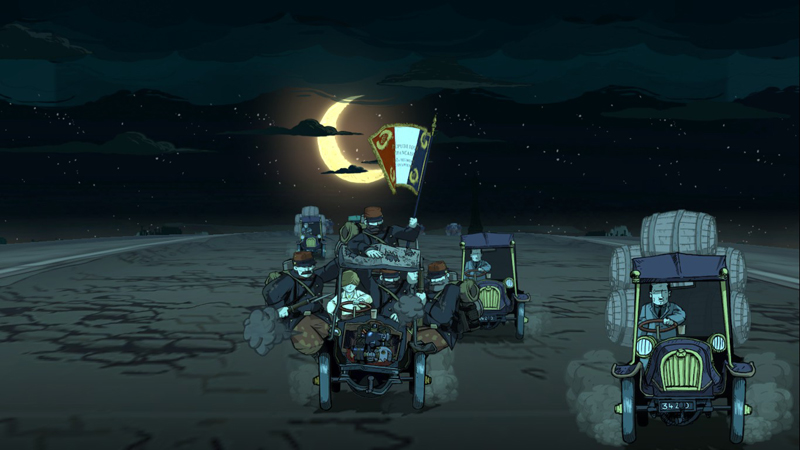
In Valiant Hearts: The Great War, the driving sequences featuring taxis and tanks are crafted as complex gameplay challenges that blend rhythmic timing with evasive maneuvers. These segments not only serve to engage players through traditional mechanics of action and reflex but also inject a captivating auditory experience rooted in classical music, elevating the emotional and immersive quality of the game.
Taxi Driving Sequences
The taxi driving sequences, particularly those involving Anna’s taxi, challenge players to navigate through a dynamic environment fraught with obstacles and enemy attacks. The gameplay is intricately tied to classical compositions, including pieces such as Brahms’ Hungarian Dance No. 5, Offenbach’s Can Can, and Rimsky-Korsakov’s Flight of the Bumblebee. Each of these tracks has a distinct rhythm that the gameplay mechanics leverage to create a syncopated challenge.
– Rhythmic Synchronization: Players must not only react to visual stimuli but also attune their movements to the rhythm of the music. The obstacles players must evade and the attacks from enemies are carefully timed to align with the musical beat. This creates a rhythmic flow, where the player’s ability to dodge becomes a dance of sorts, enhancing the game’s engagement through musicality.
– Evasive Mechanics: The core of these sequences does not simply lie in pattern recognition but also in the quick reflexes required to move the taxi. As obstacles appear in rhythm with the classical pieces, players are pushed to memorize patterns and react with precision, requiring a blend of anticipation and quick decision-making.
Tank Sequences
In contrast, the tank sequences, such as those themed around The Flight of the Bumblebee, amplify the challenge with an increased difficulty level. Here, the gameplay centers on learning and responding to intricate enemy tank attack patterns, necessitating both memorization and precise timing.
– Pattern Learning and Strategic Evasion: The tank sequences demand that players familiarize themselves with the flow of enemy attacks. Each enemy tank follows a specific attack pattern, and recognizing these patterns is critical for successfully navigating these segments. The stakes are raised as leaving the sequences unscathed becomes considerably harder due to the relentless nature of the enemy assaults.
– Complexity and Challenge: With the addition of strategic movements and perfect timing, these tank sequences elevate the gameplay to a more demanding level, where players must constantly adapt and refine their skills. The combination of memorizing attack patterns and executing timely dodges makes for a demanding yet rewarding experience.
Conclusion
Overall, the driving sequences in Valiant Hearts: The Great War serve as exemplary cases of how gameplay can be enhanced through the integration of musical elements and rhythmic challenges. By synchronizing obstacles and enemy attacks with classical music, the game fosters a unique experience that requires mastery of both timing and evasive maneuvers. This synergy between gameplay mechanics and music not only challenges players but also immerses them in the historical context and emotional narrative of the game, creating a profound connection between the player and the battles experienced during the Great War.


Leave a Reply