
In the game Device 6, players are encouraged to engage with puzzles and riddles without the fear of severe penalties for incorrect answers. The structure of the game fosters an environment where trial and error play a vital role in solving challenges, promoting an iterative process of learning and deduction.
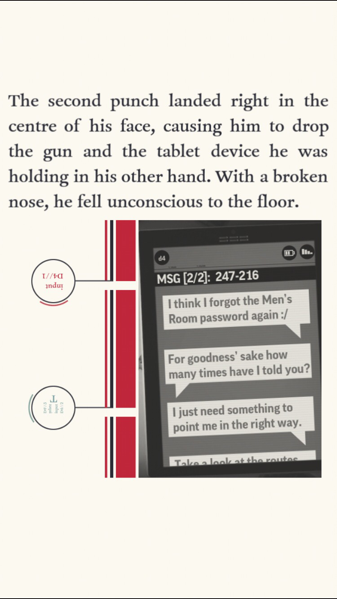
When players input an incorrect answer, such as a password or a numerical code, the game doesn’t impose harsh penalties like game over scenarios or significant progress loss. Instead, it gently nudges players to reflect on the clues and hints they’ve collected during their exploration. This design element enhances the focus on puzzle-solving, allowing for a productive trial-and-error experience.
For instance, in early puzzles, such as the four-digit lock encountered in Chapter 1, if players enter an incorrect number sequence, the game invites them to reconsider the clues and revisit their prior inputs. This might involve calculating the correct total sum based on gathered hints or reexamining the logical relationships among the numbers. The expectation is not to discourage players but to stimulate critical thinking and engagement with the game’s narrative and clues.
Similarly, in puzzles that require deciphering passwords, like those involving characters such as the Three Bears, a wrong input serves as a prompt to reassess the hints, such as interpreting upside-down numbers or identifying shared characteristics among the clues. Such puzzles encourage players to analyze their surroundings, take notes, and deduce the correct answers logically.
Overall, Device 6 creates a supportive gaming experience where incorrect answers are seen as opportunities for deeper engagement and understanding rather than failures. Players are motivated to gather information, revise their hypotheses, and persist in their attempts until they successfully unlock the next step in the narrative-driven puzzle adventure.
Leave a Reply