
Gwent is an engaging and strategic mini-game found within The Witcher III: Wild Hunt, where players build decks and compete in turn-based card matches. Here’s a detailed guide on how to effectively use Gwent cards and navigate this tactical game.
How to Use Gwent Cards in The Witcher III: Wild Hunt
1. Deck Building:
– Faction Selection: Your deck is chosen from one of several factions, each with its own unique leader card and special abilities. Understanding the strengths and weaknesses of each faction can greatly influence your strategy.
– Card Composition: A minimum of 22 cards is required to form a playable deck. This includes unit cards, special cards, and a leader card. You’ll typically start with a basic deck but can expand it by winning matches against other players or purchasing cards from merchants and vendors.
2. Card Types:
– Unit Cards: These are the primary cards that contribute strength points to your score on the battlefield. Each unit card is categorized into three distinct rows:
– Close Combat: Includes units that are typically more powerful in direct confrontations.
– Ranged: Often provides bonuses based on distance and strategic placement.
– Siege: Focused on long-range attacks and can dominate the battlefield from a distance.
– Hero Cards: Special and powerful, these cards cannot be affected by negative weather effects, making them crucial in countering certain strategies.
– Weather Cards: These can drastically impact gameplay by reducing the strength of units in specific rows. For instance, “Biting Frost” negatively affects units in the Close Combat row, weakening your opponent’s position.
– Special Cards: These cards offer unique advantages, such as “Clear Weather” which removes adverse weather effects, or “Scorch,” which destroys the highest-strength unit on the field.
3. Gameplay Mechanics:
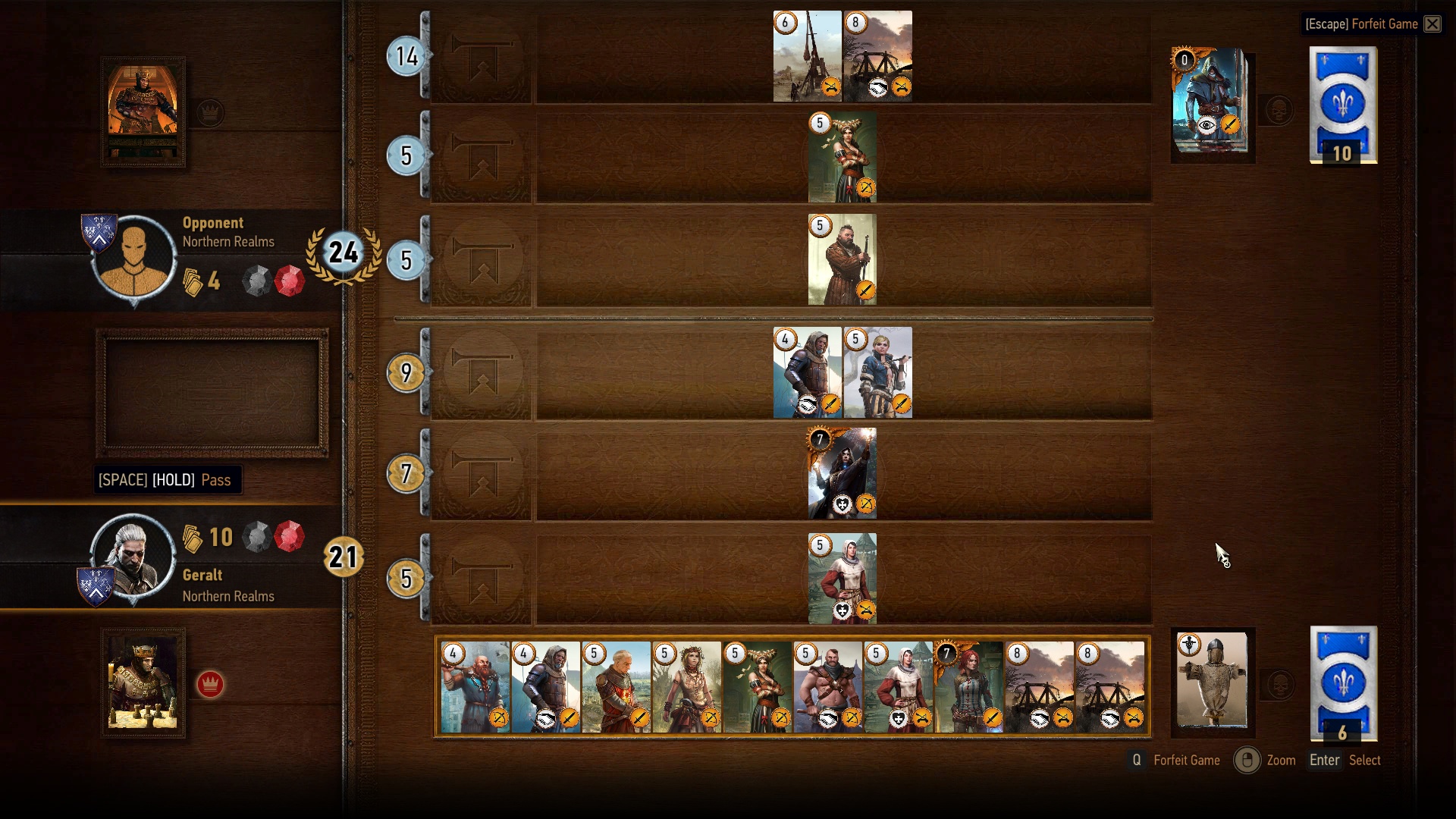
– Turn Structure: In a Gwent match, both players draw 10 cards from their respective decks and then take turns playing cards. A player can choose to either play a card or pass their turn.
– Winning Rounds: The objective is to outscore your opponent in each round by strategically placing your cards. A player needs to win two out of three rounds to secure victory.
– No Mid-Match Drawing: It’s essential to use the initial 10 drawn cards strategically, as there are no opportunities to draw new cards during a match.
4. Special Abilities:
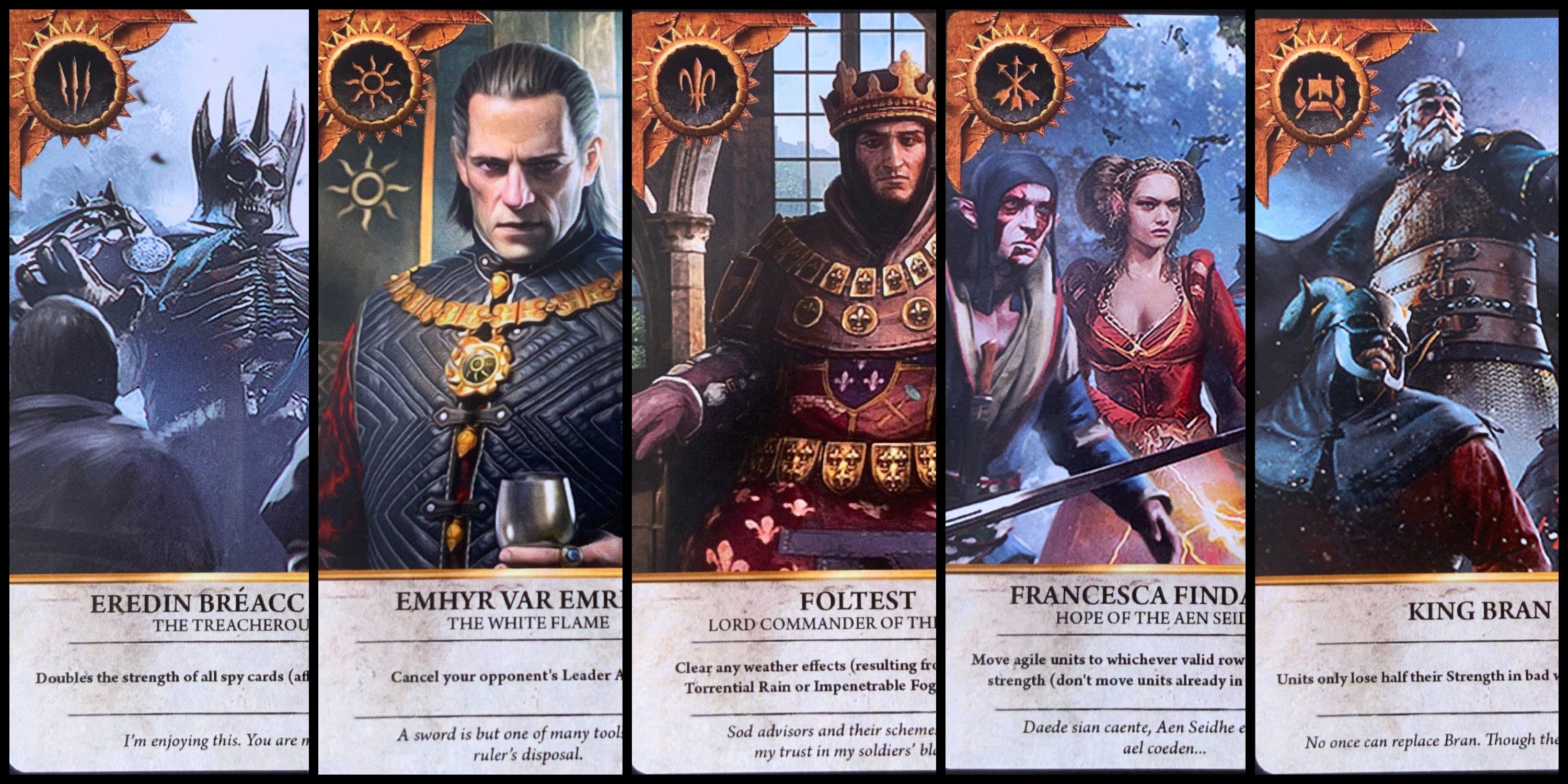
– Unit and Leader Abilities: Many unit cards have specific abilities that activate when played or in certain conditions. Your leader card also provides a unique ability that can be employed once during a match, often proving pivotal in tight situations.
– The “Decoy” Card: This special card allows players to return one of their unit cards that’s already on the battlefield back to their hand. This can be useful for repositioning cards to maximize their effectiveness or replaying them for repeated benefits.
5. Strategic Tips:
– Timing of Leader Ability: Deploy your leader’s ability at the right moment, as it can be game-changing.
– Resource Management: Be aware of your total card composition and the cards that remain unseen in your deck, as careful management of your cards can impact overall performance.
– Weather Manipulation: Use weather effects not only to weaken your opponent but also to strengthen your own units, if applicable.
– Strategic Passing: Deciding when to pass can be just as critical as playing your cards. Early victories might leave you at a disadvantage later if you deplete your cards early.
Conclusion
Gwent is a sophisticated card mini-game that melds strategic deck-building with tactical play over multiple rounds. Success hinges on a careful balance of card strength, awareness of special abilities, and astute timing to outmaneuver your opponent and secure victories in a best-of-three format. Engage with the game thoughtfully, and you will enhance your Gwent skills and enjoy the intricate depth this mini-game offers in the world of The Witcher III: Wild Hunt.


Leave a Reply