
In The Witcher III: Wild Hunt, the five Witcher Signs—Aard, Axii, Igni, Quen, and Yrden—each offer unique tactical advantages that significantly enhance Geralt’s combat capabilities. Understanding the strengths and applications of each Sign enables players to tailor their strategies to effectively manage different combat scenarios.
Overview of Witcher Signs
1. Aard:
– Function: A telekinetic blast that can push enemies away.
– Combat Application: Aard is particularly effective for crowd control, as it can stagger multiple foes and break through their defenses, creating opportunities for follow-up attacks. Its knockback effect can also be used to create distance from aggressive enemies or force them into unfavorable positions.
2. Axii:
– Function: Manipulates the minds of enemies, allowing temporary control over them.
– Combat Application: In combat, Axii can stun foes or turn them against their allies, providing a tactical advantage during skirmishes. Outside of combat, it serves as a powerful tool for social interactions, allowing Geralt to influence conversations and manipulate situations to his favor.
3. Igni:
– Function: A fire-based attack that inflicts direct damage and can ignite enemies.
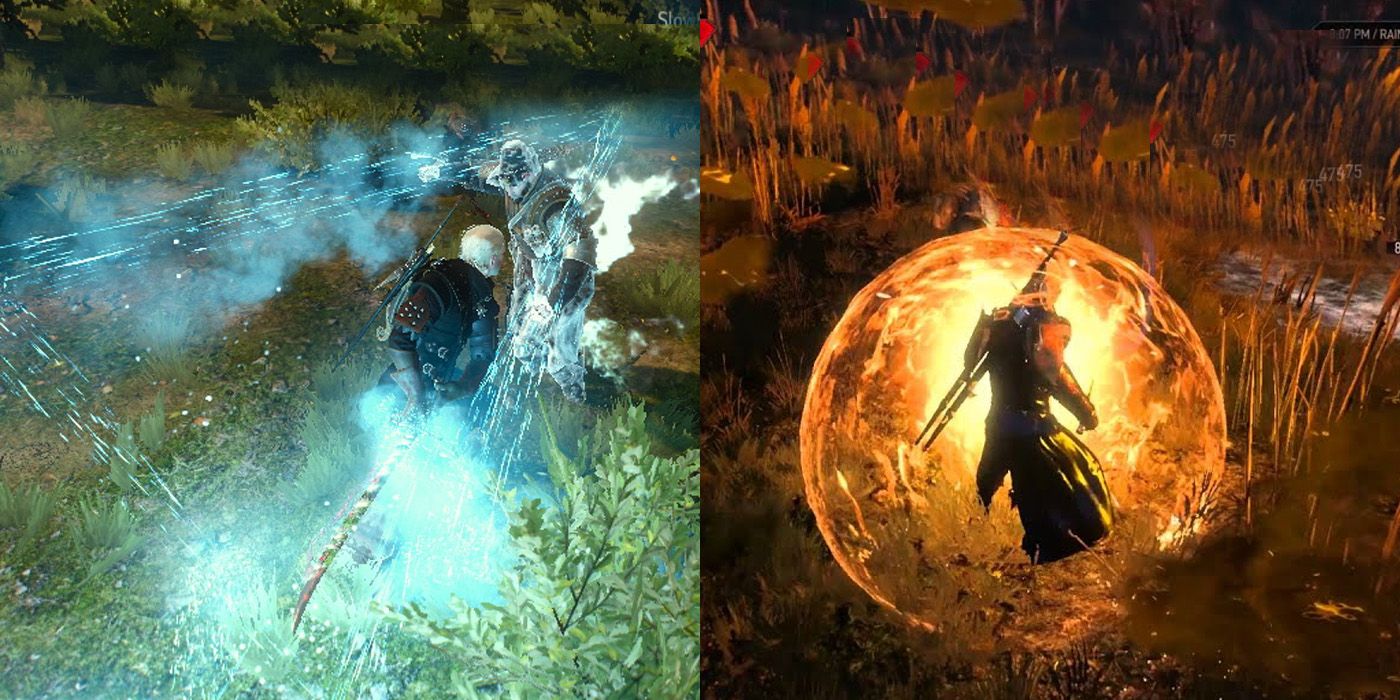
– Combat Application: Igni is effective for area damage, especially against groups, as it can cause lingering burn damage over time. At higher levels, it can even produce a continuous stream of flames, ensuring that trapped enemies face further consequences. This Sign is invaluable when combined with crowd-control tactics, such as utilizing Yrden traps to immobilize foes and setting them ablaze.
4. Quen:
– Function: Creates a protective shield that absorbs damage.
– Combat Application: Quen is essential for survivability during tougher battles, as it can absorb multiple hits before dissipating. Upgrades can allow for faster regeneration of the shield or transform it into an Active Shield, enabling Geralt to move more freely while maintaining protection. This makes Quen versatile for both defensive play and aggressive engagements where taking risks is sometimes necessary.
5. Yrden:
– Function: A magical trap that slows and can immobilize enemies.
– Combat Application: Yrden is crucial for controlling the battlefield, particularly against fast-moving or powerful foes. By placing traps strategically, players can dictate enemy movement and create openings for follow-up attacks. Upgrades to Yrden can allow for multiple traps to be set, enhancing its crowd control capabilities.
Strategic Usage in Combat
The tactical diversity of the Witcher Signs allows players to mix and match their usage based on the challenges presented by various enemies. For example:
– Combination Tactics: Utilizing Aard to disrupt a group of foes followed by Igni can maximize damage and capitalize on the chaos. Alternatively, setting up a Yrden trap can slow down approaching enemies, making them an easier target for Igni’s flames.
– Defense and Control: Quen provides a solid defense, enabling Geralt to withstand attacks while repositioning or executing his strategy. Coupled with Axii, combat becomes less about outright aggression and more about manipulating the battlefield and opponents to gain the upper hand.
Conclusion
Overall, the Witcher Signs are integral to Geralt’s combat style in The Witcher III: Wild Hunt. By mastering these Signs and their upgrades, players can create formidable strategies tailored to specific encounters, showcasing the depth of combat mechanics within the game. The ability to adapt tactics on the fly not only enhances survivability but also enriches the overall gaming experience, allowing for creative problem-solving and engagement with the world.

Leave a Reply