
In This War of Mine, effective management of your group of survivors is crucial for enduring the hardships of war. Each character presents different skills and emotional states that influence their effectiveness and the overall survival of your shelter. Here’s a detailed guide to optimizing your group’s potential:
1. Assigning Roles Based on Skills
Survivors come with unique abilities that can significantly impact your strategy:
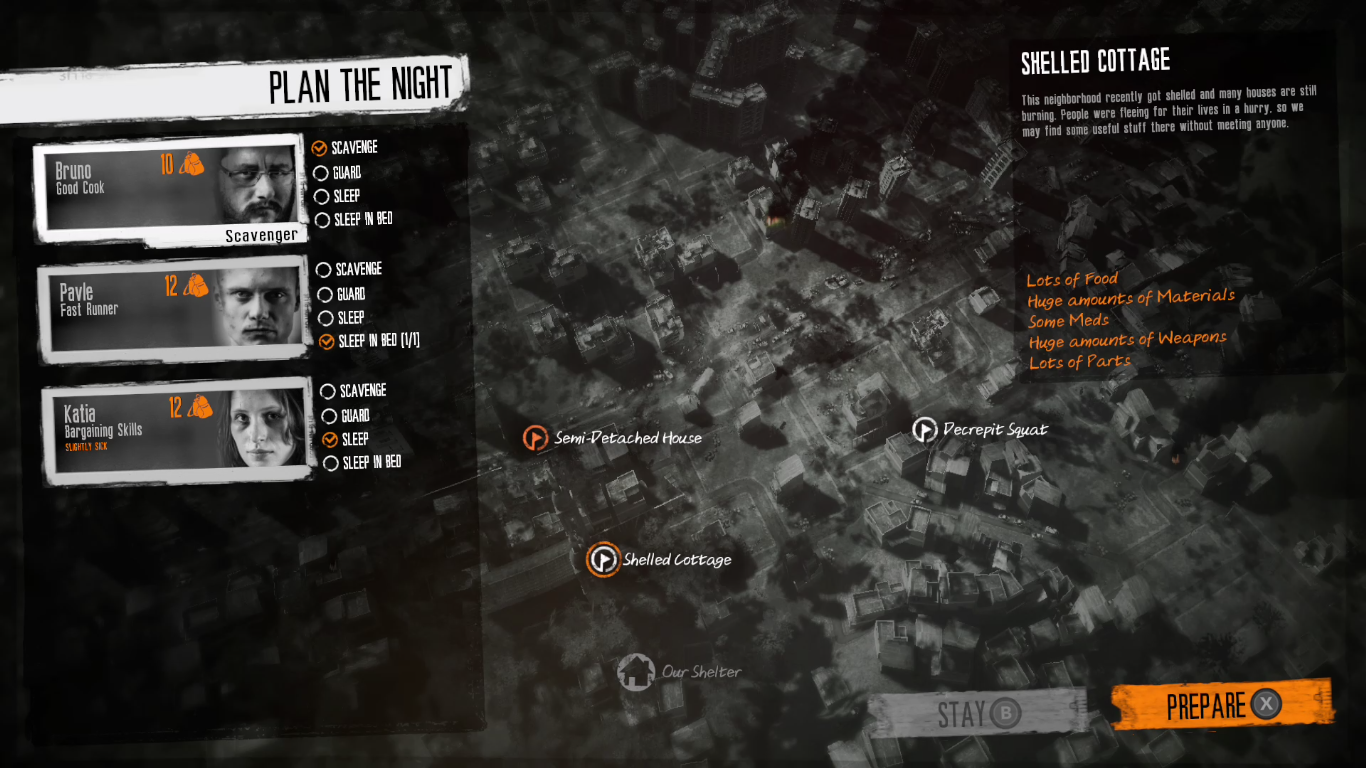
– Scavengers: Assign your most skilled scavengers to nocturnal expeditions as they can navigate dangers more efficiently and gather essential resources.
– Cooks and Craftsmen: During the daytime, direct survivors with cooking and crafting skills to prepare meals and build or upgrade shelter facilities. This maximizes resource use and improves the group’s living conditions.
– Guards: Allocate survivors with combat proficiency to guard the shelter at night to protect against intrusions, allowing others to focus on scavenging.
2. Managing Daily Activities
Optimize each survivor’s time based on their immediate needs and tasks:
– Daytime: Survivors should eat, rest, and engage in crafting or cooking. This is also the ideal time to heal wounds or tend to illness among the group to keep everyone in top condition before the night’s challenges.
– Nighttime: While some survivors go scavenging, others should rest to manage fatigue or stand guard. Efficiently employing rest strategies helps maintain a high-energy team for future tasks.
3. Monitoring Survivor Needs
Consistent attention to hunger, wounds, illness, mood, and fatigue is essential for survival:
– Hunger Management: Prioritize cooked meals or canned food when possible to boost morale and health—raw food can sustain basic hunger but does little for overall well-being.
– Health Management: Treat injuries and illnesses promptly with available medicine and ensure adequate rest. This will prevent the deterioration of survivors’ health and morale.
– Emotional Well-Being: Keep an eye on mood indicators; high levels of sadness or depression can decrease a survivor’s efficiency. Activities like cooking or interacting with fellow survivors can help lift spirits.
4. Building and Upgrading Shelter Facilities
Investing in your shelter is key to long-term survival:
– Essential Structures: Build workshops such as a metal workshop for crucial tools and weapons, a stove for cooking, and a garden for sustainability. Each facility should be manned by survivors with appropriate skills to enhance output.
– Comfort and Warmth: Upgrade your shelter with heating systems to stave off the cold during harsh weather, aiding in health maintenance.
5. Feeding Strategies
Balance nutritional strategies based on available resources:
– Quality vs. Quantity: Prioritize feeding survivors with well-prepared meals to boost health and morale. However, using raw food strategically can help manage resources if supplies are low.
– Sustainability: Consider the long-term implications of your feeding choices. Sometimes maintaining a basic level of sustenance is preferable to depleting your resources quickly.
6. Trade and Interaction
Engage thoughtfully in trading or social interactions:
– Decision Making: Take cautious approaches to trading offers or interactions with other survivors, as they can impact morale and resource availability—some trades may benefit your team, while others might deplete vital supplies.
Practical Application
For example, if you have a night where scavenging seems risky due to enemy presence, consider sending your less skilled survivors to guard while just one skilled scavenger risks the expedition. During the day, utilize this time to nurture all survivors through cooking hearty meals or recovering from wounds.
By continually balancing the strengths and needs of your survivors, you enhance your chances of enduring the hardships of wartime life, making every decision count towards collective survival in This War of Mine.


Leave a Reply