
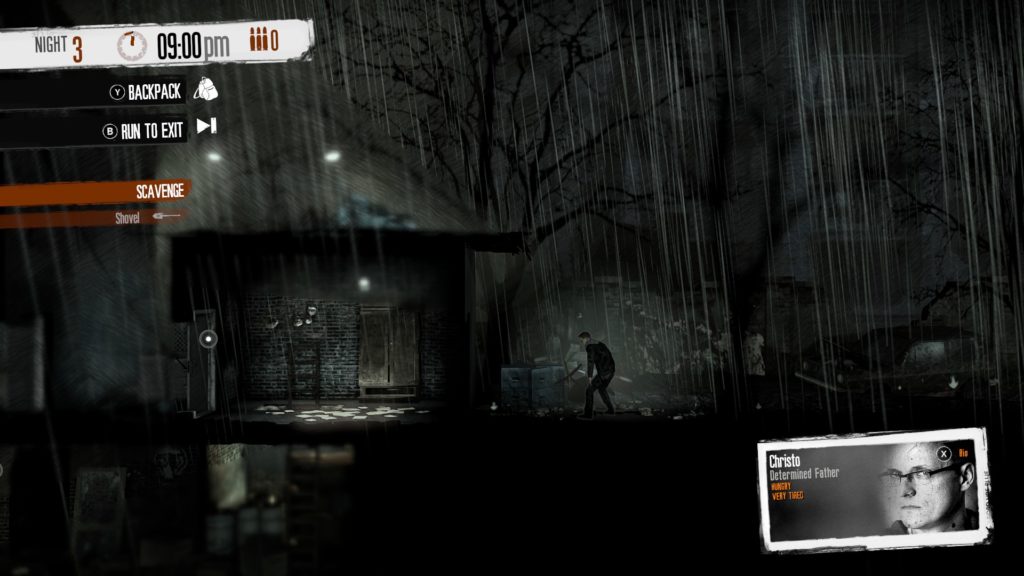
In “This War of Mine,” the gameplay experience is intricately woven with moral dilemmas that reflect the harsh realities of survival in wartime. Players are immersed in a world where every scavenging expedition poses significant ethical challenges, forcing them to confront the tension between survival instinct and humane principles. The game adeptly highlights how crisis situations blur moral lines and complicate decision-making, leading players to grapple with the consequences of their actions.
Key Moral Dilemmas:
1. Altruism vs. Self-Preservation:
Players often encounter opportunities to help other civilians or groups in distress. While altruistic actions can foster a sense of humanity amid chaos, they come at a steep price, including the depletion of valuable resources and time. The decision to assist others can jeopardize your group’s survival, leaving players torn between their guilt over abandoning those in need and the necessity of prioritizing their own survival. This dilemma resonates deeply with themes of moral responsibility in crisis situations.
2. Engagement in Violence:
The game forces players to decide whether to resort to violence when threats arise. As ordinary civilians, the characters are ill-equipped for combat, making any engagement a dire choice that risks not only physical harm but also moral disintegration. Utilizing violence against other survivors can secure resources or safety for one’s group; however, it also raises profound ethical questions about the right to life and the cost of survival. This contradiction underscores the brutal reality of desperation where individuals may harm others simply to stay alive.
3. Risk versus Reward:
Players must constantly evaluate the dangers of returning to previously scavenged locations. As the game progresses, areas that were once safe for exploration can become treacherous due to new occupants or heightened hostility. This leads to a strategic dilemma where players weigh the benefits of additional resources against the very real risk of losing their characters. This balancing act reflects the uncertain nature of survival where short-term gains might undermine long-term viability, adding layers of complexity to decision-making.
4. Permanent Consequences:
Unlike many games, the death of characters is permanent, creating an atmosphere of urgency and gravity around every choice. Characters can die as a result of morally charged decisions or violent encounters, emphasizing the emotional stakes involved. Players must consider not only what their choices mean for immediate survival but also how they will impact the group’s morale and cohesiveness. The psychological burden that comes with the weight of irreversible decisions mirrors the profound trauma faced by civilians in real wartime circumstances.
5. Navigating Ambiguity:
The scenarios presented in “This War of Mine” often lack clear moral answers, forcing players into ambiguous situations. There are no right or wrong paths, and each decision can lead to unforeseen consequences, embodying the chaotic unpredictability of war. This ambiguity is reflective of real-life dilemmas faced by individuals in conflict zones, lending an authenticity to the moral struggles depicted in the game. Players must adapt to this complexity, navigating through a landscape where “survival” often comes at the cost of one’s humanity.
Conclusion:
In summary, scavenging in “This War of Mine” ascends beyond mere resource collection; it transforms into a profound exploration of moral complexity, survival ethics, and the psychological ramifications of one’s choices. Players engage with lasting implications—both for themselves and their characters—illustrating how conflicts force individuals to grapple with their conscience while striving to endure. Through these elements, the game powerfully reflects on the human condition in times of war, illustrating that ethical decisions are perhaps the most challenging and impactful of all when survival is at stake.



Leave a Reply