
The vampiric hunger mechanic in Cabernet serves as a pivotal gameplay element that intricately weaves survival instincts with social interactions, deeply influencing the player experience. Below is an in-depth analysis of how hunger mechanics shape gameplay within Cabernet.
1. Health Mechanics
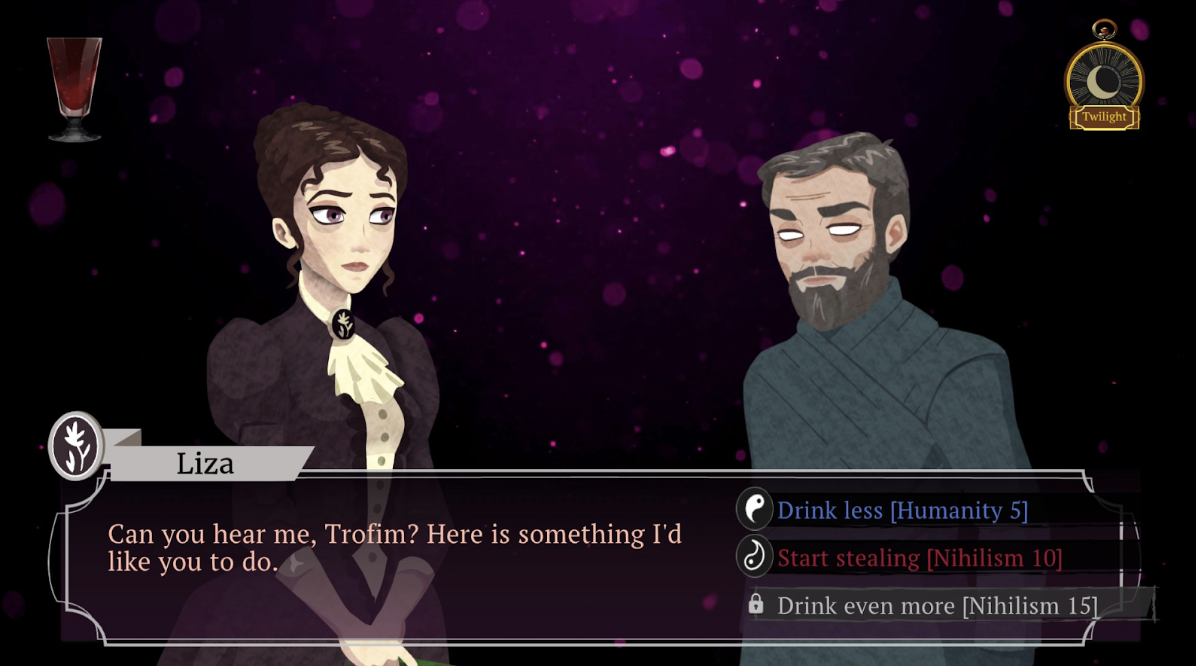
– Blood Chalice: Players monitor Liza’s health through a blood chalice displayed in the top-left corner, which gradually drains each night. This progressive depletion creates a constant sense of urgency as players must adapt their strategies to manage hunger.
– Physical Condition: A critical aspect of survival is maintaining blood levels. When the chalice falls below the halfway mark, Liza suffers from weakened abilities, resulting in impaired mobility and reduced effectiveness in bat form. This reflects how essential blood is not just for survival, but for retaining character functionality.
– Consequences of Neglect: Ignoring hunger does not lead to immediate death but can deteriorate Liza’s health significantly, culminating in a game-over scenario. This ongoing threat compels players to regularly engage with feeding mechanics, integrating survival management into the game’s core loop.
2. Feeding Mechanics
– Primary Food Source: The primary means for Liza to sustain her health involves feeding on humans, but this is contingent upon enchanting them first—tying the feeding mechanic directly to social interactions.
– Enchantment Requirement: Building relationships is pivotal since Liza can only enchant humans with whom she shares a positive rapport. This mechanic emphasizes the importance of social strategies, as antagonistic relationships bar crucial feeding opportunities.
– Feeding Process: The interactive nature of feeding, where players can control the amount of blood taken, adds layers of engagement. However, the risk of overfeeding—potentially killing a victim—introduces a tense dynamic that pressures players to manage their actions carefully.
– Overfeeding Risks: Timing becomes crucial in the feeding process. A delay between releasing the action button and the feeding conclusion adds a layer of strategy, making players contemplate not just the act of feeding, but the potential ramifications of their choices.
3. Alternative Food Sources
– Rabbits: In moments of desperation, players can resort to hunting rabbits as a makeshift food source. However, choosing this option incurs Nihilism points, portraying the moral repercussions of deviating from feeding on humans.
– Purchased Blood: The availability of Cabernet, a blood substitute purchasable from the Countess, offers a temporary respite from hunger but at a high cost, emphasizing resource management throughout gameplay. This option is not sustainable long-term, reinforcing the necessity of establishing reliable feeding practices.
4. Impact on Gameplay Experience
– Social Dynamics: Hunger is intricately linked to social interactions in Cabernet. Developing healthy relationships is essential for safe feeding, pushing players to engage in dialogue and character-building activities.
– Moral and Ethical Decisions: Players face ongoing moral dilemmas regarding feeding choices—balancing the necessity of human versus animal blood affects two critical attributes, Humanity and Nihilism. These mechanics push players to confront the ethical implications of their actions and guide the narrative’s thematic depth.
– Time Management: The game limits players’ actions each night by providing just three action points across various times—dusk, midnight, twilight, and sunrise. This restriction necessitates meticulous planning to satisfy hunger, foster relationships, and explore the environment, significantly enhancing strategic gameplay.
5. Late Game Developments
– Evolution of Hunger: As players progress, maintaining hunger levels becomes less of a concern due to the introduction of more dependable feeding methods, such as romantic connections or special items bypassing the negative consequences of traditional feeding. This shift provides a more lenient gameplay experience in the late game, allowing players to focus on narrative exploration.
Conclusion
In summary, the vampiric hunger mechanic in Cabernet significantly enriches the gameplay experience, merging survival and moral decision-making with the complexities of personal relationships and resource management. Players must navigate an intricate web of choices that affect not only their survival but also their character’s ethical standing within a hauntingly rich narrative environment. This dynamic interplay between hunger and social interaction is what makes Cabernet a compelling and immersive experience.



Leave a Reply