
Civilization VII showcases significant advancements in its tech and civic tree systems, marking a distinct evolution from earlier iterations in the franchise. Here is a comprehensive breakdown of these changes and their implications for gameplay:
New Tech Tree System
1. Age-Specific Tech Trees:
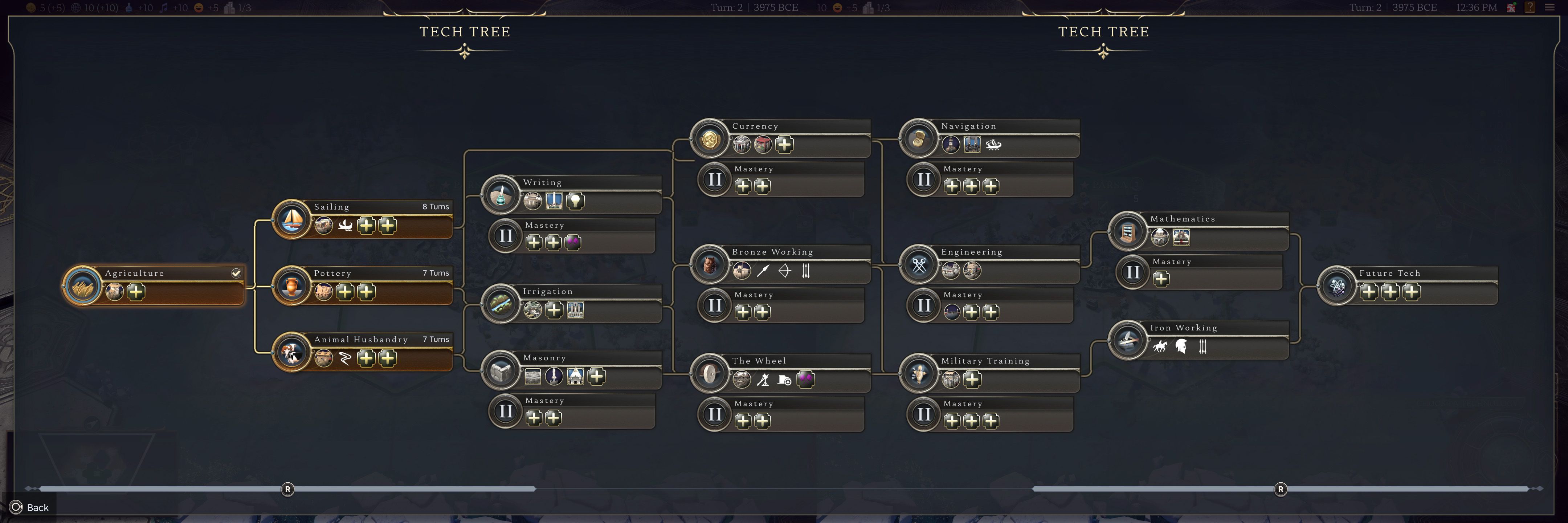
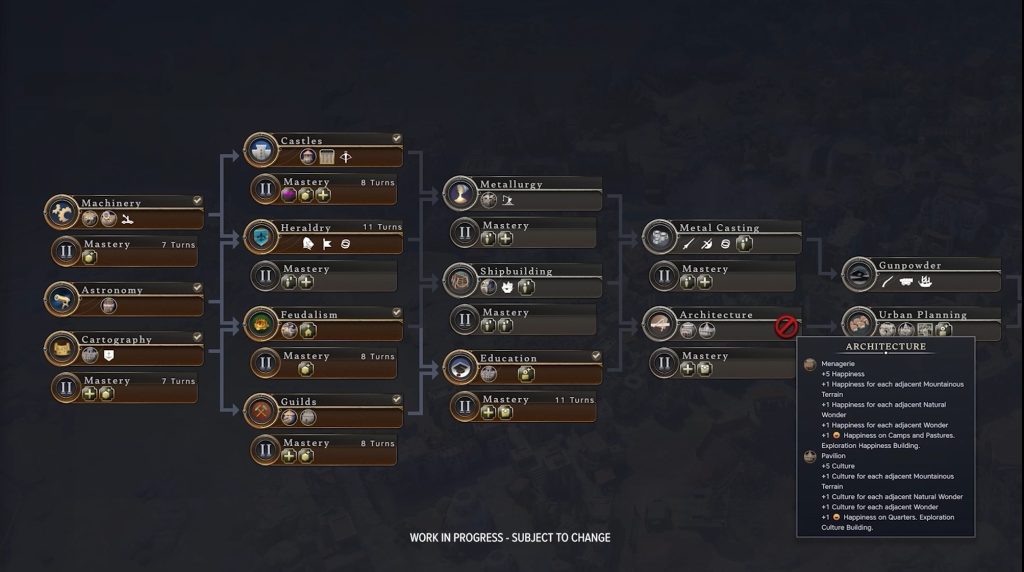
Civilization VII diverges from the traditional single tech tree model by implementing separate tech trees that align with three distinct eras: Antiquity, Age of Exploration, and Modern Age. This structure compels players to adopt strategies tailored to the specific technological advancements available within each era, fostering a deeper strategic progression as players navigate through distinct phases of history.
2. Research Mastery:
A revolutionary feature in Civilization VII is the introduction of Research Mastery, which allows players to research certain technologies multiple times. Achieving mastery in a technology unlocks enhanced bonuses, new buildings, units, or abilities that can offer pivotal advantages in military and production aspects. This encourages players to prioritize specific technologies for deeper investment rather than simply advancing linearly through the tech tree.
3. Focus on Science Yield:
While Science Yield remains a foundational element for technological advancement, the game’s emphasis on targeting specific sciences pertinent to different ages creates an intricate layer of strategy. Players must consider not only which technologies to pursue but also how to generate Science Yield effectively to maximize their progress.
New Civic System
1. Civics vs. Technologies:
The distinction between technologies and civics is heightened in Civilization VII. Technologies are primarily aligned with advancements in military capabilities, infrastructure, and production, while civics delve into shaping government policies, social structures, and cultural evolution. Progressing through civics requires Culture Yield, which operates independently from the Science Yield utilized for tech advancements.
2. Mastery in Civics:
Similar to tech mastery, civics can also be advanced to mastery levels, providing players with the opportunity to enhance particular civic elements for greater benefits. This synergy with the tech mastery system allows for a cohesive approach to civilization development, enabling players to align their technological and cultural growth in a complementary manner.
3. Unique Civics Trees:
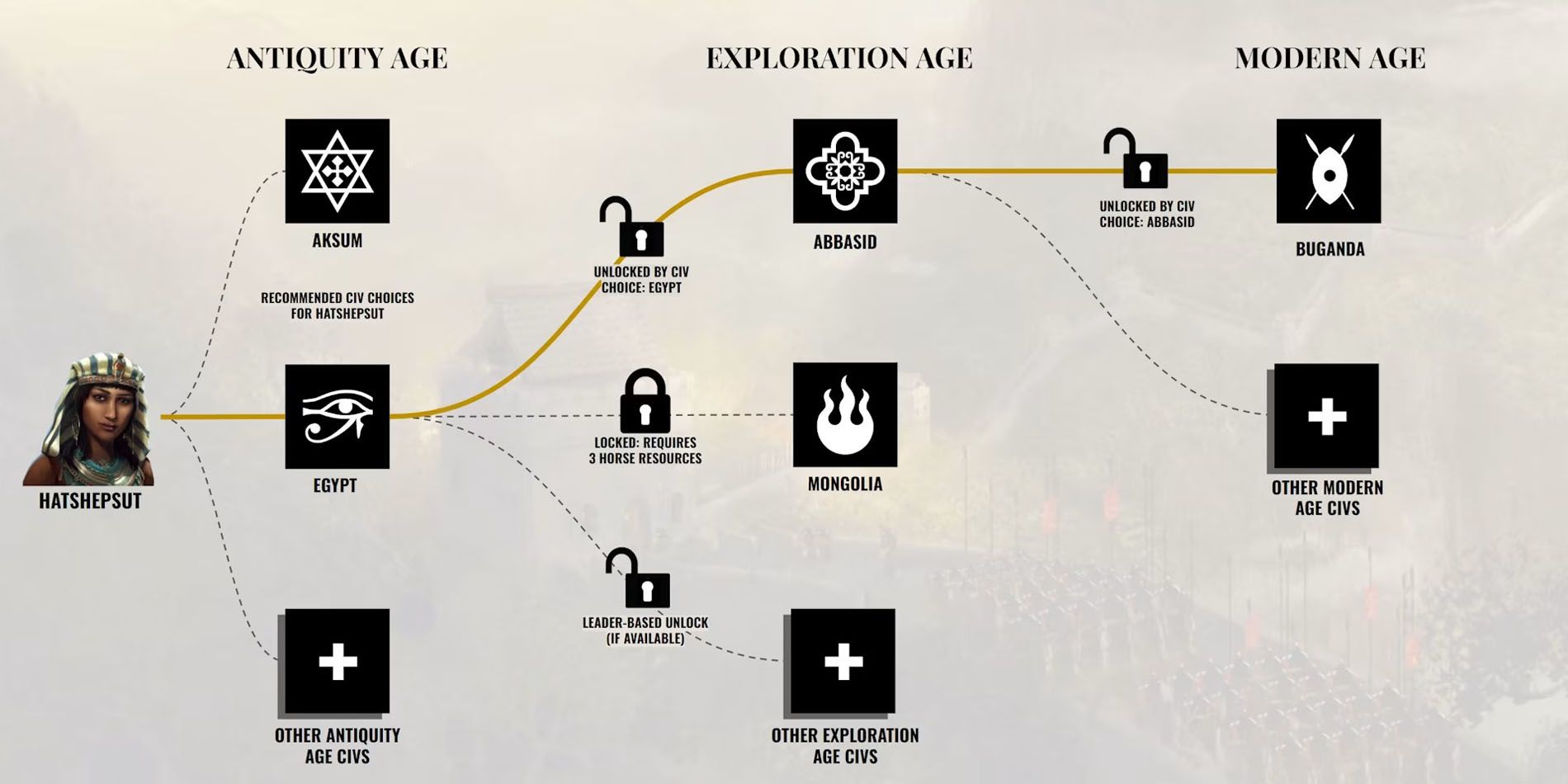
Each civilization now boasts its own mini civic tree, tailored to its unique traits and strengths. This customization allows for specialized cultural and societal developments, making each civilization feel distinct and offering players varied gameplay experiences that reflect their chosen civilization’s identity.
Overall Impact on Gameplay
– Strategic Flexibility:
The incorporation of age-specific tech trees, mastery options for both technologies and civics, combined with the separation of Science and Culture Yields, grants players enhanced strategic flexibility. They can decide whether to specialize in particular areas, allowing for more diversely developed civilizations or focus on a balanced approach between technology and culture.
– Cultural and Technological Depth:
Mastering both technologies and civics contributes to a richer gameplay experience, allowing players to create specialized units, advanced buildings, or unique societal traits that were often limited in previous games. This depth provides a more nuanced feel to civilization management and development.
Conclusion
In summary, the innovations in Civilization VII’s tech and civic tree systems significantly enrich the gameplay experience. By offering greater complexity, flexibility, and depth, players are empowered to adopt varied strategies in cultivating and managing their civilizations, bringing a fresh perspective to the iconic series. The result is a more engaging and tailored gameplay experience that caters to individual playstyles and strategic preferences.
Leave a Reply