
In Dorfromantik, mastering tile placement is vital for maximizing your score and extending your gameplay experience. Here’s a comprehensive look at the key factors that influence effective tile placement in the game.
1. Contiguous Area Formation
– Contiguity Requirement: Tiles must be placed in a way that ensures the playing area remains contiguous. Each newly placed tile must share at least one edge with an existing tile. This principle keeps the game engaged and strategically challenges players to expand the territory thoughtfully.
2. Edge Matching
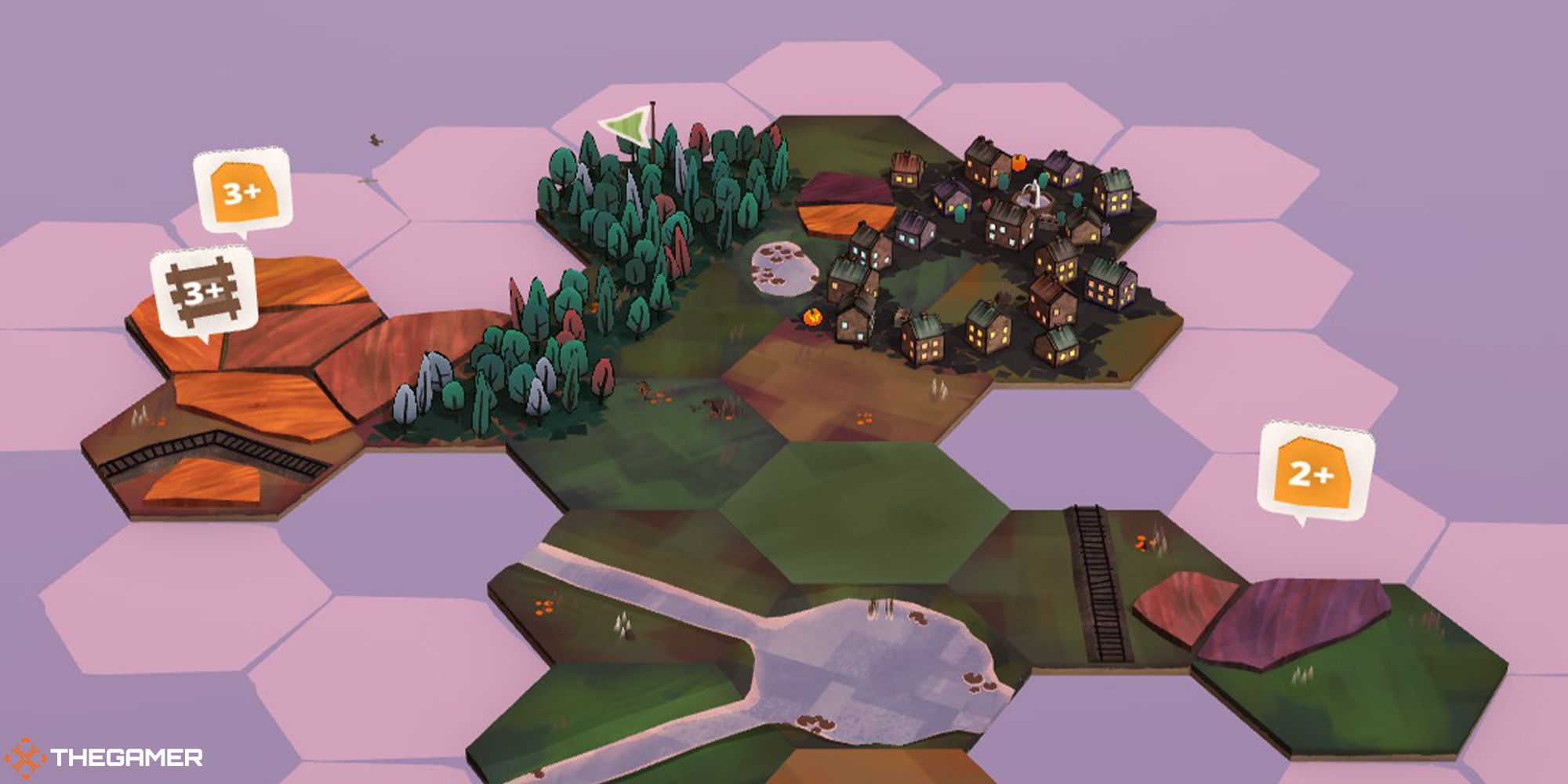
– Visual Indicators: Each tile features edges with specific color indicators—white for a successful match and pink for a mismatch. To score points and maintain gameplay continuity, players should aim to align edges of the same type, whether they be fields, forests, or water bodies.
– Special Features: Particular attention must be paid to railroad and river edges. Discrepancies in these features can not only detract from scoring but can also disrupt potential expansions of the layout. Continuation on these paths is essential for maximizing score bonuses.
3. Perfect Placement
– Achieving Perfect Matches: When players successfully match all six sides of a tile with adjacent tiles of the same type, they are awarded a significant bonus of 60 points along with additional tiles. This “perfect placement” is a strategic goal that can greatly extend gameplay. It’s important to carefully consider the arrangement of surrounding tiles to optimize for this benefit.
4. Quests and Objectives
– Specific Goals: Certain tiles include quests, such as connecting a windmill to six grain fields or linking a locomotive to ten tracks. Completing these quests not only yields extra tiles but also encourages strategic planning and tile placement that may not otherwise align with spontaneous play. Engineering connections to fulfill these objectives can lead to both scoring opportunities and strategic depth.
5. Tile Variety and Planning
– Understand Tile Types: Familiarity with the variety of tiles available and their characteristics is key. For instance, knowing how many houses, trees, or fields can appear on a single tile will assist in strategic placement decisions. Understanding the composition of the tiles allows players to plan effectively for possible future moves.
– Future Planning: The game provides previews of upcoming tiles, which can be utilized for strategic foresight. Players should analyze these previews to prioritize more feasible quests while being flexible enough to adjust their strategies if new quests generate infeasible challenges.
Summary
By considering contiguous area formation, edge matching, perfect placement, quests, and the variety of tiles, players can refine their strategies in Dorfromantik. Leveraging these factors effectively will lead to higher scores and more enjoyable play sessions, as players navigate the engaging and beautifully crafted world of tile-based strategy.
-session-complete-score-(right).jpg)


Leave a Reply