
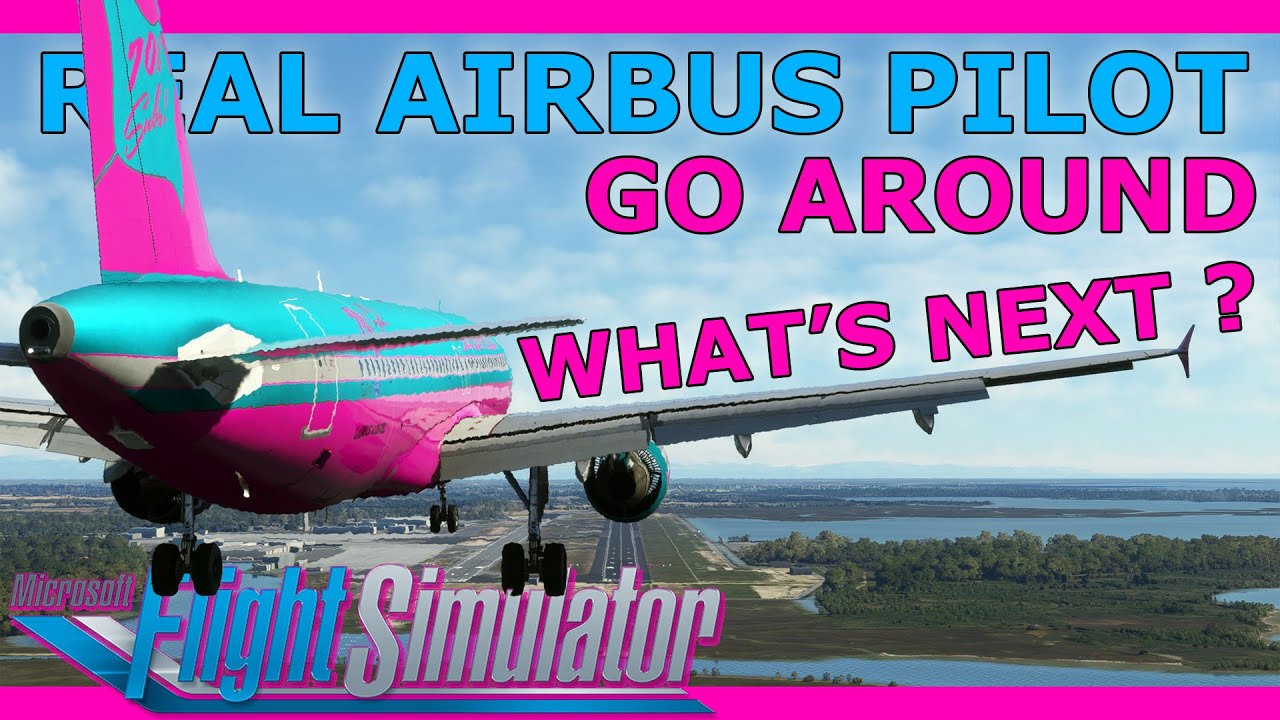
To perform a successful go-around after a missed landing in Flight Simulator 2025, follow these structured steps based on realistic aviation procedures adapted for the simulator:
Steps for a Successful Go-Around in Flight Simulator 2025
1. Initiate Go-Around Power and Pitch
– Apply Power: Smoothly advance the throttle to maximum climb power. In many aircraft, this can be achieved by pushing the thrust levers fully forward.
– GA Switch Engagement: If your aircraft is equipped with a Go-Around (GA) switch, press it. This will often enable the autopilot’s go-around mode and cancel any suspensions on GPS navigation.
– Directional Control: Use the rudder to maintain directional control as you initiate the climb.
– Pitch for Climb: Adjust the aircraft’s nose to achieve the recommended climb attitude, typically aiming for Vy (best rate of climb speed) for the first 1,000 feet AGL.
– Trim Adjustment: Trim the aircraft to help maintain the climb speed without continuous control input.
2. Climb Out and Configuration Changes
– Landing Gear: Once you are climbing safely, retract the landing gear if it is extended.
– Flaps Management: Gradually retract the flaps in accordance with your aircraft’s operating manual, usually in stages to enhance climb performance and minimize drag.
– Speed Brake/Spoiler Retract: Ensure any deployed speed brakes or spoilers are retracted during the climb.
– Cowl Flaps: If applicable, open the cowl flaps to improve engine cooling as you ascend, and slightly reduce the pitch attitude to accelerate to your climb speed.
3. Navigation and Flight Path Adjustment
– Approach Mode: Disengage the approach mode from the autopilot if it remains active after initiating the go-around.
– Path Management: Initially fly parallel to the final approach path or waypoint. This helps ensure you have a safe clear airspace as you set up for a new approach.
– Localizer Intercept: Vector the aircraft to intercept the localizer or the appropriate navigation aid for your next approach. Setting a reasonable altitude for the next approach is critical for safety.
– Re-engage Approach Mode: Once aligned and with the proper configuration set (gear down and flaps extended), reactivate the approach mode.
– Follow Missed Approach Procedure: Ensure you adhere closely to the published missed approach routing to navigate safely back to the airport or to a holding pattern.
Summary Using the 8 C’s Memory Aid:
– CRAM IT: Apply maximum climb power and engage the GA switch.
– CLIMB IT: Pitch for Vy climb speed and trim as needed.
– CLEAN IT: Retract landing gear, flaps, and speed brakes.
– COOL IT: If applicable, open cowl flaps, lower the pitch attitude to accelerate.
– CONTINUE IT: Manage navigation modes (GPS, approach mode), and follow missed approach routing.
These systematic steps ensure a smooth and safe transition from a missed landing attempt to a climb for a second approach attempt.
Additional Tips:
– Practice: Simulate go-arounds from various stages of approach to improve proficiency and confidence.
– Monitor Systems: Keep a close eye on your aircraft systems and airspeed during configuration changes.
– Autopilot Assistance: Utilize Flight Simulator 2025’s autopilot and navigation features to assist with the intercept during the second approach, enhancing your situational awareness.
By following these procedures, you will not only replicate real-world airline operations but also enhance your experience in Flight Simulator 2025 by emphasizing safety and procedural discipline.


Leave a Reply