
Indiana Jones and the Great Circle: A Comprehensive Overview of Gameplay Mechanics
In Indiana Jones and the Great Circle, players are immersed in a richly designed semi-open world that facilitates exploration and encourages creative problem-solving. This freedom not only enhances the gameplay experience but also resonates with the adventurous spirit of Indiana Jones himself. Here’s a breakdown of how players can tactically approach objectives and solve puzzles throughout the game.
Approaching Objectives
1. Exploration and Path Selection
– The game’s design promotes exploration, allowing players to discover multiple paths to their goals. This is particularly crucial in scenarios where objectives are obstructed by enemies or environmental hazards. Players can take the initiative to scout surrounding areas and identify alternative routes that may be less densely guarded. This creates a compelling sense of agency and rewards players for being observant.
2. Stealth Mechanics
– Another fundamental aspect of the game is its emphasis on stealth. Players have the option to navigate through environments quietly to evade detection. This can involve a variety of tactics, such as donning disguises to blend in with foes or carefully traversing through shadows to remain unseen. Additionally, players can use distractions—like throwing objects (e.g., bottles)—to divert attention, creating opportunities to slip past enemies or complete objectives without direct confrontation.
Solving Puzzles
1. Environmental Puzzles
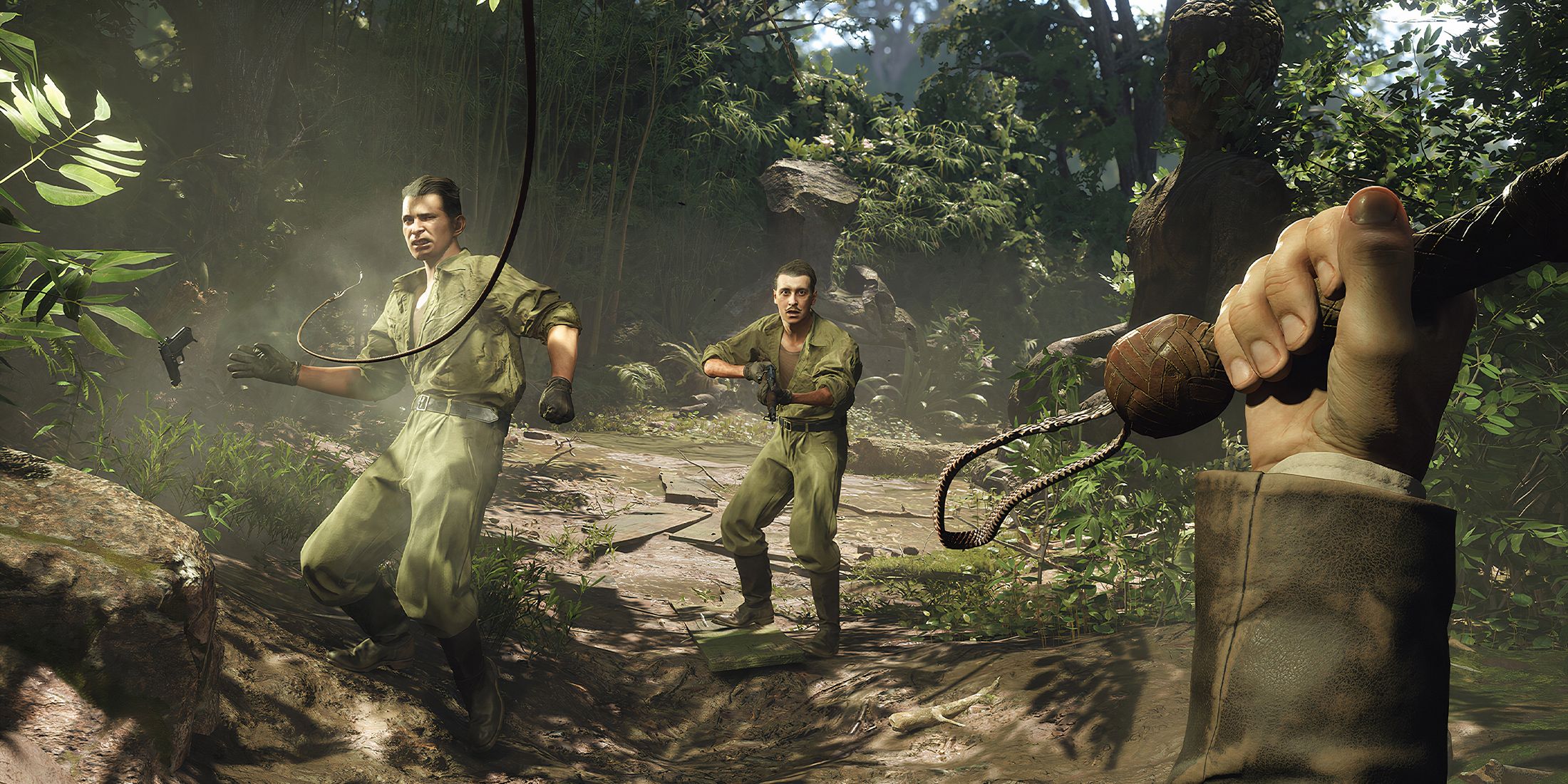
– The game features a range of environmental puzzles that require players to engage directly with their surroundings. For example, the iconic whip can be utilized not only as a weapon but also as a tool for climbing or manipulating objects. Players might need to search the environment for hidden clues or items, integrating the physical landscape into puzzle-solving strategies. This promotes a sense of discovery and encourages players to think creatively about how to interact with the world.
2. Intellectual Puzzles
– Intellectual puzzles, such as the intricate challenge of the “Secret of Secrets” found in the Vatican, push players to think critically and decode complex clues. In such instances, players must analyze astronomical symbols linked to the statues of saints to unlock a safe. While these puzzles may have fixed solutions, the process of interpreting the clues can involve various thought pathways until the correct conclusion is reached, adding depth to the problem-solving aspect of the game.
3. Mechanical Puzzles
– Mechanical puzzles present a different type of challenge, often requiring the manipulation of machinery or intricate objects to advance. Games like those set in the Gold and Silver Forges demand precise timing and sequencing of player actions. While the core mechanics to solve these puzzles may be straightforward, players can often find diverse approaches based on how they choose to line up their actions, enhancing replayability and player engagement.
Conclusion
In summary, Indiana Jones and the Great Circle harnesses a blend of exploration, stealth, and varied puzzle-solving methodologies to create a dynamic and engaging gameplay experience. Players can tailor their adventure by choosing how to navigate objectives and tackle challenges, embodying the spirit of Indiana Jones. This combination of open-ended exploration and inventive problem-solving not only enhances the thrill of adventure but also underscores the ingenuity required to thrive in this captivating universe.



Leave a Reply