
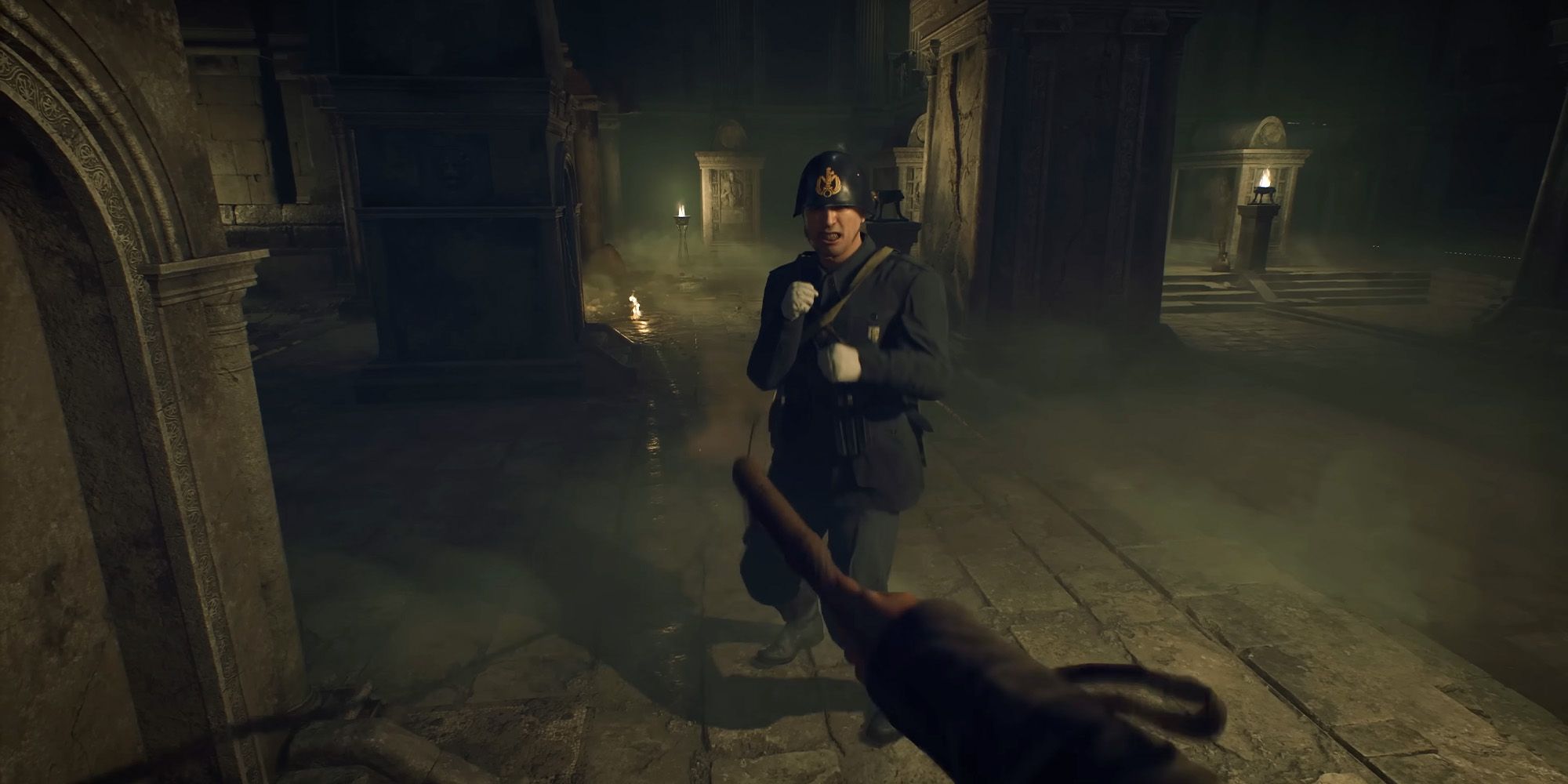
In “Indiana Jones and the Great Circle,” the first-person perspective plays a pivotal role in enhancing the puzzle-solving experience, providing players with an immersive and engaging adventure that immerses them in the world of Indiana Jones. Here are the key ways in which this perspective enriches the gameplay:
Enhanced Immersion
– Direct Connection: The first-person view places players in Indiana Jones’ shoes, creating an immediate and personal connection to the puzzles. This perspective amplifies the sense of urgency and presence as players navigate through intricately designed environments. Rather than observing Indiana’s actions from a distance, players experience the journey firsthand, heightening emotional stakes and investment in the narrative [1][2].
– Tactile Interaction: The game takes full advantage of first-person mechanics to foster tactile interactions with objects within the environment. Players can reach out to inspect, rotate, and manipulate artifacts as if they were physically present, making the act of solving puzzles not just a mental exercise but a physical one as well. This immersive element makes puzzle-solving feel more engaging and rewarding, as players can intuitively interact with the world around them [2].
Storytelling and Engagement
– Active Participation: Being in a first-person perspective transforms players from passive observers into active participants in the story. This shift significantly enhances emotional engagement, as players witness the outcomes of their actions up close. Each completed puzzle feels like a significant milestone in the adventure, contributing to an overarching narrative that feels more personal and impactful [2][3].
– Authenticity and Agency: The first-person perspective grants players a heightened sense of agency. Instead of directing Indiana Jones from afar, players experience the adventure through his eyes, making each puzzle’s solution a personal achievement. This authenticity not only enriches the narrative experience but also encourages players to feel invested in their exploration and in the challenges they face [2][3].
Puzzle Design
– Immediacy and Intimacy: The design of puzzles benefits significantly from the first-person view, offering players an immediate and intimate experience. Players can directly manipulate objects, witnessing the outcomes of their actions in real-time, akin to being involved in an elaborate escape room scenario. This immediacy adds a layer of urgency and excitement to each puzzle-solving encounter [4].
– Dynamic Challenges: The puzzles within “Indiana Jones and the Great Circle” are crafted to leverage the first-person perspective, demanding quick thinking and adaptability—qualities that embody Indiana Jones’ iconic improvisational spirit. Players must think and act on their feet, solving challenges in a way that feels dynamic and alive, enhancing the overall thrill of the gameplay [3][4].
Conclusion
Ultimately, the first-person perspective in “Indiana Jones and the Great Circle” transforms puzzle-solving into a deeply immersive and engaging experience. By drawing players closer to the narrative and allowing them to interact with the game world in a tactile manner, it fosters a sense of involvement and personal achievement that resonates with fans of the franchise. This approach not only enhances gameplay but also deepens players’ connection to the legendary world of Indiana Jones.


Leave a Reply