
Comprehensive Guide to Farming in Minecraft
Farming is an essential aspect of gameplay in Minecraft, allowing players to grow crops such as wheat, carrots, and potatoes. This guide will provide you with everything you need to know to establish a successful farm, from the tools and materials required to the steps for planting, maintaining, and harvesting your crops.
Essential Tools and Materials
1. Hoe
– Purpose: Tills soil into farmland, the foundation for planting crops.
– Crafting: Can be crafted using wood planks and sticks at a Crafting Table. Available in six tiers: Wooden, Stone, Iron, Diamond, Golden, and Netherite, each offering varying durability.
2. Seeds
– Types:
– Wheat Seeds: Obtained by breaking grass or harvesting mature wheat.
– Carrot Seeds: Can be found by breaking fully grown carrots or trading with villagers.
– Potato Seeds: Acquired by harvesting mature potatoes.
Steps to Grow Crops
Step 1: Prepare Farmland
1. Choose a Location
– Look for a flat area close to water sources to ensure efficient crop growth.
2. Use a Hoe
– Right-click on a dirt or grass block with the hoe equipped to convert it into farmland.
3. Expand Your Farmland
– Continue using the hoe on adjacent dirt/grass blocks to enlarge your farming area.
Step 2: Plant Seeds
1. Equip Seeds
– Ensure the desired seeds are in your inventory.
2. Plant Seeds
– Right-click on the tilled soil where you want to plant the seeds.
Step 3: Maintain the Crops
1. Lighting
– Ensure your crops receive ample light; beneficial if your farm is exposed to natural sunlight or supplemented by torches at night.
2. Watering
– While crops like wheat, carrots, and potatoes can grow without direct water, placing water within four blocks enhances their growth speed and helps keep the farmland hydrated.
3. Protection
– Build fences or walls around your farm to protect your crops from hostile mobs and players.
Step 4: Harvest Crops
1. Wait for Maturity
– Allow your crops to mature. You’ll know crops are ready when:
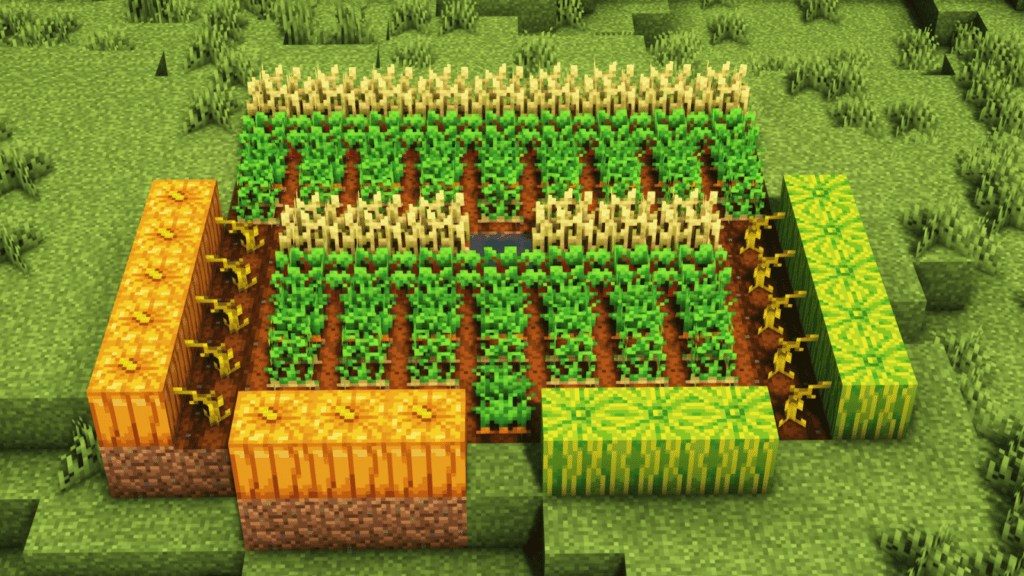
– Wheat turns golden.
– Carrots and potatoes appear above ground.
– Melons and pumpkins grow visibly on the vine.
2. Harvest
– Right-click on mature crops to collect them. For carrots and potatoes, break the block to obtain them.
Tips for Efficient Farming
– Automated Farms
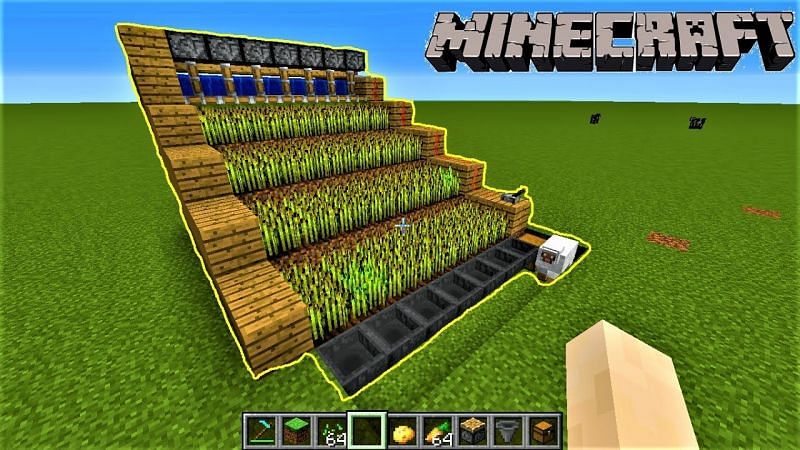
– Consider creating automated farms using redstone technology to streamline the harvesting and planting process.
– Crop Choice
– Select crops based on their growth rates and resource needs, balancing your farming efforts.
– Crop Rotation
– While crop rotation isn’t necessary in Minecraft, alternating different types of crops can be beneficial in real-world farming practices.
Additional Crops and Considerations
– Nether Wart
– Grows on Soul Sand and is primarily used for potion-making.
– Sugarcane and Kelp
– These can be grown in water. Sugarcane is useful for crafting sugar and paper, while kelp can provide food and fuel.
– Sweet Berries
– Typically found in the wild, sweet berries can be harvested for food and are used to lure foxes.
Conclusion
By following this comprehensive guide, you’ll be able to set up a fruitful farm in Minecraft that allows you to grow a variety of crops to support your gameplay. With proper planning and maintenance, your farm can become a crucial resource for food, crafting, and more, contributing to your overall success in the game. Happy farming!


Leave a Reply