
The journal art style in Pentiment serves as a crucial narrative device that intricately ties the visual experience to the historical setting and the protagonist’s evolving investigation. This connection to 16th-century European illuminated manuscripts and woodcut illustrations helps to establish a sense of authenticity while enhancing the storytelling experience.
Key Aspects of the Journal’s Art Style and Its Relation to the Investigation:
Historical Authenticity and Narrative Depth
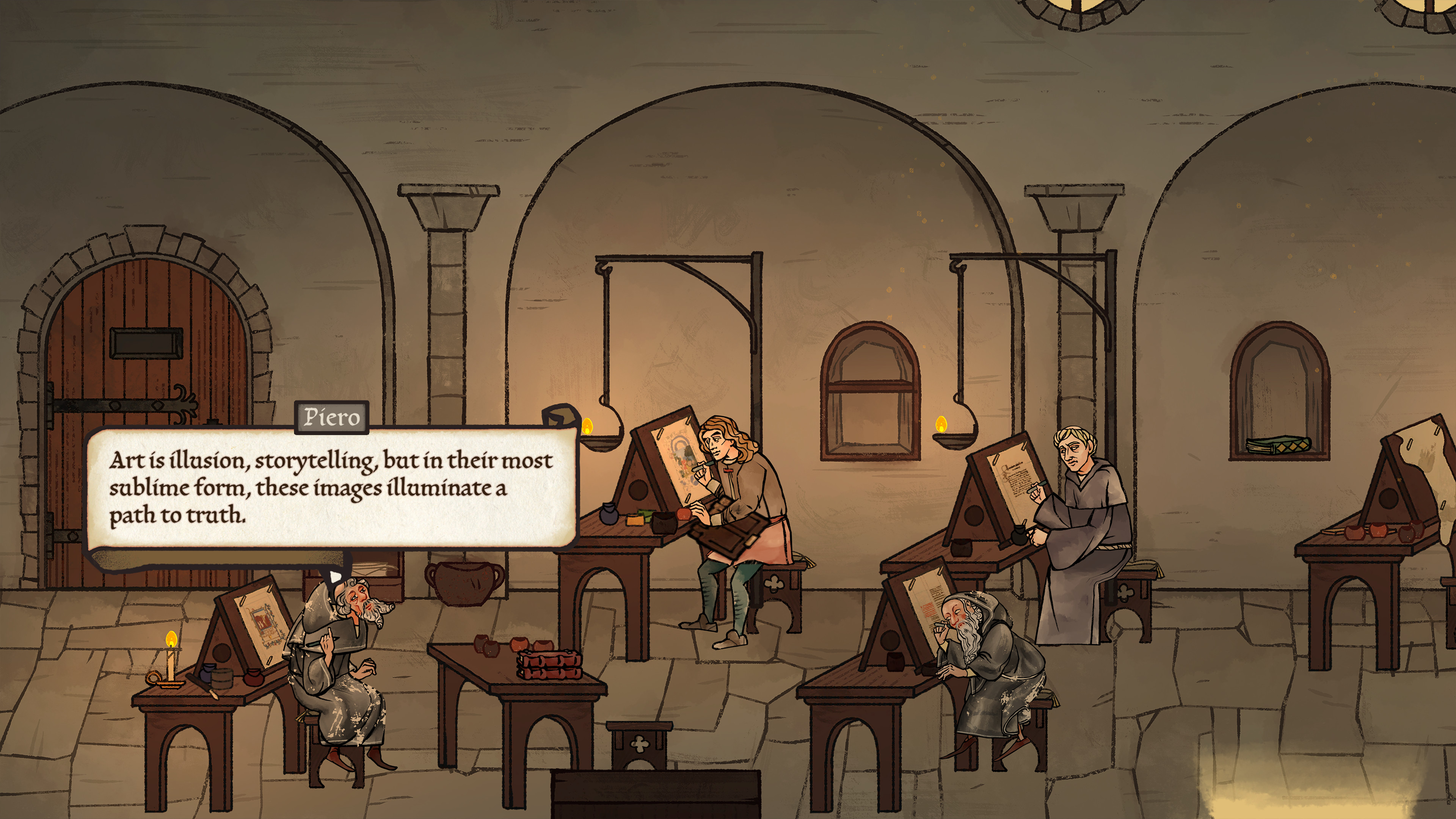
– Visual Design: The journal mimics the aesthetic of illuminated manuscripts and early printed works prevalent during the game’s historical context. This consistency not only immerses players in the late medieval and early modern European setting but also aligns with Andreas Maler’s identity as an artist and scribe.
– Content Progression: As players uncover crucial details throughout the investigation, the journal entries evolve to include more elaborate sketches and notes. This progression reflects a deepening narrative, mirroring the complexity of the mystery at hand.
Visual Indicators of Discovery and Focus
– Record of Observations: The journal acts as a comprehensive record of Andreas’ observations, theories, and discoveries throughout the investigation. Even though the fundamental art style remains the same, the creation of new sections with hand-drawn sketches and notes reflects the investigative progress and pivotal moments encountered.
– Evolution of Detail: While the style maintains a consistent visual aesthetic, the details within the journal become more confident and sophisticated. Initially sketchy entries develop into more intricate illustrations, paralleling the growing clarity of Andreas’ understanding as he immerses himself deeper into the case.
Character and World Representation
– Art as Storytelling: The art style effectively portrays the characters, settings, and artifacts of the period. Andreas’ skills as an artist allow him to represent various aspects of his world accurately, weaving in period-specific illustrations of people, food, and scenes that enrich player immersion.
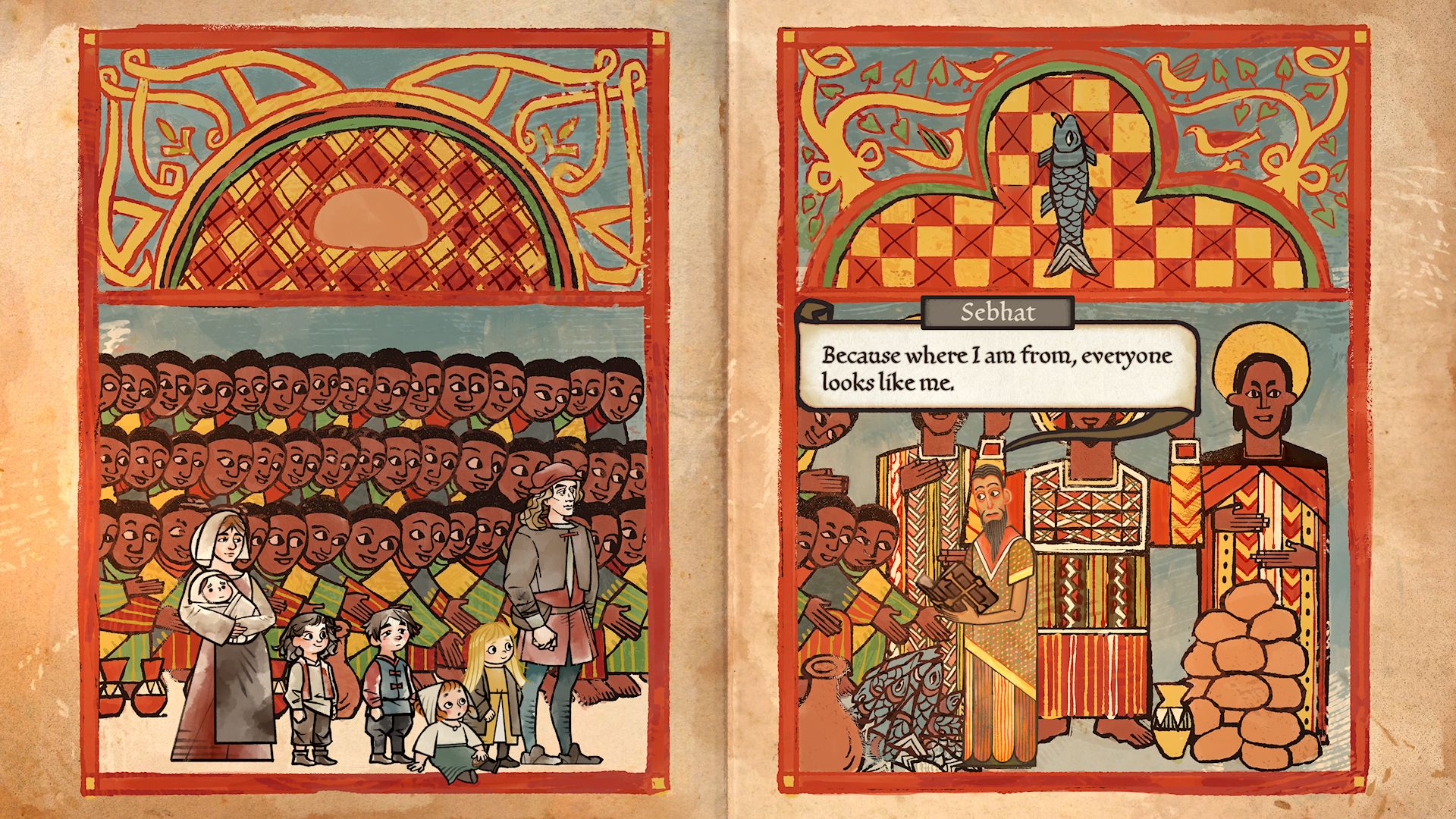
– Cultural Authenticity: When characters from diverse backgrounds, such as Brother Senhat, appear, their illustrations are rendered in styles appropriate to their cultural context, further showcasing the depth and care put into character representation and diversity.
No Drastic Visual Evolution, but Progressive Detail
– Content Over Style: Throughout the game, there is a deliberate choice to avoid any drastic shifts in the journal’s overall art style. Instead, the richness of content increases—more detailed observations and sophisticated sketches emerge as players advance through the narrative.
– Narrative Cohesion: This slow evolution in content helps strengthen the narrative as it unfolds, maintaining player immersion in the historical backdrop while reinforcing the theme of synthesis and understanding in Andreas’ journey.
Art as an Extension of Storytelling
– Themes of History and Legacy: The static nature of the manuscript-inspired art complements the overarching themes of history, legacy, and the passage of time, making the journal feel like a genuine artifact within the world of the game. Each entry contributes to the historical context surrounding the investigation.
– Attention to Detail: The development team’s focus on historical accuracy, including accurate representations of food, clothing, and architecture, enhances the journal’s credibility, resulting in a layered experience that grows richer as players progress through the narrative.
Summary Table: How the Journal’s Art Style Relates to Investigation Progress
| Stage of Investigation | Journal’s Visual Content | Art Style Consistency |
|———————–|———————————|———————————|
| Early Investigation | Basic notes, simple sketches | Manuscript/woodcut-inspired |
| Mid Investigation | More detailed sketches, theories| Same, but with added complexity |
| Late Investigation | Intricate sketches, full notes | Most refined, but stylistically unchanged |
Conclusion
In Pentiment, the journal’s manuscript-inspired art style remains consistent throughout the game, providing a seamless visual experience that underscores the narrative. The content within evolves, becoming more detailed and sophisticated as Andreas’ understanding of the investigation deepens. This thoughtful design ensures players remain immersed in an authentic historical context while actively engaging with the story’s unfolding mystery. As a result, the journal transcends simple gameplay mechanics to become a vital storytelling tool that enriches the player experience.



Leave a Reply