
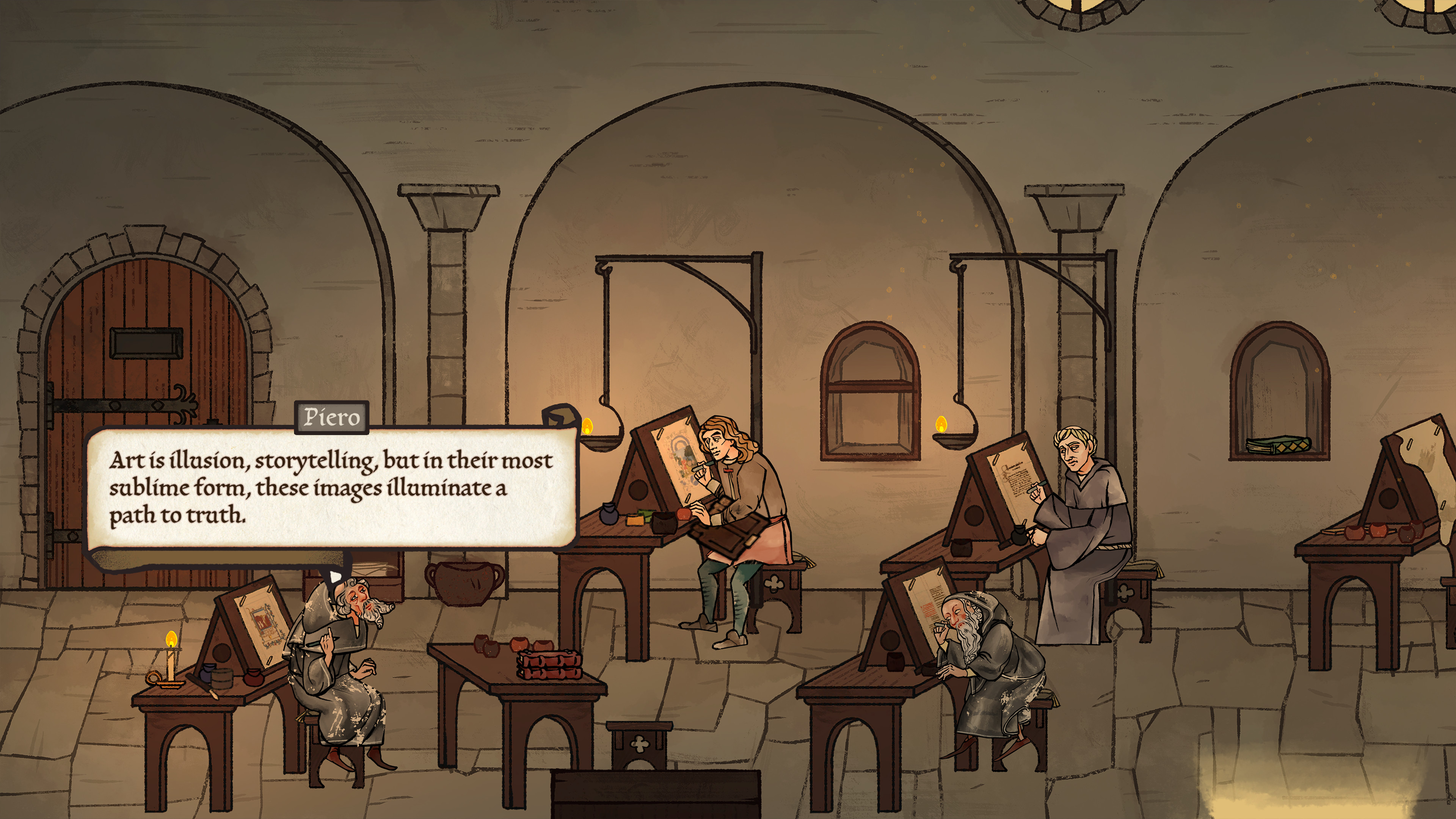
In Pentiment, manuscripts are integral to both the narrative structure and gameplay mechanics, serving as pivotal tools for investigation and discovery. These manuscripts not only propel the plot forward but also reflect the game’s overarching themes related to truth, memory, and authority.
Importance of the Manuscript in the Investigation
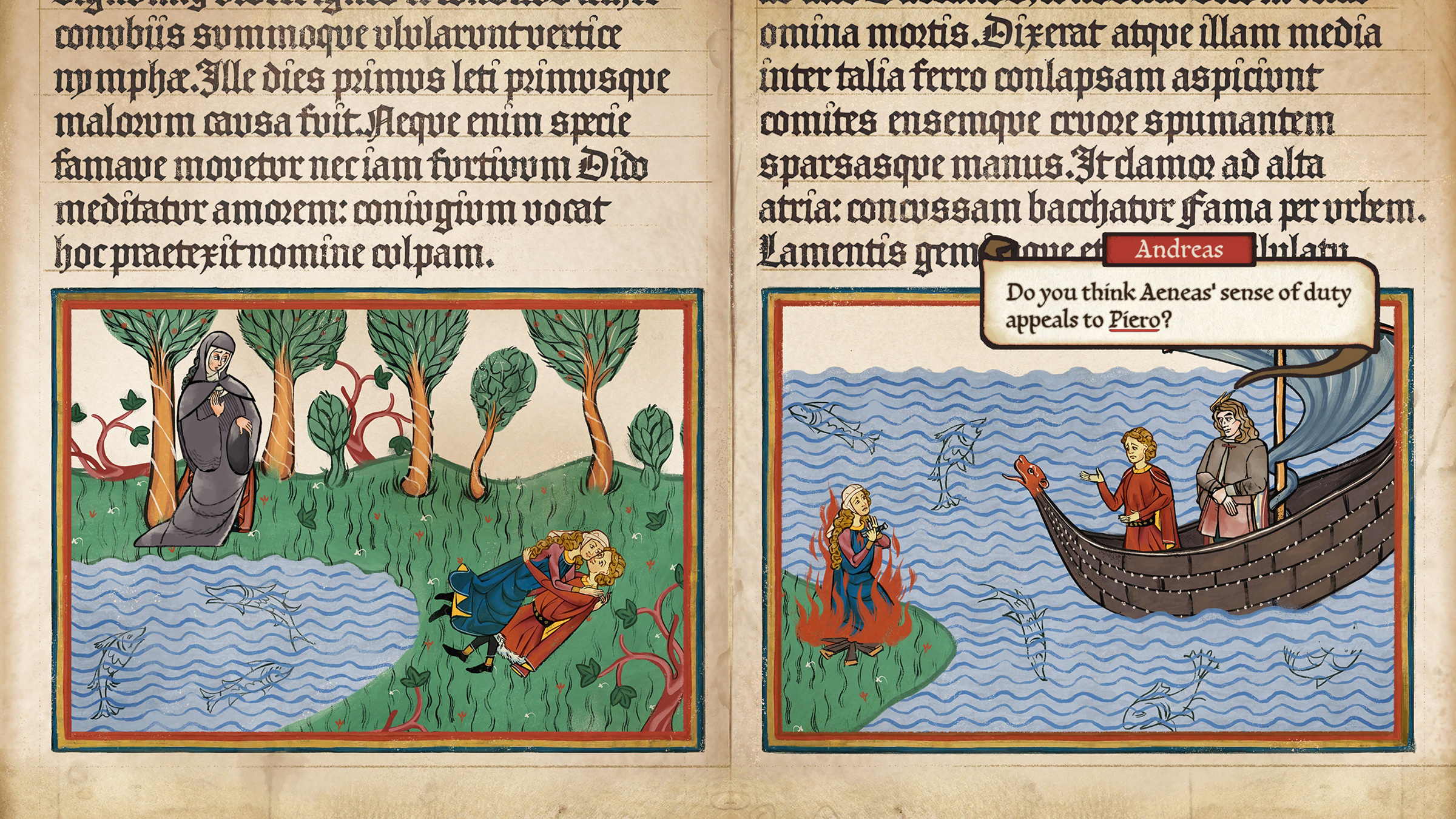
Manuscripts form a crucial bridge between the realms of “stories” and “histories,” emphasizing the complex relationship between historical record and personal narrative. Early in the game, players engage in the act of restoring a manuscript to a blank state, a powerful metaphor for the fragile nature of history and written records. This motif of transformation resonates throughout the player’s journey, highlighting the imperfections and biases inherent in historical documentation.
1. Historical and Cultural Revelations:
– A climactic revelation concerning Tassing’s saints reveals that these figures stem from reinterpreted Roman myths. This discovery has profound implications, threatening to unravel the community’s religious foundations and social fabric. Such revelations underscore the manuscript’s potential as a powerful, yet unsettling, artifact within the game’s narrative.
2. Narrative Weight:
– Beyond mere evidence in the murder investigation, the manuscripts serve as narrative devices that compel the protagonist—and by extension, the player—to make critical choices about the dissemination or concealment of sensitive information. These decisions not only influence the plot but also the destinies of Tassing’s residents, reinforcing the manuscript’s central role in shaping the community’s fate.
Using the Manuscript to Your Advantage
The strategic engagement with manuscripts throughout the game influences both gameplay mechanics and the storyline, offering players a way to navigate the complex social milieu of Tassing.
1. Gathering Information:
– As players explore, they encounter diverse manuscripts—historical records, religious documents, and personal accounts—each teeming with clues about suspects, motivations, and historical conflicts. Analyzing these texts allows players to piece together crucial timelines and relationships within the story, enhancing their investigative acuity.
2. Unlocking Dialogue and Choices:
– Reference to certain manuscripts can unlock unique dialogue options and alter characters’ perceptions of the player. This dynamic not only affects interpersonal relations but also opens new pathways for negotiation and inquiry, thus enriching the gameplay experience.
3. Critical Decision at the Climax:
– A pivotal moment occurs in the final act when players confront the choice of whether to divulge the manuscript’s revelations to the townsfolk. Opting to reveal the truths risks destabilizing the community’s faith and inciting unrest, while choosing to withhold the information reinforces a perilous status quo of authoritarianism and control.
4. Consequences of Your Choice:
– The ramifications of revealing or suppressing the manuscript’s contents carry significant weight, as both paths lead to divergent narrative outcomes. The game masterfully complicates the moral dimensions of this choice, illustrating the nuanced interplay between social stability and the pursuit of truth.
Summary Table: Manuscript Use in Pentiment
| Function | How to Use It | Impact on Game/Story |
|—————————|—————————————-|————————————-|
| Clue Gathering | Read for hints, cross-reference others | Uncovers suspects, motives, history |
| Dialogue/Interaction Tool | Present to characters, influence trust | Opens new dialogue, alters outcomes |
| Climactic Decision | Choose to reveal or hide the truth | Shapes final act, consequences |
By meticulously engaging with manuscripts throughout Pentiment, players deepen their comprehension of the game’s thematic richness, guide the narrative trajectory, and ultimately influence the fates of the town of Tassing and its inhabitants. The interplay between manuscripts and player decisions fosters a compelling exploration of history, authority, and community dynamics, making each player’s journey unique and resonant.


Leave a Reply