
Navigating the diverse and intricate alternate realities in Ratchet & Clank: Rift Apart is a rich and engaging experience, thanks in large part to the innovative dimensional rift mechanic. Mastering this mechanic not only enhances gameplay but also ensures that players do not get lost among the numerous interdimensional pathways. Here’s how players can effectively utilize dimensional rifts and streamline their exploration.
Understanding Dimensional Rifts and Interdimensional Travel
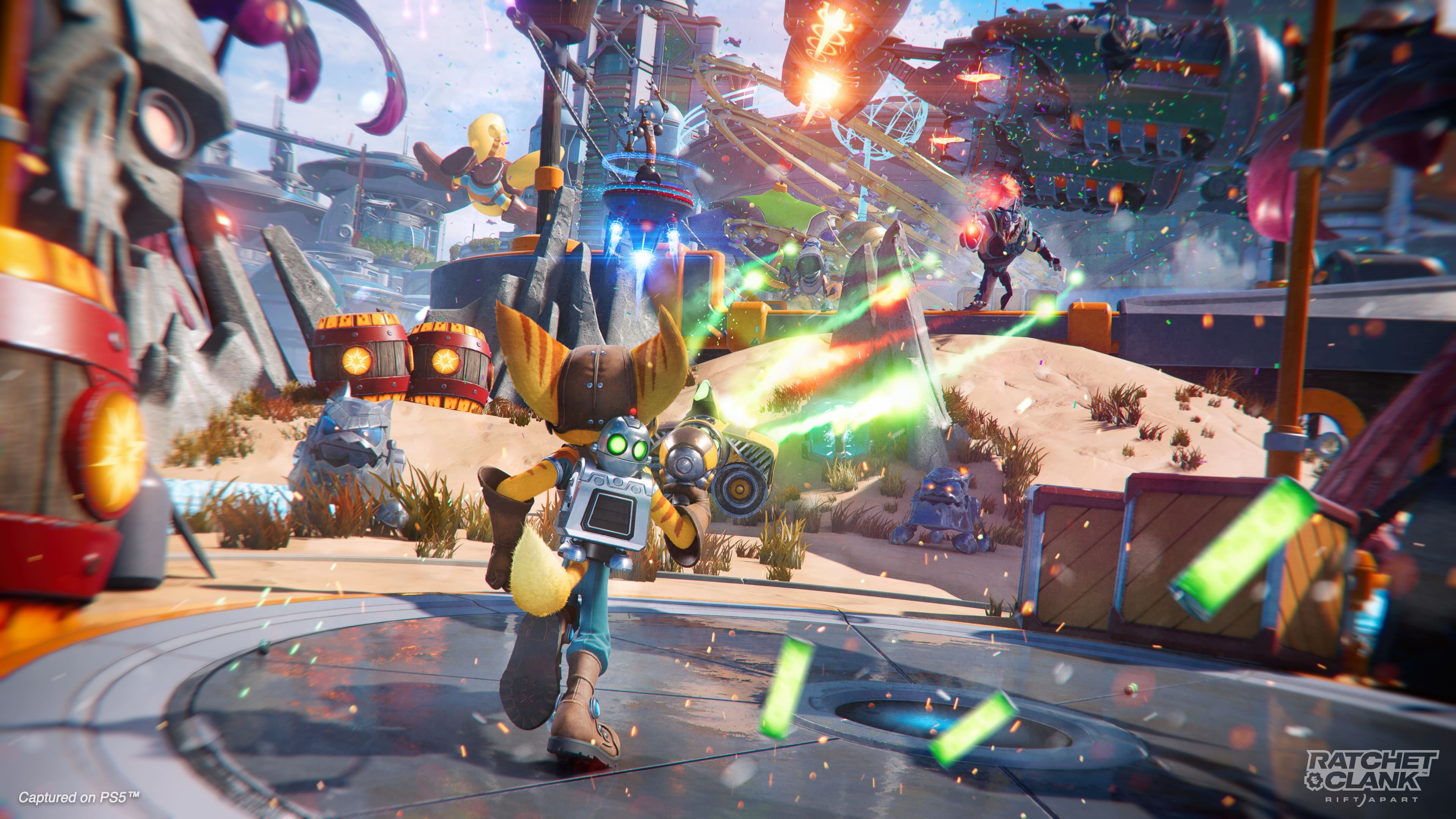
The Dimensionator plays a pivotal role in Ratchet & Clank’s dimensional travel system. It is central to both the narrative and gameplay mechanics, allowing players to seamlessly traverse between distinct realities. The PlayStation 5’s capabilities enable these transitions to occur without loading screens, fostering a fluid gaming experience that helps players acclimate quickly to new environments.
Each dimension features variations of familiar characters and settings, often with notable alterations in the storyline. This differentiation provides players with visual cues, assisting them in recognizing various realities and enhancing immersion.
Tips for Efficient Navigation and Avoiding Getting Lost
1. Follow Visual and Map Cues
– Locations like Savali feature prominent visual markers—such as glowing platforms, colored orbs, and switches—that indicate where rifts are located. These visual indicators can guide players through complexities of dimensional navigation.
– Engaging with environmental clues imbues a sense of direction and focus, reducing the risk of disorientation in the vastness of alternate realities.
2. Use Puzzles as Landmarks
– Many dimensional rifts are embedded with puzzles that involve manipulating spheres or orbs. Successfully solving these puzzles often unlocks new routes, acting as both progress markers and navigational aids.
– These puzzle elements provide natural stopping points that help players maintain a sense of direction, making it easier to navigate through diverse rift areas.
3. Leverage the Dimensional Map and In-Game Guidance
– Players can unlock a dimensional map in key hub worlds, such as Savali, which illustrates travel points and objectives, allowing for efficient routing.
– The compass or waypoint system further diminishes confusion regarding where to enter or exit rifts, guiding players toward their next mission or objective with clarity.
4. Observe Story-Driven Rift Transitions
– Dimensional transitions are often narrative-driven. Many occur after completing specific tasks or through scripted events that unveil new challenges. Being attentive to these moments can provide insights into the natural flow of the game and how to progress through the storyline.
– Understanding the context behind rift transitions helps cement a player’s sense of continuity across dimensions.
5. Practice Dimensional Anomaly Puzzle Mechanics
– Investing time in mastering orb and portal manipulations within dimensional anomalies is crucial. These puzzles frequently involve Clank navigating through the spectral manifestations of possibilities to reach terminals.
– Developing proficiency in these mechanics not only expedites progress in challenging segments but also enhances overall spatial awareness while traversing dimensions.
Summary
To effectively navigate dimensional rifts in Ratchet & Clank: Rift Apart and maintain orientation, players should:
– Utilize in-game visual cues, puzzles, and waypoint markers to keep track of their surroundings.
– Leverage dimensional puzzles as logical landmarks that guide navigation.
– Make efficient use of the dimensional map and follow game prompts to trace progress accurately.
– Acknowledge that many rift transitions are driven by story elements and align navigation with these narrative cues.
– Cultivate skills in completing dimensional anomaly puzzles for better spatial navigation within complex environments.
Employing these strategies will significantly enhance the experience of exploring the game’s rich tapestry of alternate realities, allowing players to embark on their adventures with confidence and clarity.


Leave a Reply