
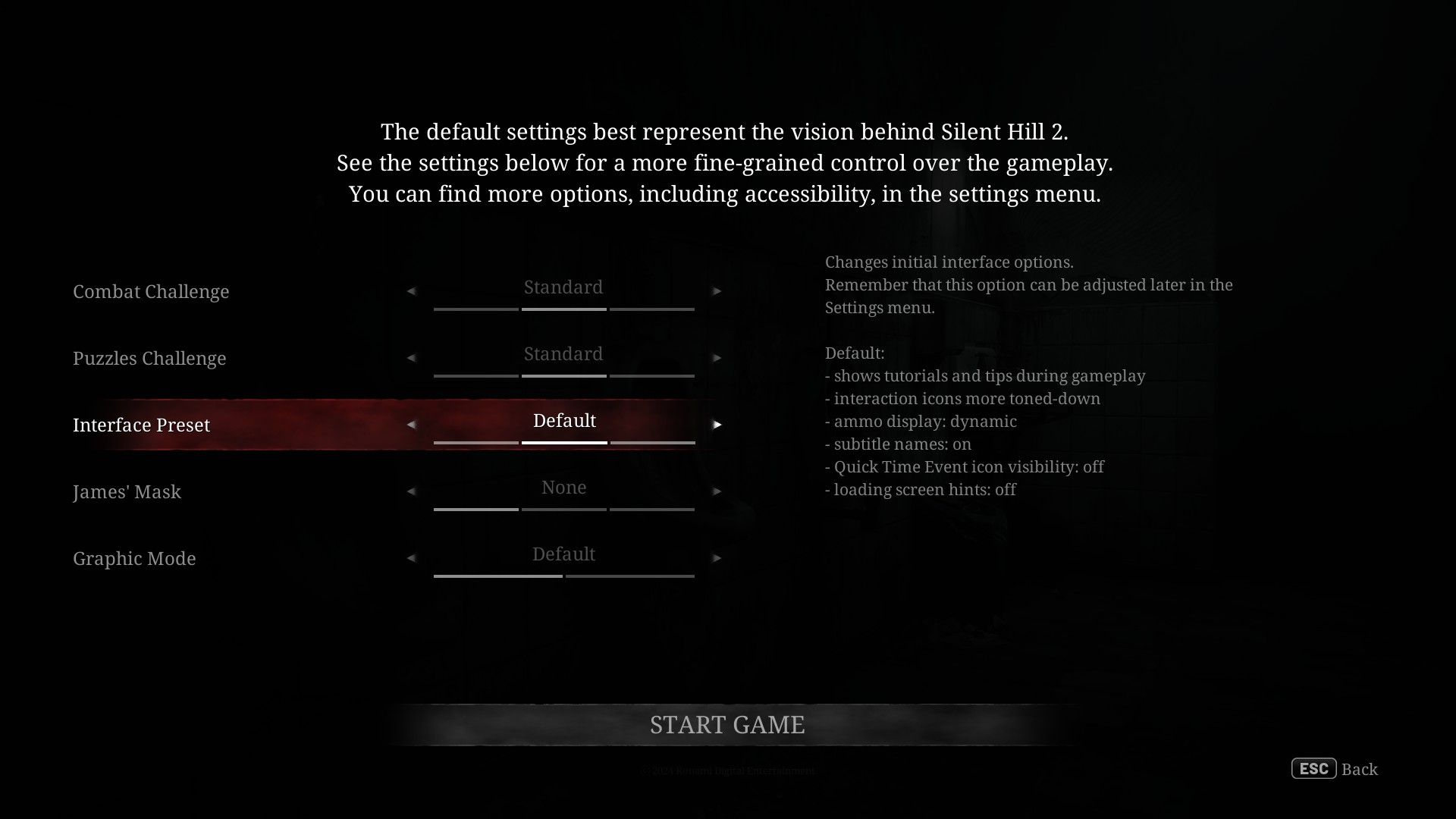
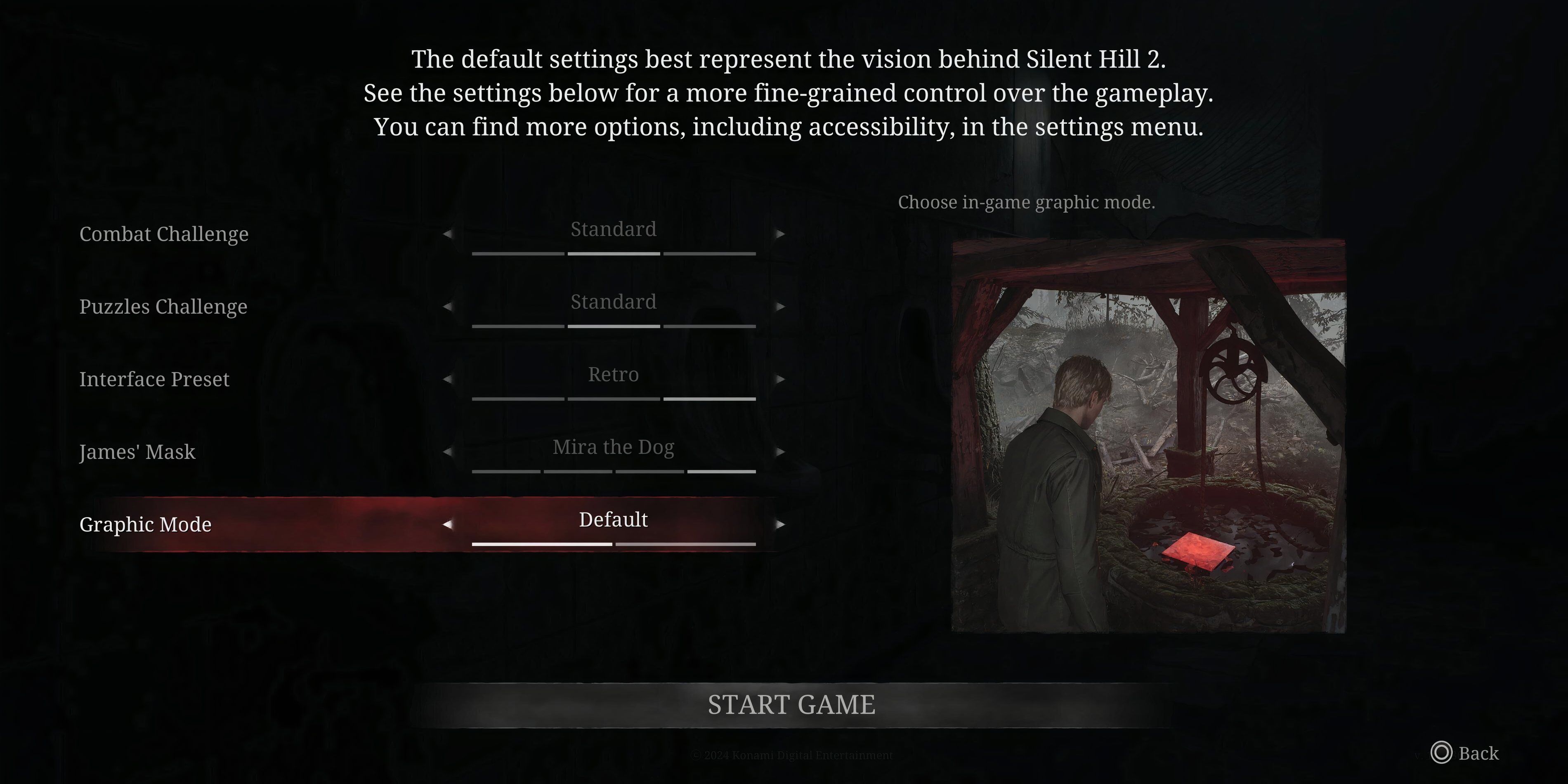
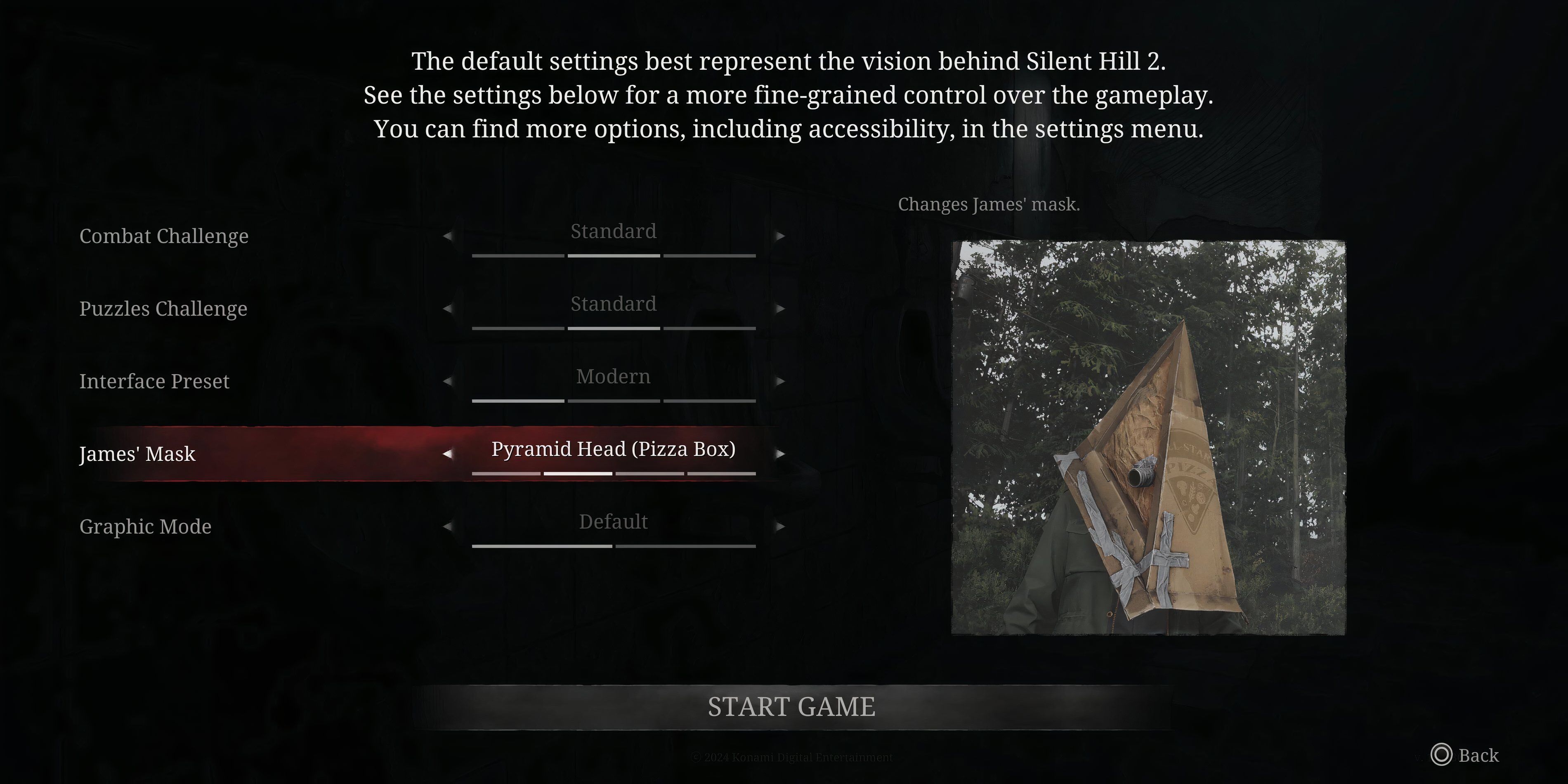
In Silent Hill 2, the design of difficulty settings plays a crucial role in shaping the player’s overall experience, with separate categories for Combat Challenge and Puzzle Challenge. Each category features three distinct difficulty levels—Light, Standard, and Hard—each tailored to offer varying degrees of challenge and engagement. Below is a detailed breakdown of how these settings affect gameplay, emphasizing both combat and puzzle elements.
Combat Challenge
1. Light (Easy) Mode:
– Enemy Damage: Enemies inflict significantly less damage, allowing players to engage in fights with a lower risk of losing health.
– Player Damage Output: James, the protagonist, deals increased damage with his weapons, providing a sense of empowerment in combat.
– Health Supplies and Ammo: The game offers a greater abundance of health supplies and ammunition, ensuring that players have sufficient resources to tackle adversaries without the stress of resource scarcity.
– Atmosphere: While the challenge of combat is reduced, the haunting atmosphere and psychological tension of the game remain intact, allowing players to experience the narrative without overwhelming difficulty.
2. Standard (Normal) Mode:
– Enemy and Boss Damage: Enemies deal average damage, creating a balanced combat experience suitable for most players. Boss encounters retain their intended difficulty, contributing to a well-rounded challenge.
– Resource Management: Health supplies are less plentiful than in Light Mode, prompting players to think critically about how they use their items and ammunition. This adds a strategic layer to combat that keeps players engaged in managing their resources effectively.
3. Hard Mode:
– Enemy Health and Aggressiveness: Enemies are tougher, possessing more health and showing increased aggression, making encounters significantly more challenging.
– Damage Output: Not only do enemies deal more damage, but players will need to exploit strategies and timing to overcome them successfully.
– Resource Scarcity: With limited supplies, each bullet or health item becomes invaluable, emphasizing the need for careful planning and skillful combat techniques. This mode is best suited for players who have already experienced the game, as it demands familiarity with enemies and mechanics.
Flexibility in Combat:
Players can change the combat difficulty settings at any time during gameplay, allowing them to adapt to their current state of play. However, these changes only take effect after reloading a save, offering a balance between flexibility and the need for commitment to gameplay decisions.
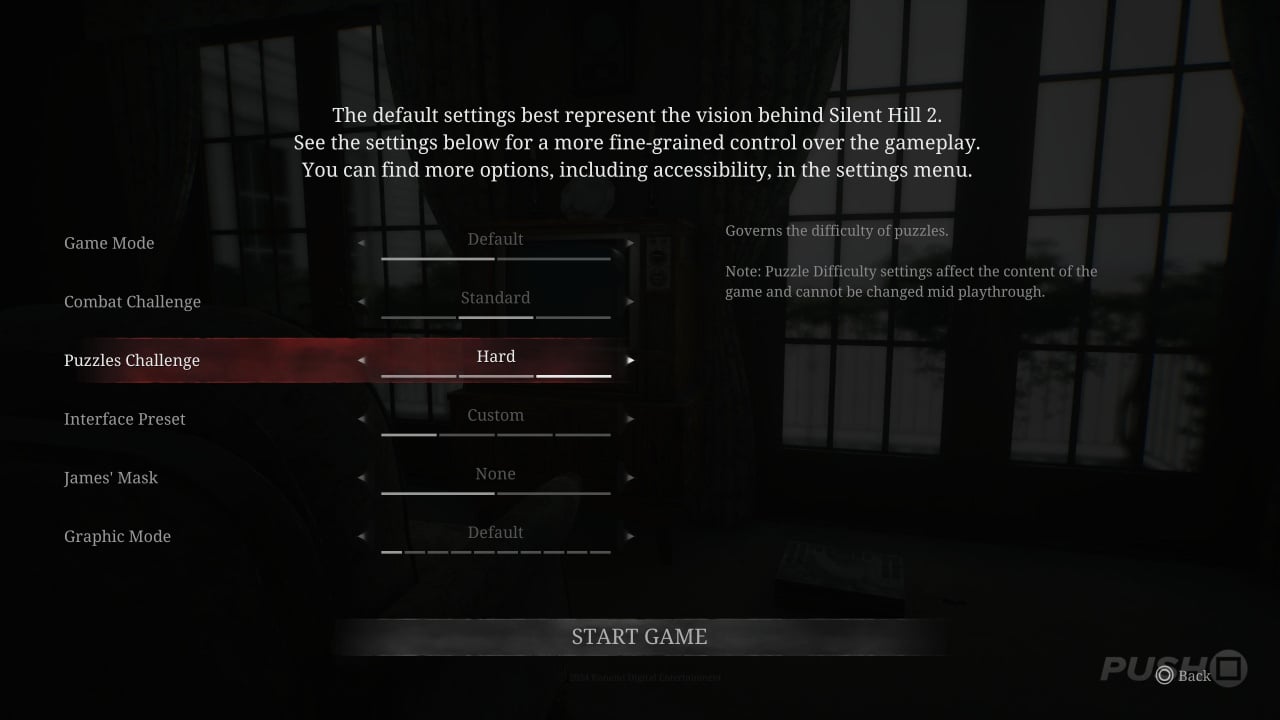
Puzzle Challenge
1. Light (Easy) Mode:
– Hints and Clues: Players receive clear and accessible hints, significantly easing the process of solving puzzles. Clues may be literally written on walls, guiding players directly towards solutions.
– Puzzle Nature: While the core puzzles remain unchanged, players benefit from enhanced guidance that makes them feel accomplished without friction.
2. Standard (Normal) Mode:
– Subtle Hints: In this mode, hints become less straightforward, requiring players to be observant and attentive to their surroundings. This increased challenge necessitates a deeper level of engagement with the game world.
– Moderate Difficulty: Puzzles become moderately challenging, striking a balance that maintains interest without leading to frustration.
3. Hard Mode:
– Challenging Puzzles: Players face significantly more complex puzzles that often lack clear hints. The solutions may require critical thinking and an understanding of intricate patterns or game mechanics.
– Skill and Knowledge Requirement: Mastery of the game’s underlying principles becomes vital, making this mode appealing for players looking for an intellectually demanding experience.
Flexibility in Puzzle Difficulty:
Unlike combat, puzzle difficulty is set at the beginning of the game and cannot be changed later. This means that players must choose their desired level of challenge wisely, as any alterations would necessitate starting a new game.
Conclusion
The differentiated difficulty settings in Silent Hill 2 empower players to tailor their gameplay experience according to their preferences, whether they wish to emphasize combat, focus on puzzles, or find a harmonious balance between the two. The ability to adjust combat difficulty on the fly provides a convenient way for players to modulate their experience accordingly, ensuring that both new and returning players can enjoy the atmospheric and psychological journey that Silent Hill 2 is renowned for.
Leave a Reply