
Improving your timing for anti-airs and counter-attacks in Street Fighter 6 is integral for elevating your gameplay. Below is a comprehensive guide designed to refine your skills through structured practices, understanding of mechanics, and effective training techniques.
1. Understand Anti-Air Basics
To begin, familiarize yourself with your character’s specific anti-air options—both normal and special moves. Essential anti-air moves often include:
– Normal Attacks: Certain characters have effective normals that can hit airborne opponents.
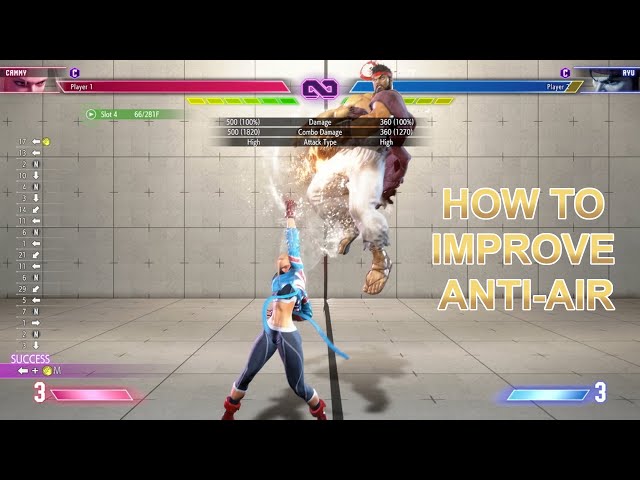
– Special Moves: Signature moves like Shoryuken are classic anti-airs due to their speed and invincibility frames. Also, explore your character’s Super Arts for potential anti-air applications.
Understanding the characteristics of these moves—such as their range, speed, and hitboxes—will allow you to choose the right move for various jump-in scenarios.
2. Practice in Training Mode
Training mode is a critical environment for practice. Here’s how to utilize it effectively:
– Set Up Jump-In Scenarios: Adjust the training mode to have a dummy character perform consistent jump-ins. This enables you to practice your anti-airs reliably and focus on timing.
– Experiment with Distances: Work on anti-airs from various distances to understand when to execute your moves effectively.
3. Focus on Reaction and Execution
Fast reaction is key to successful anti-airing:
– Simulate Different Jump Types: Use the training program to challenge yourself with different jump types: forward jumps, instant air attacks, or delayed jumps.
– Adjust Your Timing: Depending on the type of jump, adjust your response accordingly until you can react without overthinking.
4. Use Mind Tools and Drills
Creating mental drills can sharpen your instincts:
– Angle Variability: Have your opponent jump in from multiple angles. Focus on your anti-air response each time to build muscle memory.
– Consistent Repetition: Regularly practicing these specific scenarios will enable your reactions to become more automatic over time.
5. Analyze and Adapt to Opponent’s Patterns
In live matches, observing your opponent is crucial:
– Identify Jump Patterns: Pay attention to how frequently and in what manner your opponent jumps in. Some might favor quick jump-ins, while others may utilize delayed approaches.
– Adjust Accordingly: Tailor your anti-air timing based on your observations, which may involve anticipating their jump tendencies.
6. Practice Counter-Attacks
After successfully landing an anti-air:
– Follow-Up Attacks: Practice transitioning from an anti-air to a counter-attack. This could mean using quick normals or special moves to capitalize on your opponent’s vulnerability, or executing a throw if they’re within range.
– Combo Practice: Work on simplified combos after an anti-air for maximum damage potential.
7. Record Your Gameplay
Utilizing recorded gameplay gives you a broader perspective on your performance:
– Review Your Matches: Look back at matches where your anti-airs failed or where you missed opportunities. Analyze your timing and execution to identify areas for improvement.
– Learn from Mistakes: Understanding your errors will guide you on what to focus on in future practice sessions.
8. Play Against Different Opponents
Diversity in practice opponents enriches your experience:
– Varied Play Styles: Engage with different players to expose yourself to various jump-in styles, allowing you to adapt and enhance your anti-air timing across scenarios.
– Competitive Matches: Attend local tournaments or online competitions to practice under pressure while facing varied approaches.
Example Drills
– Basic Timing Drill: Set your opponent to jump from various distances. Repeat the anti-air response and refine your timing for each move based on distance.
– Reaction Drill: Program delayed or angled jumps in training mode to enhance your reaction time to less predictable situations.
– Counter-Attack Drill: After landing successful anti-airs, practice executing multiple follow-up attacks to improve your offensive options.
By diligently following these guidelines and dedicating time to regular practice, you will see substantial improvements in your timing for anti-airs and counter-attacks in Street Fighter 6, leading to enhanced gameplay effectiveness and overall success in matches.




Leave a Reply