
In Baba Is You, the game’s unique mechanics primarily revolve around the manipulation of word-based rules, allowing players to interact with the environment in innovative ways to solve puzzles. While the official guides do not explicitly address floating and sinking mechanics, we can infer how such dynamics would integrate with the existing mechanics of the game based on its foundational principles.
General Mechanics of Baba Is You
1. Rules and Interactions:
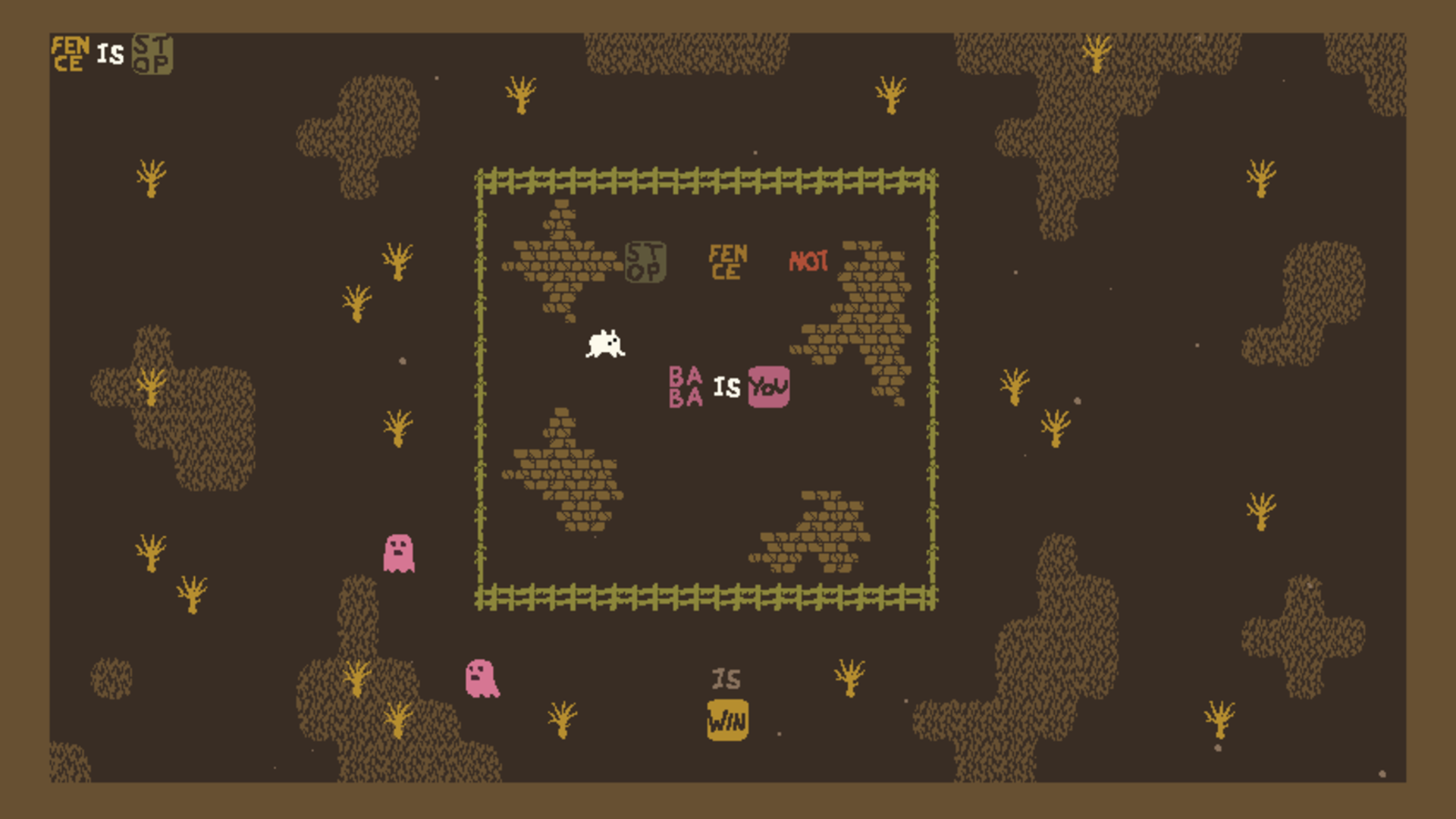
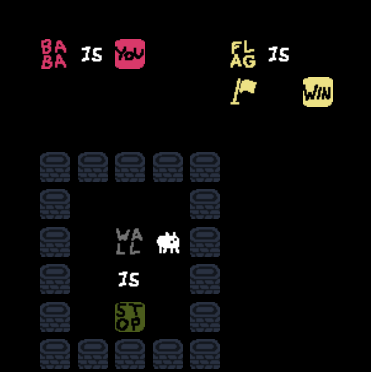
– The core gameplay involves forming rules by connecting words, such as “BABA,” “FLAG,” “IS YOU,” and “IS WIN.” These combinations define interactions between the player, objects, and the level structure.
– For instance, if the rule “FLAG IS WIN” is established, then to complete the level, the object classified as “YOU” must make contact with the “FLAG.”
2. Rule Parsing:
– The rules within the game are dynamically parsed as players manipulate characters and objects. This means the game’s logic continuously updates, accounting for changes made by the player, thus providing a fluid puzzle-solving experience.
Speculating on Floating and Sinking Mechanics
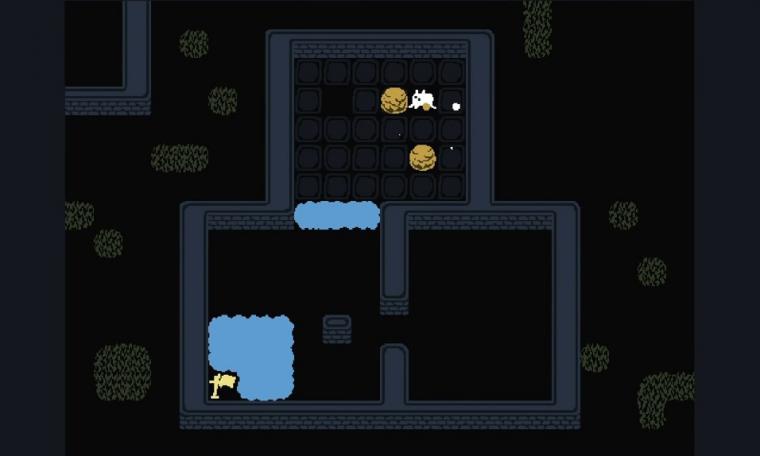
While floating and sinking are not directly part of the game, if they were to be included, they could introduce fascinating complexities to the current mechanics.
1. Movement:
– Floating Objects: If certain objects had the ability to float, this could mean that their position is influenced by other environmental factors, like water or gravity, which would require players to rethink their strategy. For example, a “PUSH” object that floats may need support from other objects or rules in order to be moved effectively, introducing a new layer of challenge.
– Sinking Objects: Conversely, if an object could sink, players might need to incorporate rules that allow them to stabilize or counteract sinking. For instance, if a “STOP” object sinks, players could create rules that tie it to a series of floating objects, preventing it from being lost from the play area.
2. Rule Application:
– The presence of sinking and floating dynamics could necessitate new rule applications. Players might need to establish specialized rules that dictate how floating and sinking behaviors interact with the existing rules. For example, manipulating a sinking block (with rules like “BLOCK IS MOVE”) may require subsequent adjustments to keep it from disappearing after being pushed too far.
Advanced Techniques
Advanced techniques in Baba Is You often exploit the “NOT” rule, enabling players to create unexpected scenarios where negated interactions yield new solutions. If floating and sinking mechanics existed, they could similarly spark creative approaches. The player might, for example, negate a rule associated with a floating object to control how it interacts with other elements within the level, leading to unique puzzle solutions that maximize the physics at play.
Conclusion
While floating and sinking mechanics are speculative in Baba Is You, understanding the fundamental mechanics of rule manipulation, movement, and dynamic parsing can foster imaginative concepts surrounding these potential mechanics. The game’s charm lies in its capacity for creativity and innovation, challenging players to think outside conventional boundaries to devise solutions, and incorporating floating and sinking would only enhance that complexity. As players continue to experiment with existing rules, they might intuitively implement similar principles to achieve goals within the game’s framework even without direct support for these mechanics.


Leave a Reply