
In Crusader Kings III, the management of holdings is essential for enhancing your realm’s economic stability, military strength, and overall influence. To thrive in this complex simulation of medieval politics, players must adeptly manage resources, select the appropriate types of holdings, and implement strategic upgrades over time. Here’s an in-depth look into building, upgrading, and optimizing holdings for long-term growth.
Types of Holdings
In CK3, there are three primary types of holdings available for construction and upgrades:
1. Castles: These are the backbone of feudal power, offering significant military and defensive advantages. Castles boost your fort level and levy size, making them vital for defending your territory against invaders.
2. Cities: Urban holdings primarily generate tax revenue, contributing significantly to your economic resources. While they offer fewer levies and lack fortifications, cities can become lucrative sources of income as they are developed.
3. Temples: Serving a dual purpose, temples provide a mixture of tax income and levies, managed mainly by clergy. They also play a critical role in increasing your religious influence within your realm.
Additionally, tribal holdings present another avenue but typically have limitations, such as an upgrade ceiling of level 2 and a requirement for specific government management conditions.
Building New Holdings
Creating a new holding involves the following steps:
1. Select a County: Start by navigating the map to choose a county that you wish to develop.
2. Locate a Barony: Within the selected county, find an empty barony slot available for construction.
3. Construct the Holding:
– Click on the selected barony.
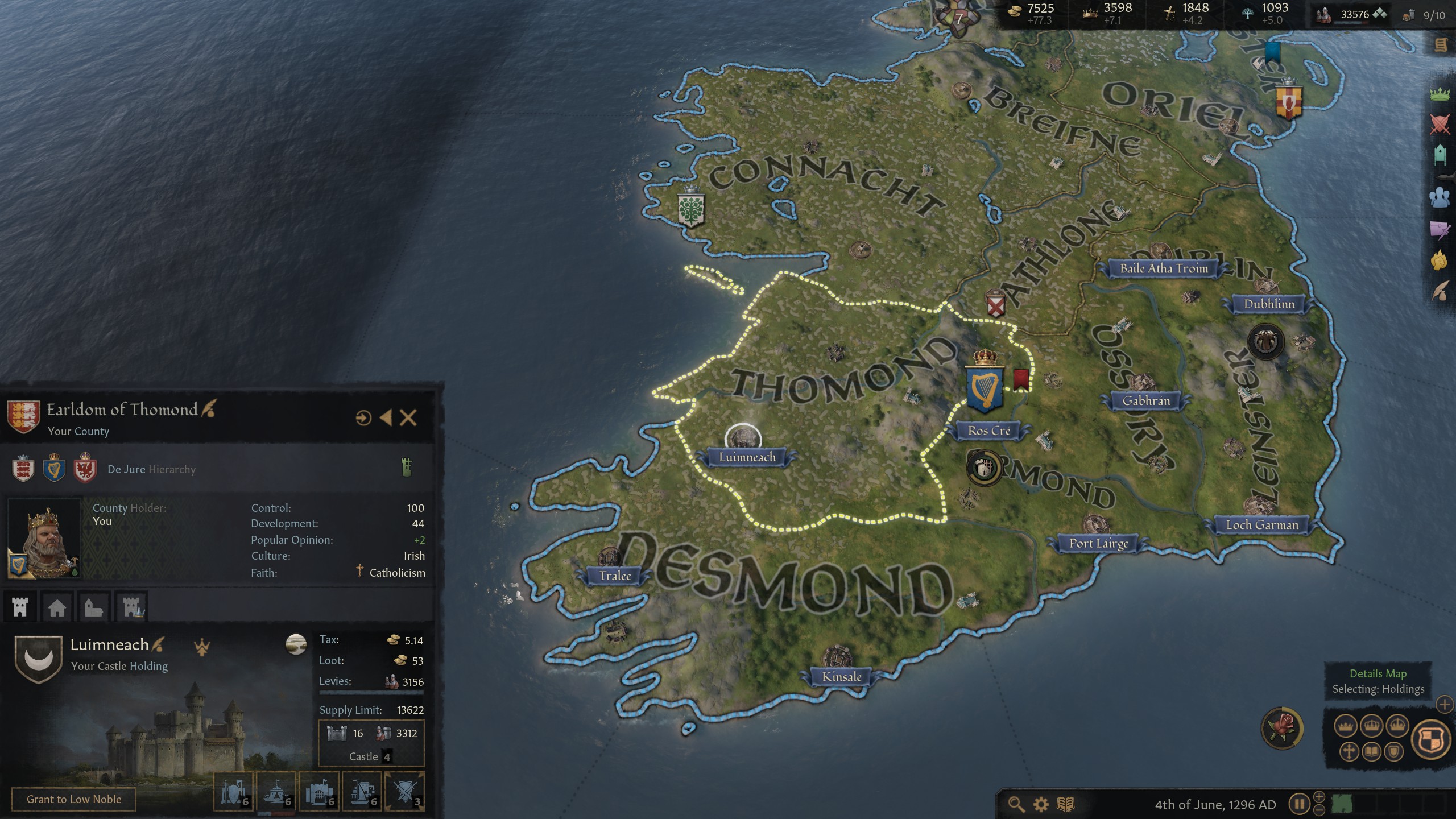
– Choose the type of holding (castle, city, or temple) based on strategic needs and terrain considerations.
– Pay the required gold (usually 400–500) and wait for the construction period to complete (approximately 5 years for a new holding; around 3 years for building structures within existing holdings).
Upgrading Holdings
Each holding type can be upgraded to enhance its benefits:
– For Castles: The upgrade path typically follows moat (level 1), keep (level 2), concentric castle (level 3), and fortress (level 4). Each level adds increments to your levies, garrison, fortifications, and tax revenue.
– For Cities: The progression involves village center (level 1), large city (level 2), city center (level 3), and bustling metropolis (level 4). Upgrades primarily improve tax income and light levies without adding fortifications.
– For Temples: Similar to cities, temple upgrades enhance tax income and levies but are managed by the clergy rather than feudal lords.
The upgrading process requires financial investment, time commitment, and, in some cases, specific innovations. Players can queue multiple upgrades when resources allow.
Building Structures Within Holdings
Within each holding, specialized structures can be constructed:
– Castle Buildings: These include barracks, stables, and fortifications, focusing on bolstering military capacity and defenses.
– City Buildings: Structures such as markets, guilds, and harbors prioritize economic development, enabling a boost in financial income.
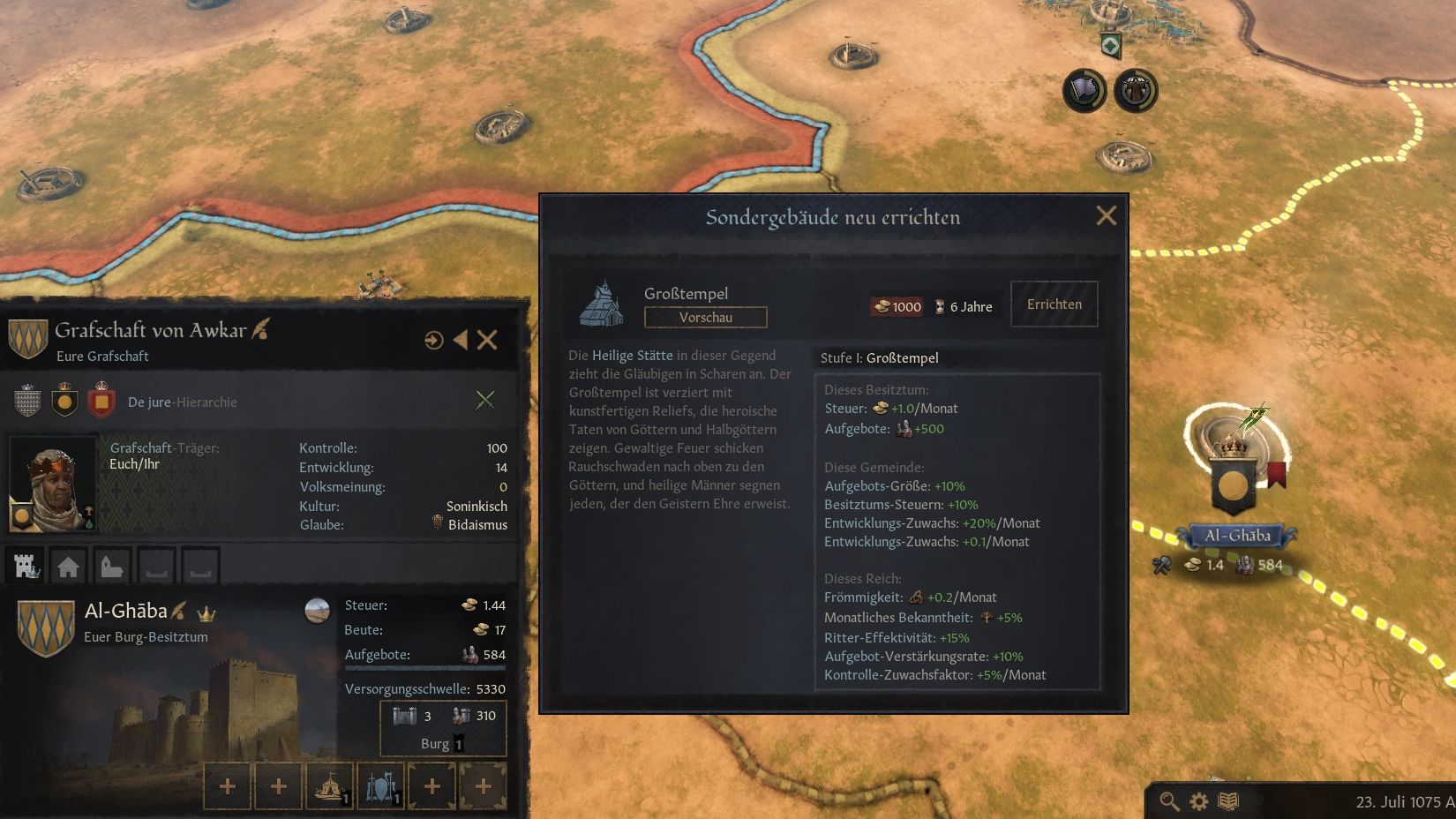
– Temple Buildings: Options include shrines and monasteries, which enhance religious strength and provide modest levies.
To build or upgrade these structures:
– Select the desired holding.
– Choose an available building slot.
– Proceed to construct or upgrade the building for enhanced effects.
Strategic Considerations for Long-Term Growth
Key strategies for maximizing your holdings include:
– Capital Investment: Focus on upgrading holdings in your capital county, which receives additional bonuses that can amplify benefits.
– Terrain Analysis: Some holdings or buildings perform better in specific terrains; for example, harbors are essential on coastal territories for economic trading advantages.
– Vassal Management: Assign cities and temples to appropriate vassals (mayors for cities and clergy for temples) who tend to manage them more efficiently than feudal lords.
– Technological Innovations: Certain upgrades and buildings require specific technological advancements, so invest in research to access a broader array of options.
– Tribal Management: If you initially rule as a tribal leader, consider transitioning to a feudal or clan government for access to higher-tier buildings and advanced holding upgrades.
Key Steps for Optimal Long-Term Growth
1. Expand Your Domain: Target new holdings through conquest or construction to boost both income and military capacity.
2. Regular Upgrading: Consistently invest in enhancing existing castles, cities, and temples to maximize economic and military output.
3. Specialized Structures: Construct buildings that align with your overarching goals, whether they are military, economic, or religious in nature.
4. Efficient Vassal Management: Assign holdings to the appropriate type of vassal to ensure optimal performance.
5. Unlock Innovations: Dedicate resources to unlocking technological innovations that facilitate advanced building types and holding upgrades.
By following these strategies and responding adaptively to the challenges of ruling in Crusader Kings III, players can cultivate a prosperous, resilient, and influential realm for generations to come.

Leave a Reply