
In Crusader Kings III, the selection and management of succession laws are critical for ensuring the stability and continuity of your realm following the ruler’s death. Succession laws dictate how titles are inherited, which has far-reaching consequences for both the structure of your kingdom and the relationships among your heirs. Below is a detailed overview of the various succession laws, mechanisms for changing them, and strategies for effective inheritance management.
Overview of Succession Laws
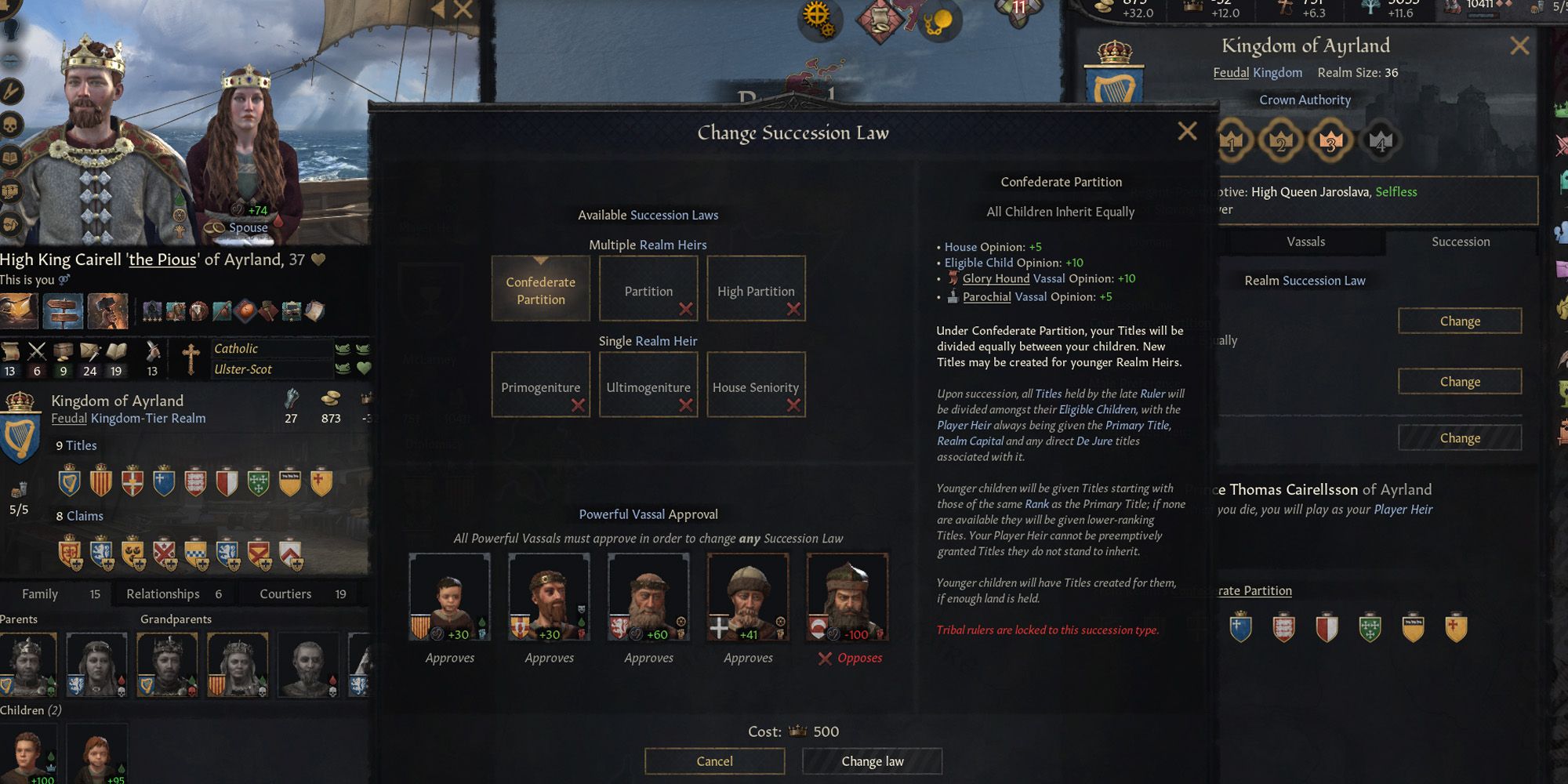
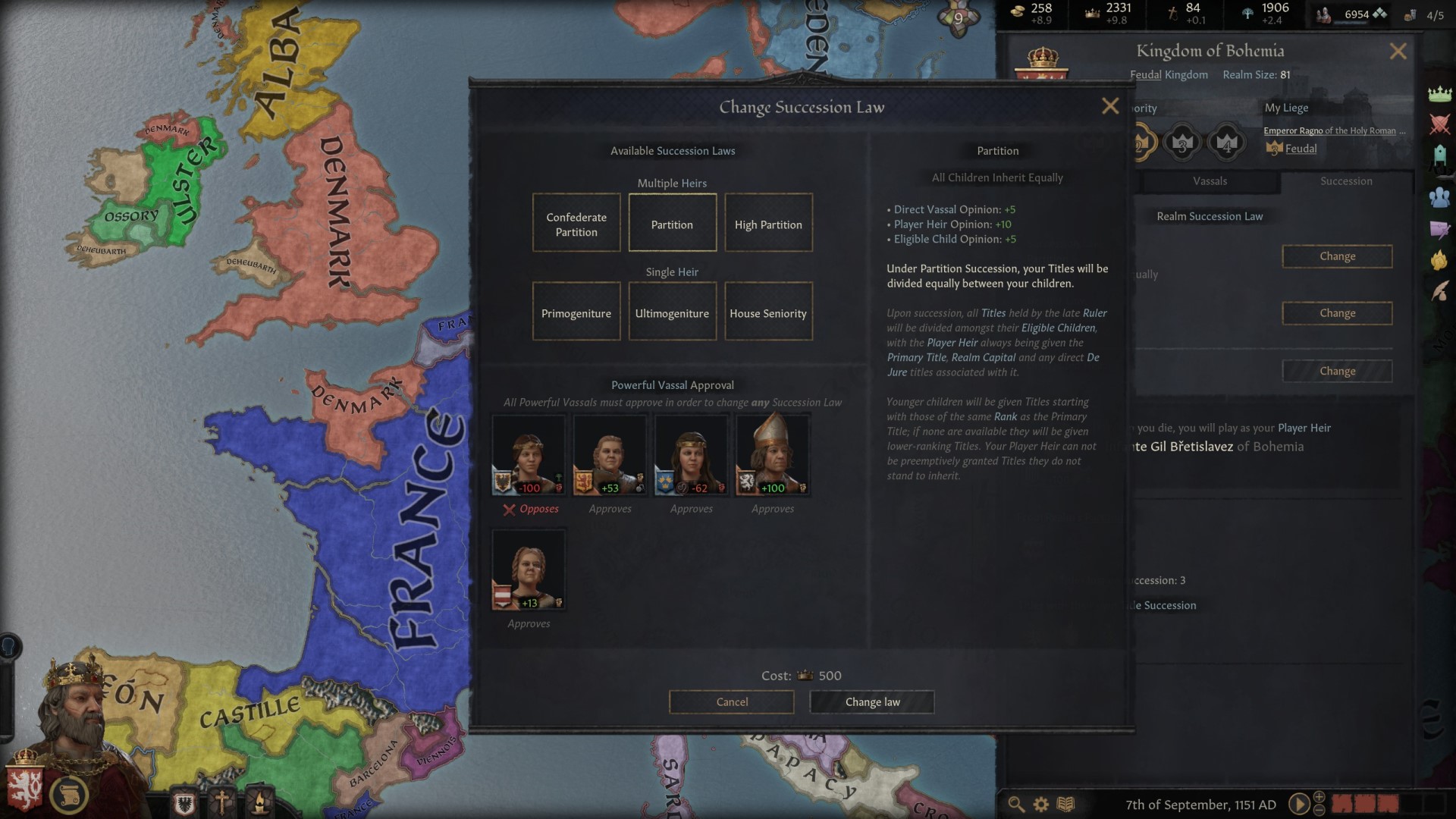
Succession laws classify how titles are passed down to heirs, and they primarily fall into two categories: single heir and multiple heirs. Each type has distinct implications:
1. Single Heir Systems: Focus on designating one heir, thereby maintaining the realm’s cohesion. For instance, Primogeniture ensures that all titles are inherited by the eldest child, thereby minimizing the risk of fragmentation.
2. Multiple Heir Systems: Share titles among all eligible heirs, leading to potential division of the realm. Confederate Partition divides titles equally, which may benefit younger heirs but risks creating power blocs that could challenge the ruler’s authority.
Types of Succession Laws
1. Primogeniture: This law allows the eldest child to inherit all titles without division. To adopt this law, a high level of crown authority is necessary. It promotes stability and continuity within the monarch’s realm.
2. Confederate Partition: This system equally divides titles among all heirs, giving each child a portion of the realm. If younger heirs are not granted new titles, it may result in weaker vassals as they hold less power, making it a common choice among tribal realms due to its balance of power distribution.
3. Gavelkind: Under Gavelkind, titles are split among eligible heirs based on their types. Although this law can lead to significant fragmentation, it can also cultivate strong vassals who can help expand your influence.
Changing Succession Laws
Changing succession laws requires a level of crown authority, which gauges your centralized control over the realm. Here are the necessary conditions:
– Limited Crown Authority: Suitable for certain multiple-heir transitions. This level allows for more flexibility in managing titles and makes it easier to implement changes among divide-based systems.
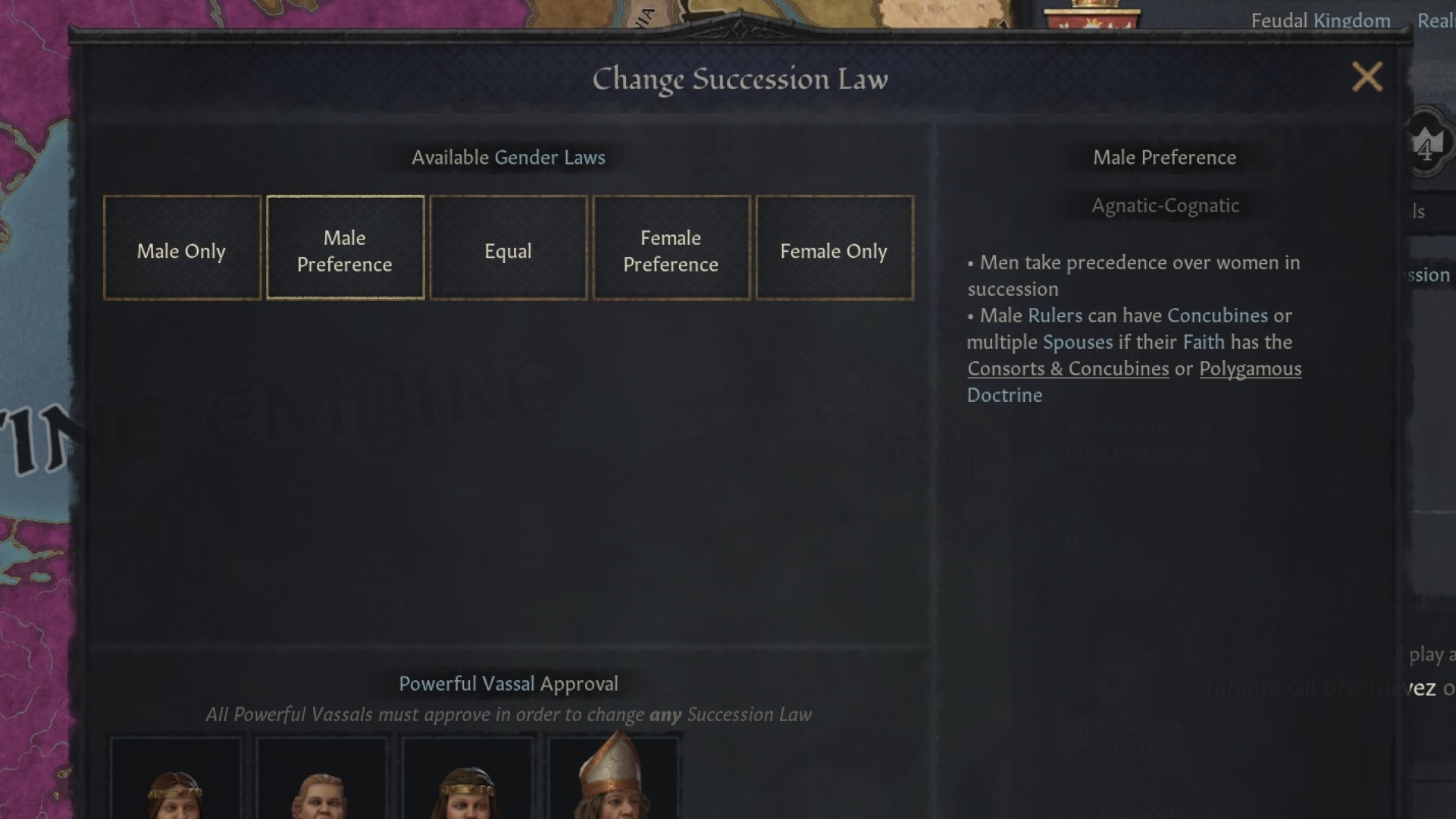
– High Crown Authority: Mandatory for implementing gender laws or shifting from a multiple-heir law to a single-heir system like Primogeniture. This restriction enhances the ruler’s control to avoid potential chaos during succession.
Impact on Inheritance
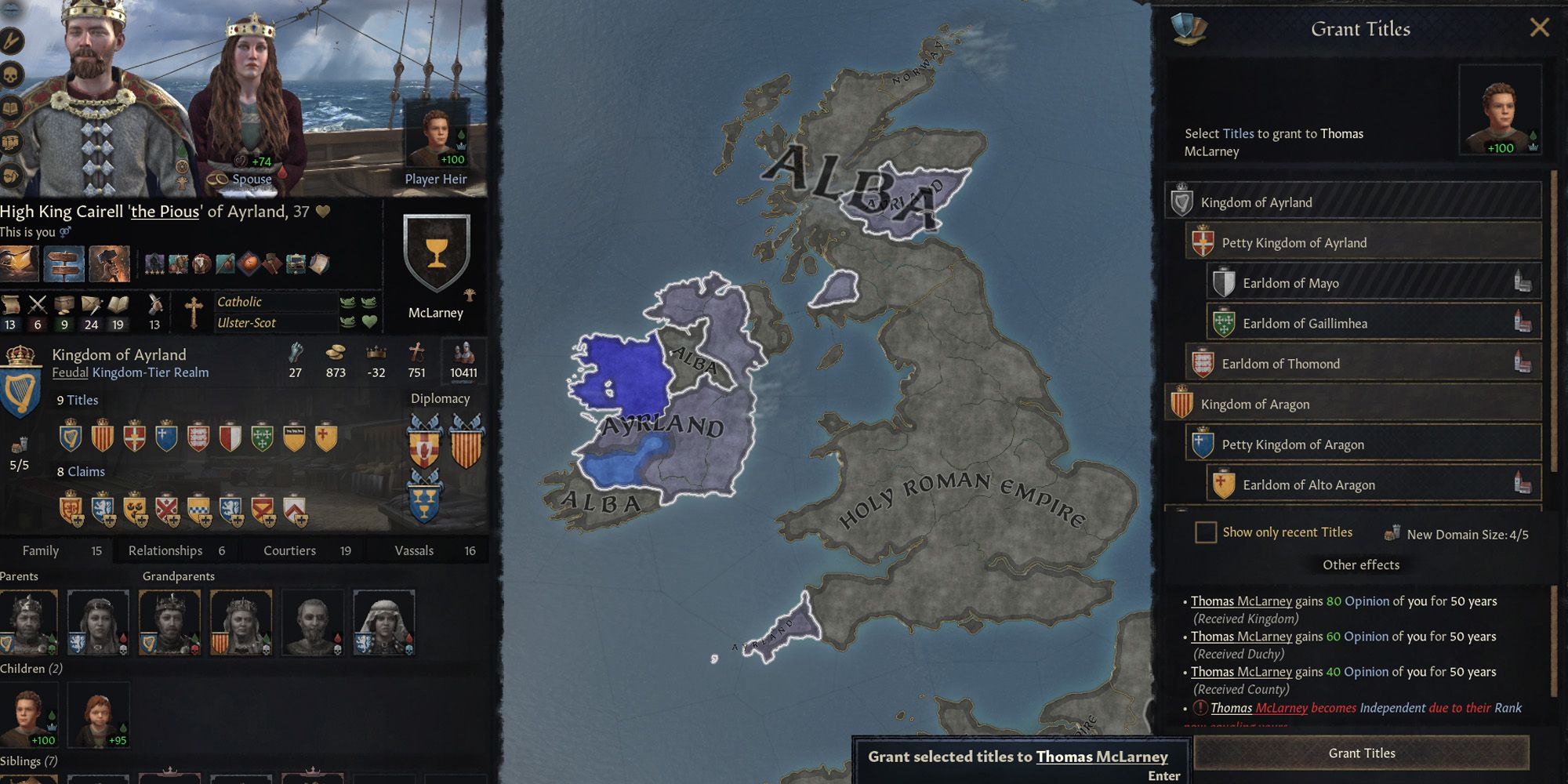
Changing the succession law can dramatically alter the landscape of your realm after your death:
– Single Heir Systems: By consolidating all titles under one heir, the realm remains unified, reducing the risk of civil wars or power struggles. However, this could engender discontent among other heirs, leading to strained family relations or rebellious ambitions.
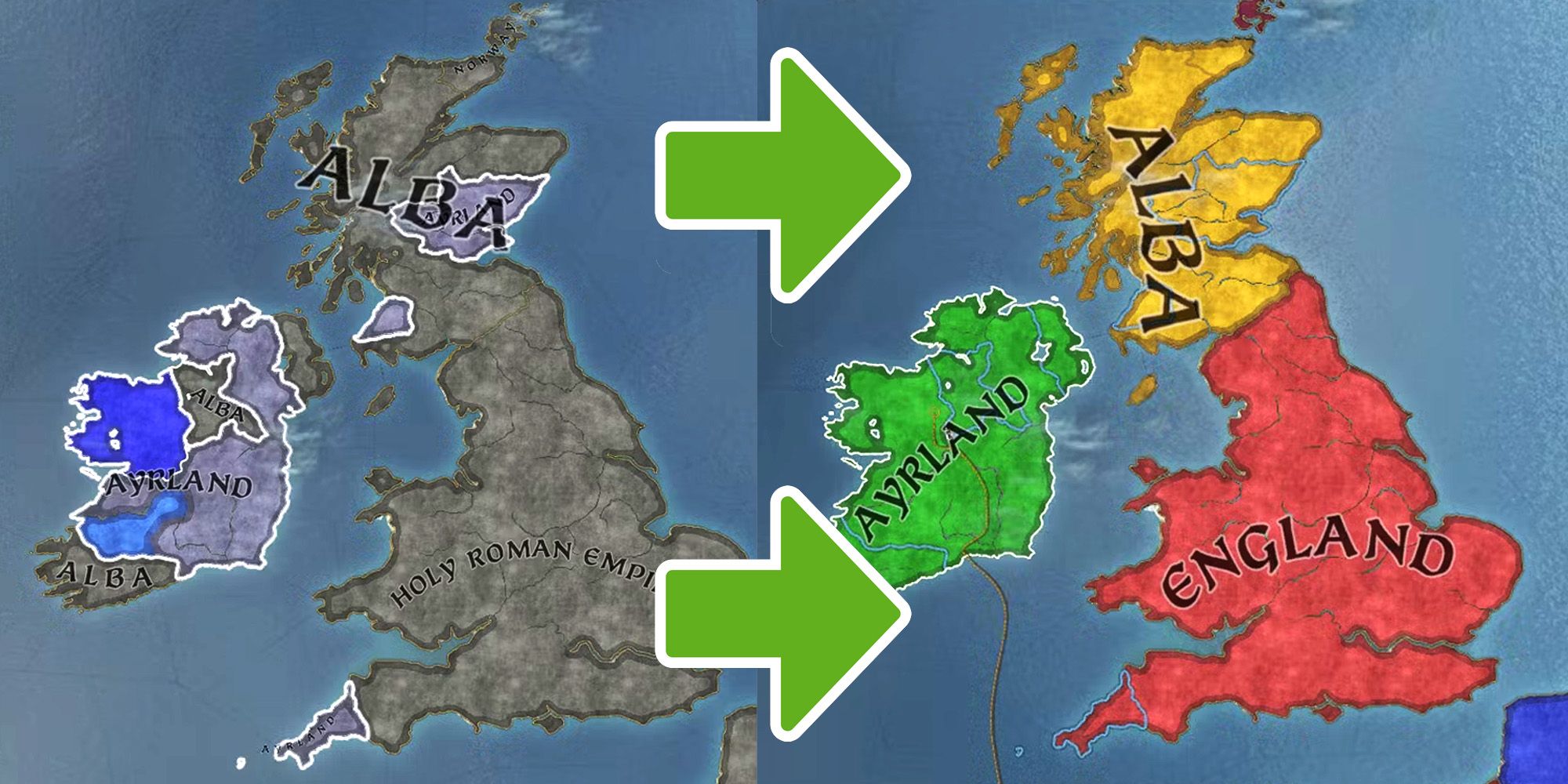
– Multiple Heir Systems: While they promote fairness among descendants, these laws may fracture the realm into smaller entities, making the ruler’s job more challenging. Such fragmentation can create new power dynamics that might usurp authority or lead to civil unrest.
Managing Inheritance
To ensure a successful transition of power and prevent fragmentation:
1. Monitor Crown Authority: Maintaining an optimal level of crown authority is essential to enforce desired succession laws.
2. Choose the Right Law: Consider the political landscape and select a law that suits your territorial ambitions. Maintain a focus on a unified realm if you prioritize stability over all.
3. Manage Heir Expectations: Pay attention to the needs and ambitions of your heirs. Encourage loyalty and manage relationships wisely to mitigate risks of dissent or insurrection.
Conclusion
In conclusion, the effective management of succession laws in Crusader Kings III is a nuanced process that requires foresight and strategic planning. By understanding the implications of various laws, monitoring your realm’s crown authority, and thoughtfully engaging your heirs, you can shape the future of your realm and ensure your legacy endures through the intrigues of medieval politics.
Leave a Reply