
Introduction to Artifacts in Crusader Kings III
Artifacts play a crucial role in the gameplay of Crusader Kings III, serving as unique historical items that players can craft, collect, or loot throughout their journey. These artifacts not only reflect the rich historical context of the game but also offer significant enhancements to a ruler’s abilities, status, and influence within the game world. By providing various benefits—ranging from increased prowess to improved diplomatic relations—artifacts are integral to developing a strong and capable ruler.
Types of Artifacts
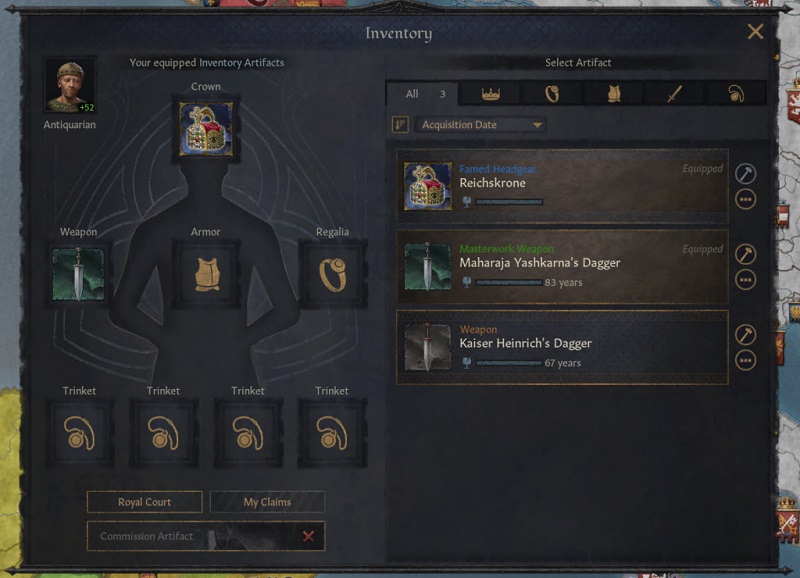
In Crusader Kings III, artifacts come in several types, each with distinct advantages and characteristics. The main categories of artifacts include crowns, journals, weapons, armor, regalia, and trinkets. Each type can be equipped by your character or displayed in the royal court, especially if the Royal Court DLC is active.
1. Crown: Typically crafted from precious materials like lapis lazuli or amber, crowns symbolize a ruler’s wealth and authority. Wearing a crown can improve the ruler’s prestige and influence over others.
2. Journal: Journals can contain a wealth of historical or mystical insights, offering potential bonuses to diplomacy or intrigue through the stories they hold.
3. Weapons and Armor: These artifacts enhance military prowess, boosting combat skills and providing significant advantages in battles. They can represent a ruler’s martial capabilities and lineage.
4. Regalia: Items of regalia serve to enhance a ruler’s prestige and can improve diplomatic relations with other characters, helping to solidify alliances and strengthen political ties.
5. Trinkets: These smaller artifacts vary in benefits but can provide enhancements such as increased charm or stronger stewardship skills, allowing players to diversify their ruler’s talents and capabilities.
Benefits of Artifacts
The incorporation of artifacts into gameplay is not merely decorative; they offer tangible benefits that can significantly affect a player’s strategy and success.
1. Statistical Enhancements: Artifacts can boost various attributes such as prowess, diplomacy, or martial skills. This makes rulers not only more formidable in battle but also more effective in handling courtly politics and governance.
2. Military Advantages: Certain artifacts can directly improve military capabilities by increasing the number of knights available, enhancing military strategy, or even improving levy reinforcement rates, which can turn the tide of war.
3. Diplomatic and Social Benefits: Artifacts that improve a ruler’s charm and prestige can facilitate better diplomatic negotiations, making alliances easier to forge and disputes easier to resolve.
4. Prestige and Legacy: Artifacts displayed in the royal court can elevate a ruler’s reputation and legacy. This can attract more vassals, improve relations with allies, and elevate the standing of the ruler’s dynasty in the eyes of history.
Crafting and Modifiers
The crafting of artifacts involves specific materials and modifiers, which directly influence their quality and effectiveness. This system adds an essential layer of uniqueness to each artifact.
– Regional Variations: Artifacts created in different parts of the world may exhibit unique materials or designs specific to that region, showcasing the diverse craftsmanship available in the game.
– Quality and Modifiers: The quality of an artifact affects its performance, with higher-quality artifacts yielding more substantial benefits. Players can strategize over which materials and methods to use to maximize their artifact’s effectiveness and tailor it to their gameplay style.
Conclusion
In conclusion, artifacts in Crusader Kings III are vital components that enrich the gameplay experience, offering substantial opportunities for enhancement to a ruler’s capabilities, prestige, and military power. By engaging in the strategic collection and crafting of these items, players can mold their rulers to either emphasize military dominance, diplomatic finesse, or a lasting cultural legacy, shaping their dynastic journey in the game. The depth and variation in artifacts provide players with a dynamic toolset to explore the complexities of leadership and legacy within the historical context of the game.


Leave a Reply