
In Death Stranding, the mechanics of cargo weight and balance play a pivotal role in shaping the gameplay experience, significantly impacting Sam Porter Bridges’ mobility and delivery efficiency. Let’s break down the nuances involved:
Weight Impact
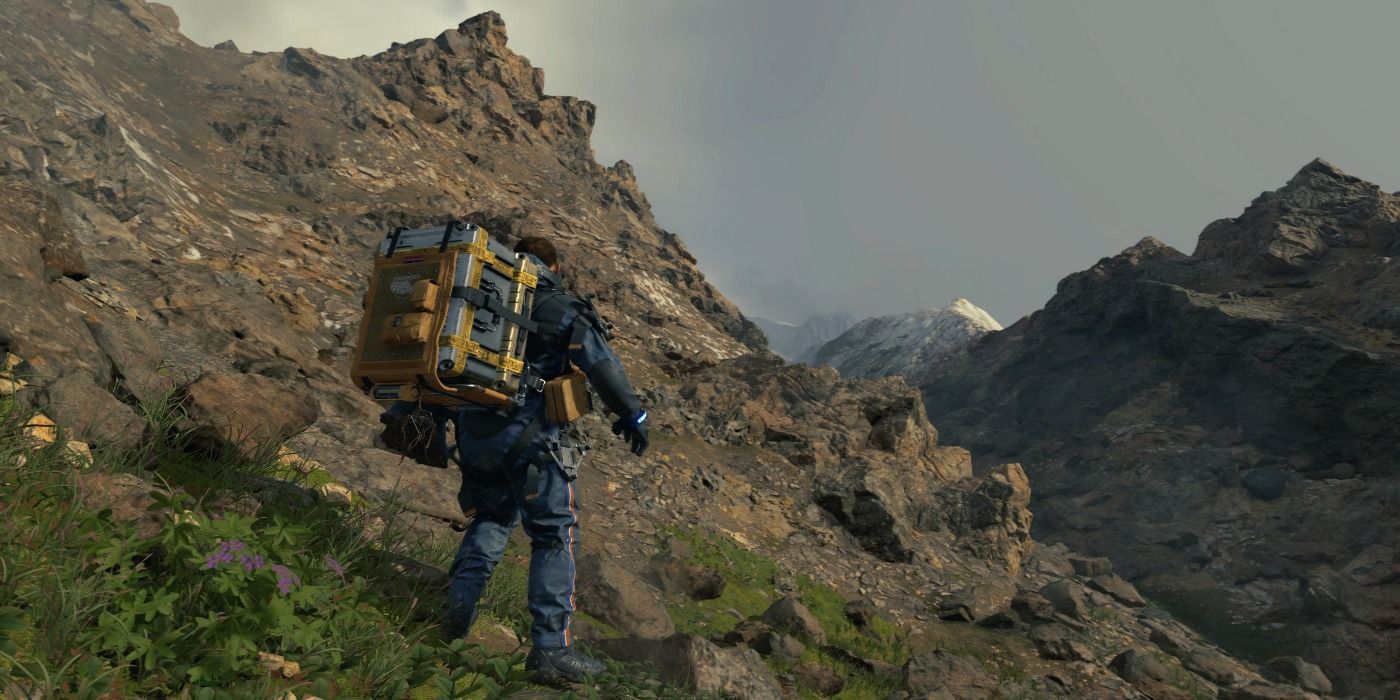
The weight of the cargo that Sam carries directly influences his performance. As players increase the load on Sam’s back:
– Movement Slowness: Increased cargo weight inherently slows down Sam’s movement speed. He becomes less agile and may require more time to navigate through various terrains, which is compounded by the nature of the environment, including uneven landscapes.
– Stamina Drain: Heavier loads lead to a quicker depletion of Sam’s stamina. This means players must be more strategic about their routes, as excessive weight can make it more difficult for Sam to complete his deliveries without needing to rest or risk exhaustion.
– Risk of Falling: The challenge of carrying heavy cargo increases the likelihood of Sam tripping, stumbling, or falling, particularly on rugged terrain or while traversing obstacles. This not only affects his physical state but also jeopardizes the integrity of the cargo being delivered.
Balance Considerations
The placement of cargo on Sam’s body is crucial for maintaining stability:
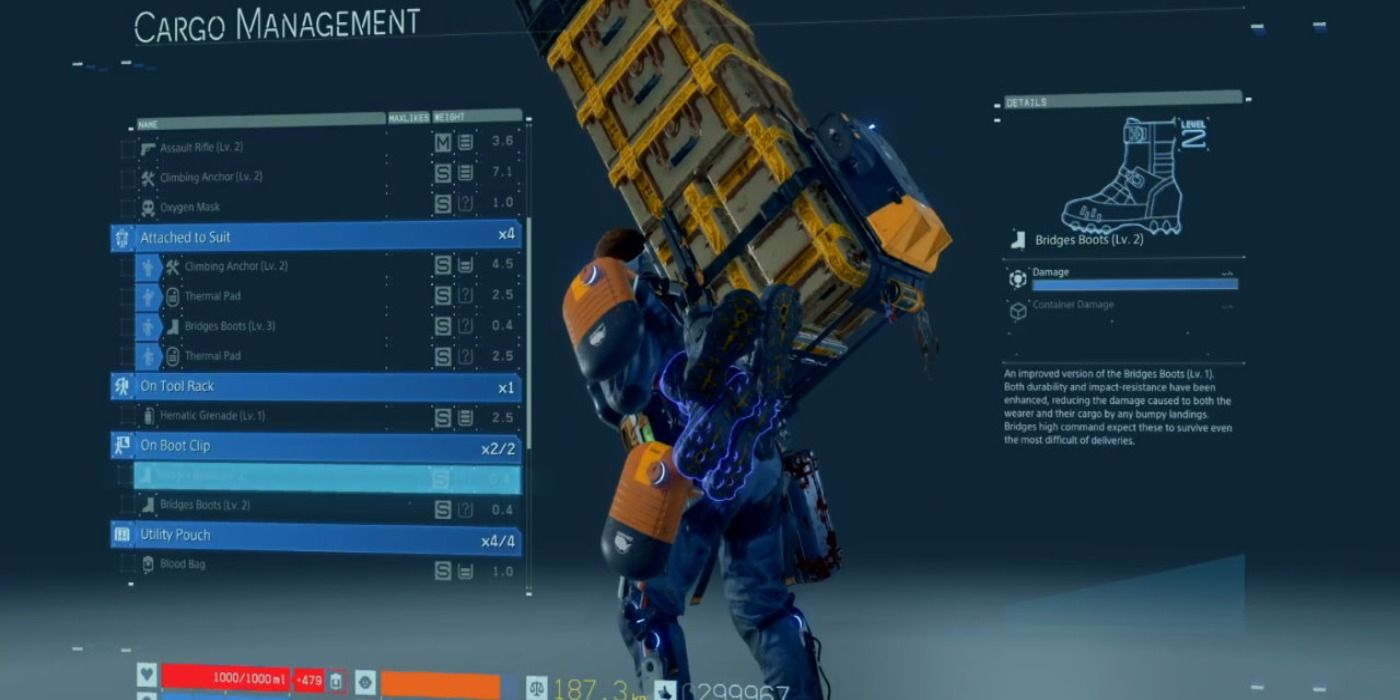
– Center of Gravity: Ideally, players should distribute cargo as evenly and centrally as possible to keep Sam balanced. An improper weight distribution can unbalance him, making it easier to tip over or lose control while moving, especially during rapid or swift actions such as sprinting or climbing.
– Cargo Arrangement: Players need to pay attention to how cargo is stacked on Sam’s back, as poorly arranged loads can shift during movement, further complicating navigation.
Cargo Stability
The stability of the cargo itself is another layer that players must manage:
– Risk of Scattering: Uneven or unstable cargo can lead to disastrous falls where items can scatter, necessitating a difficult and time-consuming task to gather and re-organize everything. This is particularly troublesome if maneuvering through challenging terrain or across bodies of water.
– Environmental Hazards: For instance, traversing across rivers poses a heightened risk; if Sam falls while carrying heavy cargo, the current can sweep away the items, resulting in potential delivery failures.
Tools to Manage Cargo
To mitigate the challenges presented by weight and balance, Death Stranding provides various tools and equipment:
– Floating Carriers: These innovative tools attach to Sam and help distribute weight more effectively, providing chiralium-based floating support that minimizes the strain on Sam.
– Vehicles: For heavier loads, utilizing vehicles allows safe transportation across longer distances, reducing the physical toll on Sam.
– Climbing Assistance: Equipment such as ladders and climbing anchors are vital for successfully navigating difficult verticals, promoting successful and safer traversal without risking cargo loss.
– Strand Tool: This tool allows players to secure cargo more effectively to Sam’s gear; however, while it can reduce the risk of items falling off, it’s not foolproof and may fail if Sam endures repeated slips.
Conclusion
In conclusion, effectively managing cargo weight and balance is critical to navigating the challenges in Death Stranding. By understanding the complexities of cargo handling, players can enhance Sam’s mobility and ensure the successful completion of deliveries. Proper load distribution, careful cargo management, and strategic use of tools not only enable safer travels but also enrich the overall gameplay experience, emphasizing the careful consideration required in this unique open-world delivery simulation.



Leave a Reply