
In Disco Elysium, players face a unique character development system centered around four core Attributes: Intellect, Psyche, Physique, and Motorics. These Attributes set the foundation for your character’s abilities and playstyle but come with specific limitations that influence gameplay significantly. Here’s a deeper look into the mechanics and strategic considerations regarding Attributes and Skills:
Core Attributes
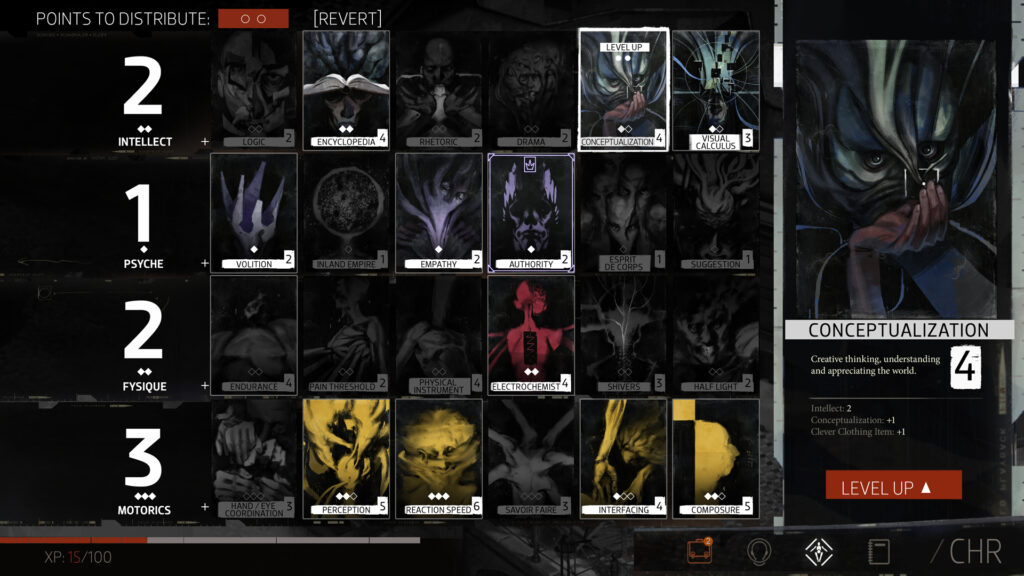
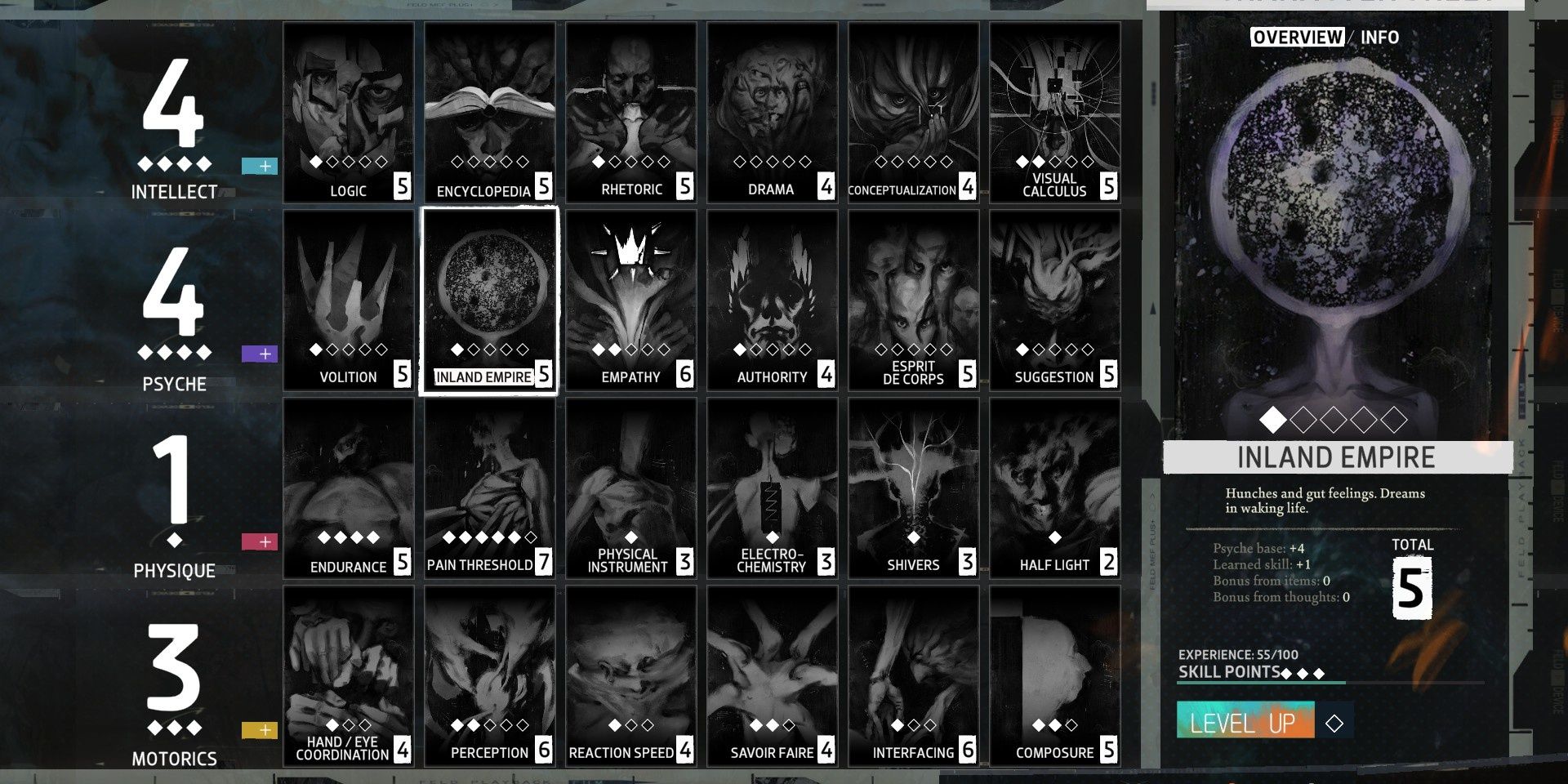
1. Static Allocation: At the start of the game, players have a total of 12 points to distribute among the four Attributes, with individual Attributes ranging from 1 to 6 points. This allocation is a one-time decision, as these Attributes cannot be adjusted again during the playthrough.
2. No Progression: Unlike many role-playing games, Attributes in Disco Elysium do not level up or increase over time. Players cannot gain more points in these Attributes, which emphasizes the importance of careful planning at the character creation stage.
3. Temporary Modifiers: Players can temporarily boost their Attributes through the use of substances such as drugs or alcohol. While these enhancements may provide a short-term advantage in gameplay—allowing for higher skill checks or different dialogue options—they come with significant risks, including potential detriment to the character’s overall health, morale, and stability.
Skills Associated with Attributes
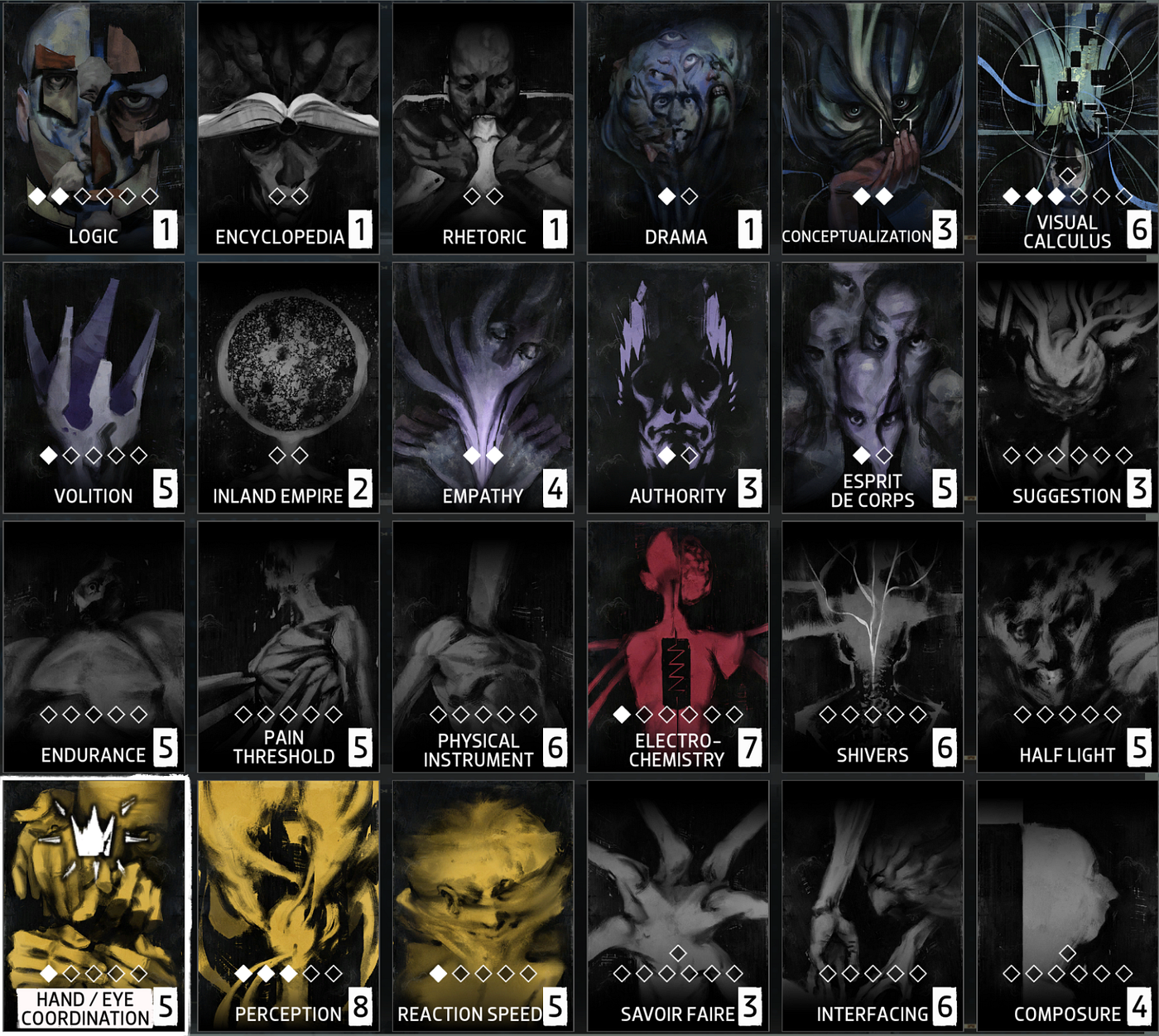
1. Trainable Skills: Each of the four Attributes encompasses a specific set of Skills. Unlike the Attributes, these Skills can be trained and improved throughout the game. Players can focus on raising skills corresponding to their initial Attributes, but the efficacy of this training is capped by the respective Attribute’s score.
2. Cap Limits: Skills are limited by the base Attributes, meaning that if an Attribute is assigned a low value, the associated Skills cannot be trained to high levels. For example, if a player has a low Physique score, they will struggle to push physical Skills further even if they invest significant time into training them.
Clothing and Equipment
1. Temporary Skill Bonuses: Players can equip various clothing and items that provide temporary bonuses to Skills. While these bonuses can be invaluable in specific situations (such as enhancing charisma in social interactions or improving physical capabilities during a confrontation), they do not alter a character’s base Attributes.
Strategic Considerations
The interplay between Attributes and Skills necessitates a strategic approach during character creation. Choosing how to allocate the initial points can profoundly impact the narrative experience, the types of dialogue options available, and gameplay style. Players should consider the following when creating their character:
– Character Identity: Decide what kind of character you want to embody (e.g., a sharp-witted detective focused on Intellect or a physically imposing figure with high Physique).
– Playstyle and Preferences: Consider how you want to interact with the world and the challenges you expect to face, as certain Attributes may be more beneficial depending on the chosen narrative path.
– Long-Term Planning: Keep in mind the relationship between Attributes and Skills. Prioritize Attributes that support Skills you wish to develop and utilize throughout the game.
Conclusion
In summary, the fixed nature of Attributes in Disco Elysium means players must strategically plan their character from the very beginning, as these choices shape their experiences and interactions. While the ability to temporarily enhance Attributes through substances and improve Skills through training provides a layer of depth, the core challenge remains in the careful balance of the initial allocation of points. This intricate character system encourages thoughtful gameplay and enhances the overall narrative richness of the game.


Leave a Reply