
Certainly! Automating the production of intermediate products like gears and circuits in Factorio is a vital step toward creating a more efficient factory. Below is a comprehensive guide that outlines each step in detail.
Step 1: Plan Your Production Line
– Identify Your Needs: Before beginning construction, list the intermediate products that are essential for your current goals. In the early stages of the game, gears and circuits are often at the top of this list as they are required for various machines and technologies.
– Design a Layout: Create a schematic of your production layout. Consider using a main bus system where all essential raw materials are transported along horizontal or vertical belts, with branches feeding into dedicated production lines. This setup allows you to easily scale and modify your factory as needed.
Step 2: Build the Production Line
– Assemblers: Set up assembly machines for your targeted products:
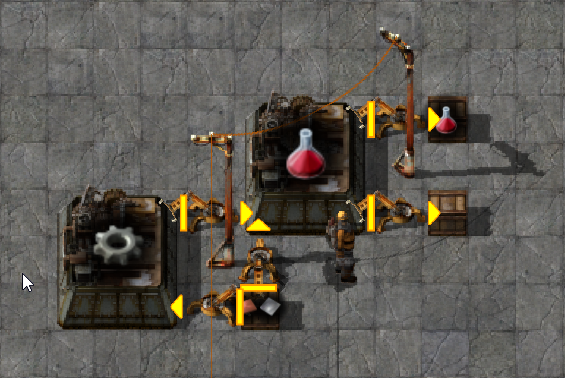
– Gears: Use an Assembly Machine 1 to produce gears from iron plates. This process is simple and requires minimal space.
– Circuits: For electronic circuits, utilize an Assembly Machine 2 as it can handle more complex recipes. Ensure you provide both copper plates and iron plates to this assembler.
– Belts and Splitters: Incorporate transport belts to move raw materials to the assemblers efficiently. Use splitters to direct the flow of materials and adjust production priorities, ensuring that each assembler receives the necessary components without slowdown.
Step 3: Implement Efficiency Improvements
– Productivity Modules: Enhance your assembly machines with productivity modules to increase output. These modules allow you to produce more items per recipe, thereby maximizing efficiency and minimizing waste. However, keep in mind that they may increase energy consumption and production time.
– Electricity and Power: Confirm that your entire production line is powered adequately. Choose a reliable power source such as steam power or solar panels. If using advanced assemblers or productivity modules, ensure your power supply can handle increased demand.
Step 4: Automate Research and Further Progression
– Research Automation: Concentrate on automating research to gain access to better machinery and improved efficiency. Start with the Automation science pack, which is foundational for automating your factory.
– Continue Researching: As you progress, prioritize technologies that enhance assembly machine efficiency (like Automation 2), increase material handling options (like Logistics), and unlock recipes for advanced products (like advanced circuits).
Step 5: Scale and Optimize
– Monitor and Adjust: Regularly assess the performance of your production lines. Look for bottlenecks where materials are being held up or where assemblers are not keeping up with demand. Adjust the layout and add additional assemblers as needed to alleviate these issues.
– Expand Production: As your factory begins to grow and your resource base expands, consider replicating successful production lines for additional intermediate products. This scalability ensures a steady supply of components necessary for manufacturing end products, such as machinery, electronic devices, or advanced components.
Conclusion
By systematically following these steps, you can achieve an effective automation of gears, circuits, and other intermediate products in Factorio. This not only enhances your factory’s productivity but also lays a strong foundation for future expansions and technological advancements. With careful planning, implementation, and continuous optimization, you will be able to create a thriving automated factory environment.



Leave a Reply